Building Strength and Safety into Every Project
A successful hardscape business isn’t just built on craftsmanship—it’s built on resilience. From patios and retaining walls to outdoor kitchens and drainage systems, these projects demand precision, planning, and protection from the forces of nature. For contractors operating along coastal and storm-prone regions, hurricane preparedness for hardscape contractors becomes a vital part of business continuity. Protecting equipment, securing materials, and maintaining client relationships are not optional—they are the foundation for long-term stability and reputation.
As the hurricane season approaches, contractors across the Carolinas and Gulf regions must take proactive steps to secure operations and ensure the safety of employees, worksites, and clients. Proper planning not only minimizes damage but also allows the company to recover faster and serve customers in post-storm restoration efforts. The strategies below outline how professional hardscape contractors can safeguard their business before, during, and after the storm.
Securing Equipment, Materials, and Worksites Before the Storm
When severe weather looms, the first line of defense is preparation. Hardscape contractors often manage multiple job sites, open trenches, and heavy equipment—all of which can become hazards during high winds and flooding. Implementing a storm readiness checklist ensures operations shut down safely and efficiently.
1. Secure All Job Sites:
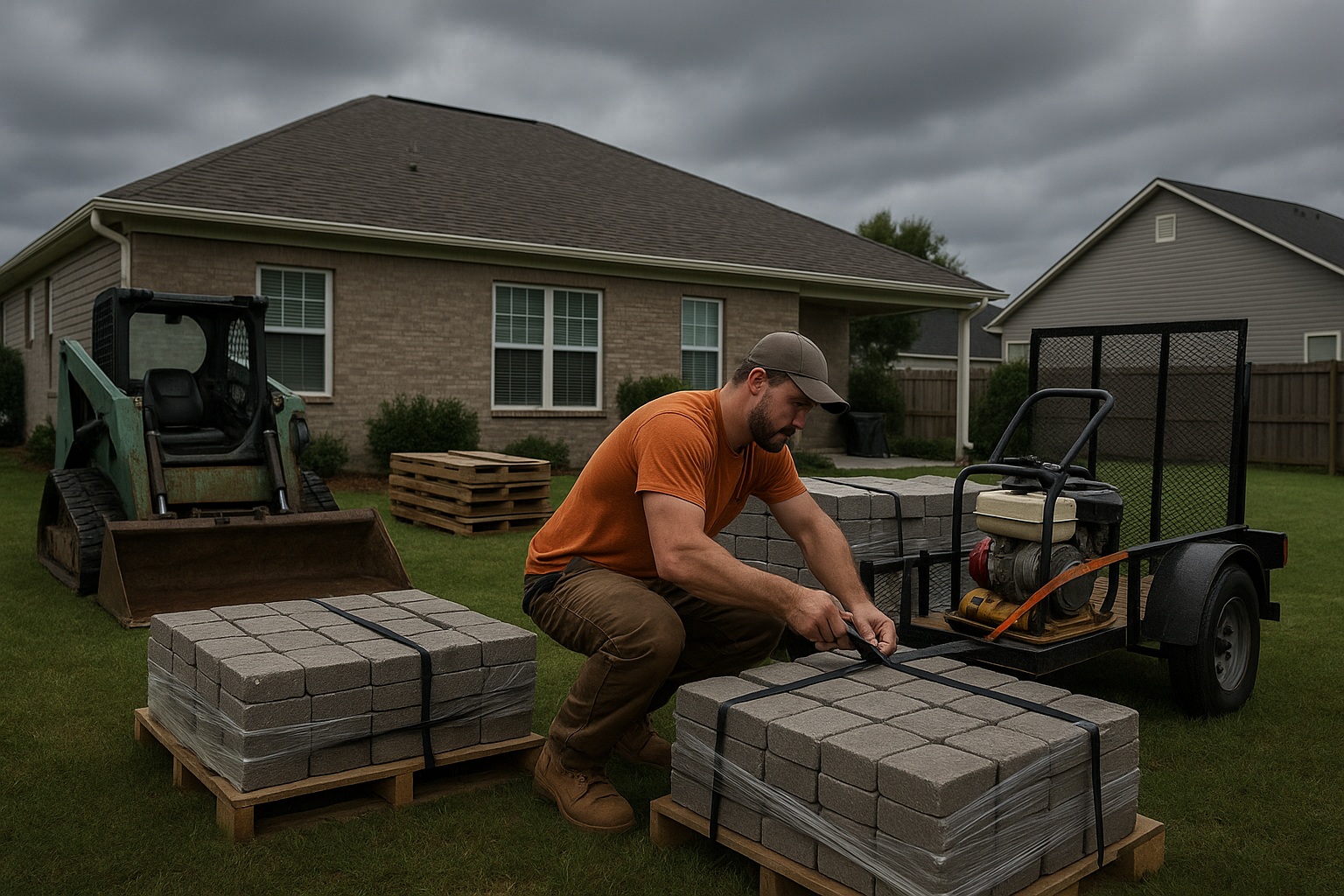
Before a storm’s arrival, remove or tie down anything that can become airborne. Pallets of pavers, sandbags, lumber, or tools should be stored in sheltered areas or tightly strapped to prevent scattering. Disconnect power tools, generators, and lighting systems to eliminate electrical hazards. For larger machinery such as skid steers, excavators, and compactors, move them to higher ground or stable terrain away from flood-prone areas.
2. Protect Material Yards and Warehouses:
Contractors should organize material yards with hurricane protocols in mind. Store stone, aggregate, and topsoil under protective tarps or in covered bins. Stack materials in low, compact formations to reduce wind exposure. Electronic systems and records should be backed up to cloud storage, ensuring critical data remains safe even if physical offices are damaged.
3. Fuel, Batteries, and Hazardous Materials:
Ensure fuel tanks, propane, and chemical storage are sealed and anchored. Leakage during a storm not only endangers property but can violate environmental regulations. Batteries and small gas containers should be moved indoors or into waterproof containers.
4. Safety for Employees:
Employee safety must come before all else. Contractors should maintain emergency contact lists, ensure vehicles are fueled, and provide team members with safety briefings before closure. Communication apps or text systems can help coordinate post-storm status checks once it’s safe to return.
A well-executed pre-storm plan allows the business to focus on recovery rather than damage control when the storm passes.
Communication, Scheduling, and Client Management During the Disruption
In times of uncertainty, communication builds trust. Hardscape contractors with clear communication plans can preserve client relationships even when timelines shift unexpectedly.
1. Pre-Storm Client Outreach:
As soon as a storm watch is announced, contact active clients with updates about their project status and next steps. Explain the safety procedures being followed and reassure them that all materials and worksites will be secured. Offer realistic expectations on how weather may delay work but emphasize that protecting their investment is your priority.
2. Post-Storm Follow-Up:
After the storm, reach out to clients immediately to assess conditions. Provide honest updates about scheduling disruptions, site conditions, and insurance processes if applicable. Even if work cannot resume immediately, this communication demonstrates professionalism and dependability.
3. Managing Scheduling Flexibility:
Keep a contingency schedule for storm delays. Build flexibility into contracts with clauses allowing for weather-related interruptions, ensuring legal protection while maintaining transparency with homeowners.
4. Digital Communication Systems:
Use cloud-based project management tools or CRM software to maintain communication with clients and subcontractors during outages. Backup copies of contracts, permits, and site plans can be stored securely online, ensuring continuity of documentation even if office systems are down.
By maintaining transparency and empathy, contractors can turn storm disruptions into opportunities to demonstrate reliability—a quality that builds long-term loyalty and referrals.
Insurance, Liability, and Post-Storm Recovery Protocols
Even the most prepared contractor faces risks during severe weather, which makes insurance coverage and documentation critical to business continuity. A storm recovery plan should address financial protection, equipment repair, and cleanup responsibilities.
1. Review Insurance Coverage:
Contractors should review their General Liability, Builder’s Risk, and Equipment Insurance policies before hurricane season. Confirm that coverage includes storm damage, flooding, and theft after disasters—many standard policies do not cover these automatically. If subcontractors are used, ensure they also carry active insurance policies and name your company as “additionally insured.”
2. Document Everything Before the Storm:
Photograph active worksites, material yards, and equipment storage areas. These images serve as proof of condition before damage occurs and can streamline insurance claims later. Keep digital copies of invoices, contracts, and vendor agreements in off-site backups or secure cloud storage.
3. Cleanup and Safety Inspections:
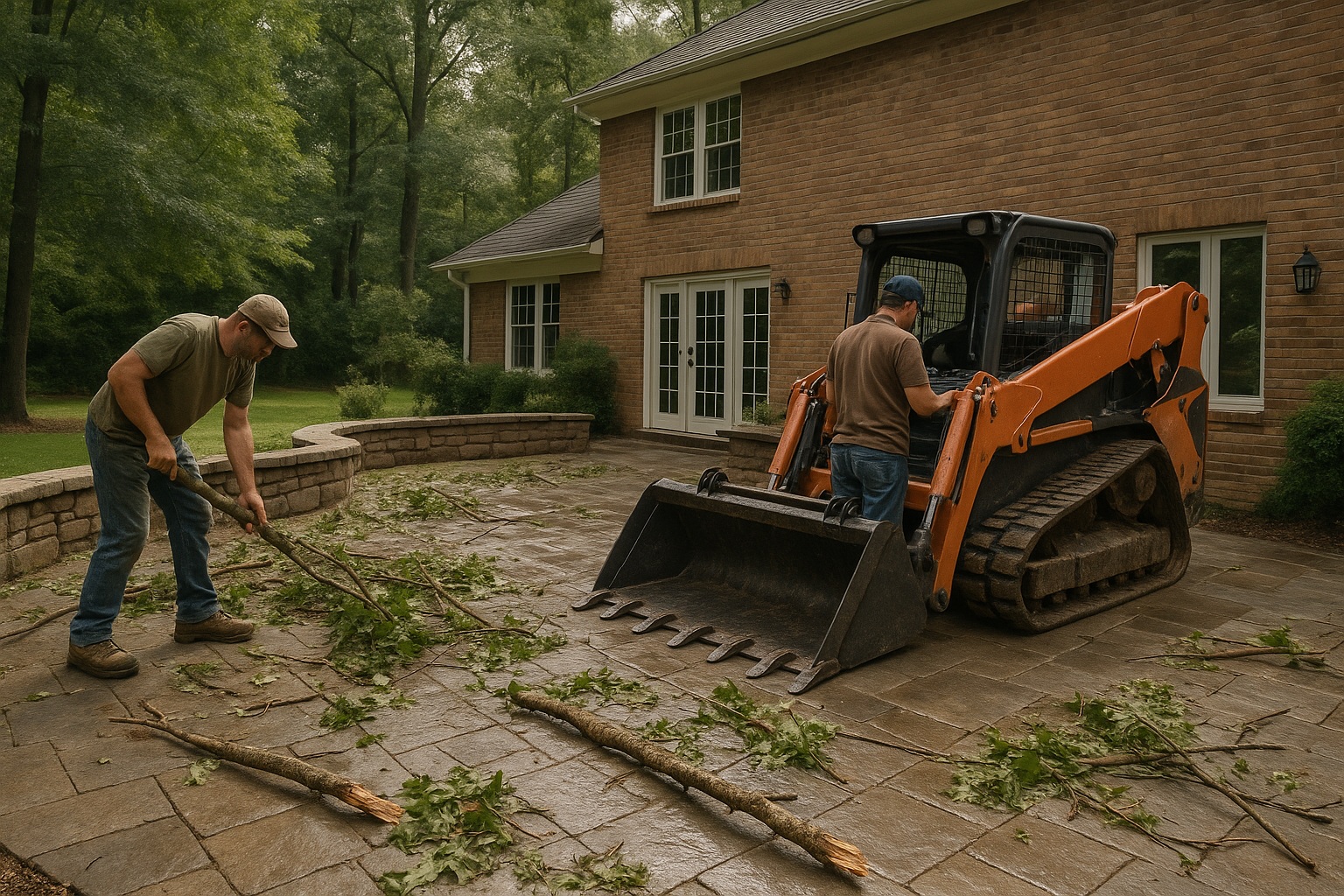
Once local authorities declare it safe, inspect all sites carefully before resuming operations. Watch for downed power lines, gas leaks, unstable soil, and hidden water damage. Prioritize removing debris and securing exposed materials before restarting work. Never use power tools or heavy machinery in standing water.
4. Employee and Equipment Accountability:
Conduct headcounts and safety checks for all team members. Assign designated leaders to inspect specific worksites or yards. Ensure that damaged or waterlogged equipment is inspected by qualified technicians before reuse.
5. Community Support and Recovery Work:
After major storms, hardscape contractors often play a vital role in community rebuilding—repairing retaining walls, patios, and drainage systems damaged by flooding. Offering emergency repair services not only supports local recovery efforts but also reinforces your company’s reputation as a trusted, reliable contractor during difficult times.
Resilient Businesses Build Resilient Communities
Contractors who plan ahead, train their teams, and communicate clearly are the first to recover and return to work after a storm. Implementing a formal hurricane preparedness and continuity plan protects employees, reduces losses, and strengthens your business reputation. From securing material yards to reviewing insurance coverage, every proactive step builds a foundation of resilience that extends to clients and communities alike.
The lessons are simple: prepare early, communicate often, and protect your people and property with the same care you give every project. Resilience isn’t just a goal—it’s a culture of readiness that defines professional excellence.
If you’re considering upgrading your property before the next storm season, explore our Retaining Wall Construction Services and Drainage Upgrades.
At Precision Hardscape Construction, we take that philosophy to heart. With years of experience building and restoring outdoor environments in coastal Carolina communities, our team understands what it means to prepare, protect, and rebuild. Whether you need storm-resistant installations, drainage improvements, or post-storm restoration, we’re here to help safeguard your investment and ensure your outdoor spaces stand the test of time.
Call (843) 222-5377 or visit www.PrecisionHardscapeConstruction.com to learn how we can help you prepare your property and projects before the next storm hits. Together, we’ll build for strength, safety, and longevity.