

Building Strength That Endures the Elements
A well-crafted hardscape is more than just an enhancement to your property—it’s a long-term investment in structure, safety, and design. From elegant patios and stone walkways to sturdy retaining walls, each installation forms part of the outdoor foundation that ties together your landscape. But when nature tests its strength with heavy rain, flooding, and high winds, the difference between success and failure often comes down to how the project was designed, built, and maintained.
Over the years, we’ve seen both sides of the equation—projects that stood strong against hurricanes and tropical storms, and others that suffered major damage due to overlooked details. These hardscape storm performance case studies reveal what works, what doesn’t, and the practical lessons every homeowner can apply to protect their property before the next storm season hits.
Case Study #1: The Patio That Survived a Category 2 Hurricane
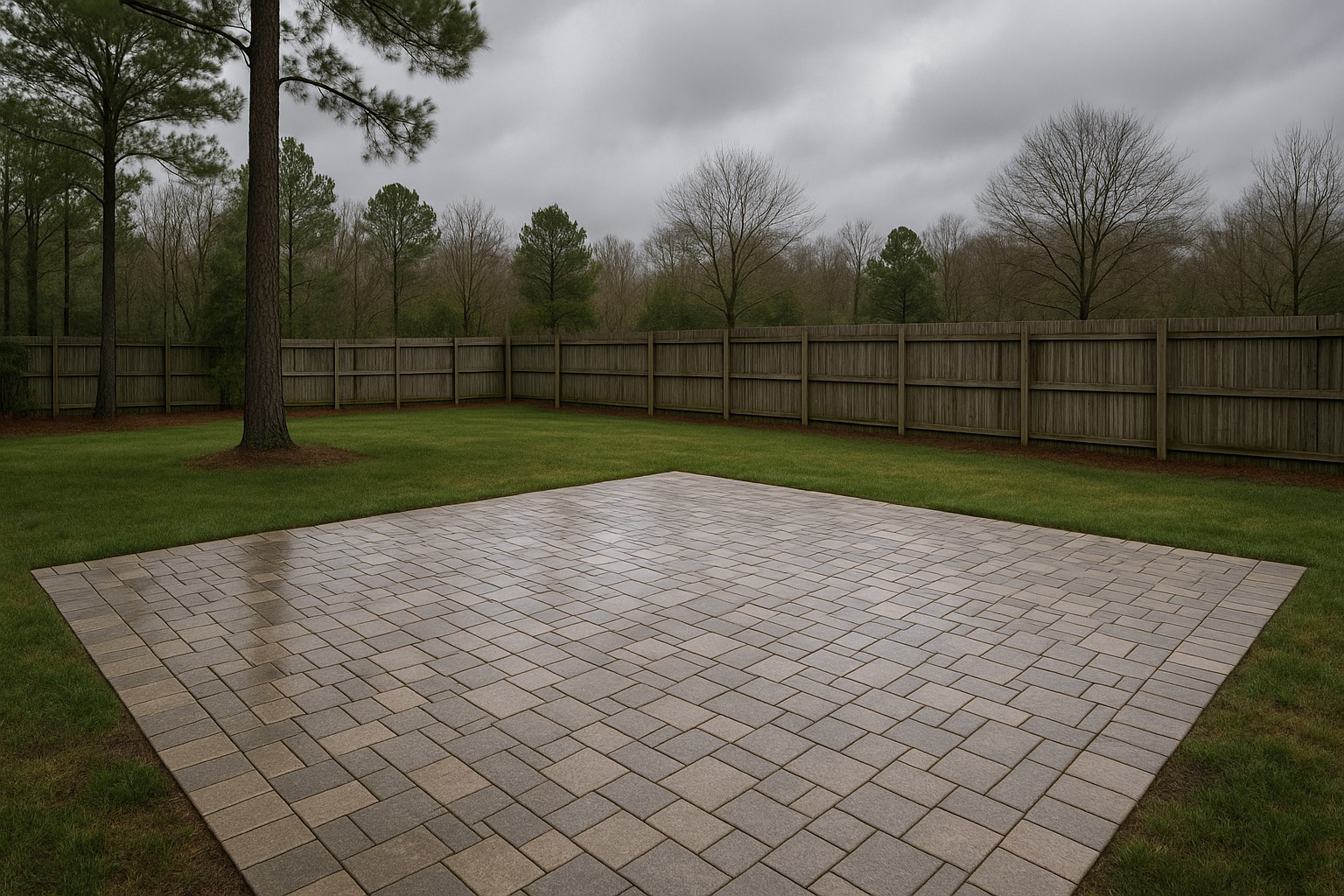
In the fall of 2022, a waterfront property in Sunset Beach, NC was directly hit by the outer bands of Hurricane Ian. The home featured a 1,000-square-foot paver patio overlooking a marsh, exposed to strong winds and tidal flooding. When we revisited the site after the storm, not a single paver had shifted—a true testament to smart engineering and preventive design.
So what made this project storm-resistant?
First, the base layer was constructed with 8 inches of compacted crushed stone and a geotextile fabric underneath to prevent soil migration. This combination created a stable, well-draining foundation that allowed water to pass through without undermining the surface. Second, the pavers were set with polymeric sand joints, which harden upon activation, locking each unit in place while still allowing micro-drainage.
Crucially, the surrounding landscape had been graded to divert runoff away from the patio and toward a French drain system. Even as floodwaters rose and receded, the structure maintained its integrity because the foundation wasn’t dependent on soil strength alone—it was reinforced for hydrostatic movement.
Lesson Learned: Proper grading, deep base compaction, and polymeric joint materials are essential defenses against storm-related displacement. Permeable surfaces and layered drainage systems outperform traditional solid concrete slabs in flood-prone zones.
Case Study #2: The Retaining Wall That Failed After Repeated Rainstorms
Not every story ends on a high note. In 2021, a homeowner in Leland, NC reached out after their retaining wall collapsed following weeks of heavy rain. The wall, about four feet high, had been installed just three years earlier by a different contractor. On inspection, the failure was not due to poor materials—it was due to a lack of internal drainage and reinforcement.
The wall had been built without perforated drainpipes or weep holes, causing water pressure to build behind the structure. Over time, hydrostatic pressure increased with each storm until the base footing shifted and the wall gave way. Additionally, no geogrid reinforcement was used, meaning the soil behind the wall was pushing directly against the block face without any tension support.
When we rebuilt the wall, we installed a gravel backfill system with perforated drainage pipes running the full length of the base, protected by landscape fabric to prevent clogging. The new wall also included two layers of geogrid reinforcement, tying the block face into the soil behind it for added stability.
Lesson Learned: The unseen components behind a retaining wall matter more than the blocks themselves. Always include drainage gravel, geogrid, and weep holes to relieve pressure and extend the wall’s lifespan.
Case Study #3: The Driveway That Cracked—and the One That Didn’t
Concrete driveways are especially vulnerable to weather extremes. One property in Calabash, NC, built in 2019, had a concrete driveway that developed deep cracks after multiple freeze-thaw cycles and heavy rainfall. The culprit? Insufficient control joints and a poorly compacted sub-base.
Concrete naturally expands and contracts with temperature changes. Without properly spaced expansion joints, the material relieves pressure by cracking at random points. In addition, a sub-base composed of mixed clay and sand caused differential settling when saturated, leaving parts of the driveway uneven and prone to water pooling.
In contrast, a similar-sized driveway we constructed just a few miles away—this one using interlocking concrete pavers—emerged from the same weather cycles without damage. The flexible nature of paver systems allows for micro-movement without cracking, and the installation’s permeable base prevented water buildup under the surface.
Lesson Learned: Concrete slabs require control joints every 8–12 feet and a well-compacted granular base. For long-term performance in storm-prone areas, pavers or permeable systems are superior alternatives to solid concrete surfaces.
Case Study #4: The Outdoor Kitchen That Withstood Wind and Water
Outdoor kitchens are a growing trend, but they can be vulnerable if not built with weather in mind. In 2023, a coastal property in North Myrtle Beach faced a direct hit from 70-mph winds and driving rain. The outdoor kitchen, completed earlier that year, remained fully intact—thanks to anchoring and material selection.
The structure was built with concrete block framing, not wood, and secured to a reinforced slab using steel rebar. The countertop was constructed from granite slabs sealed with epoxy grout, providing a watertight barrier. Appliances were stainless steel and rated for outdoor marine environments, meaning they resisted corrosion from salt and moisture exposure.
Equally important was the design layout—the kitchen was positioned behind a low retaining wall that acted as a windbreak, while surrounding plantings absorbed runoff. After the storm, the area required only minor cleaning and resealing, with zero structural damage.
Lesson Learned: For exposed coastal projects, always use non-porous, weather-rated materials and secure outdoor installations with mechanical anchors. Proper site positioning can greatly reduce wind and water exposure.
Key Takeaways: What Works—and What Doesn’t
When analyzing hardscape storm performance, patterns emerge across every project: the winners combine proper drainage, strong foundations, and intelligent design integration, while the failures usually involve shortcuts or missing layers beneath the surface.
Do’s:
-
Use permeable bases and drainage fabrics under all hardscapes.
-
Compact sub-bases in multiple layers to reduce settling.
-
Seal stone and concrete surfaces regularly to prevent water absorption.
-
Include weep holes, perforated drains, and gravel backfill behind retaining walls.
-
Choose polymeric joint sand to prevent washouts during storms.
Don’ts:
-
Don’t rely solely on soil strength—always reinforce with gravel and geogrid.
-
Don’t install plantings too close to walls or patios; roots can destabilize edges.
-
Don’t skip regular maintenance; minor cracks and unsealed joints can lead to major failures.
Building for the Future, Not Just the Forecast
Storm resilience isn’t about luck—it’s about preparation and precision. Each of these case studies underscores one central truth: quality construction endures. A storm may expose weaknesses, but it also validates craftsmanship that respects both engineering and nature. By combining smart design with durable materials and proper drainage, homeowners can ensure their hardscapes remain safe, stable, and beautiful no matter what the weather brings.
If you’re considering upgrading your property before the next storm season, explore our Retaining Wall Construction Services and Drainage Upgrades.
At Precision Hardscape Construction, we specialize in storm-resistant patios, retaining walls, and drainage systems that protect your investment and elevate your outdoor space. Our team designs with foresight, builds with integrity, and ensures every detail stands up to real-world conditions.
Call (843) 222-5377 or visit www.PrecisionHardscapeConstruction.com to schedule a consultation today. Let’s build something that doesn’t just look good—but lasts through every storm.