
Building Beauty That Stands Against the Elements
Along the Carolina coastline, homeowners dream of outdoor spaces that mirror the ocean’s beauty—stone patios that overlook the water, winding walkways framed by dunes, and retaining walls that define the landscape. But the same natural forces that make the coast so breathtaking also make it brutal on construction. Wind, salt, humidity, and flooding can weaken even the most beautiful builds if they’re not designed intelligently. A well-executed coastal hardscape design requires more than creativity—it demands engineering precision, material expertise, and foresight.
For properties exposed to coastal weather, traditional landscaping methods often fail. Salt corrodes, moisture seeps, and wind erodes. To ensure long-term resilience, hardscapes must be designed not only for beauty but for durability under extreme environmental conditions. The goal is simple: create outdoor spaces that age gracefully, resist corrosion, and protect the property through every season.
The Fundamentals of Coastal Hardscape Durability
In a coastal climate, the ocean is both friend and foe. Salt spray, sand abrasion, and fluctuating tides create an environment that tests every material. The secret to longevity lies in smart material selection and engineering design that respects nature’s power.
1. Material Selection: Choose Resilience Over Aesthetics Alone
When designing for coastal regions, it’s essential to prioritize non-porous, weather-resistant materials. Dense natural stones such as granite, bluestone, and travertine perform exceptionally well in salt-heavy air. Unlike softer materials like limestone or sandstone, they resist pitting and surface degradation caused by salt crystallization.
For concrete applications, use marine-grade or fiber-reinforced mixes designed to handle constant exposure to moisture. If using pavers, opt for interlocking concrete pavers with high PSI ratings (8,000+ PSI) to ensure compression strength and resistance to cracking.
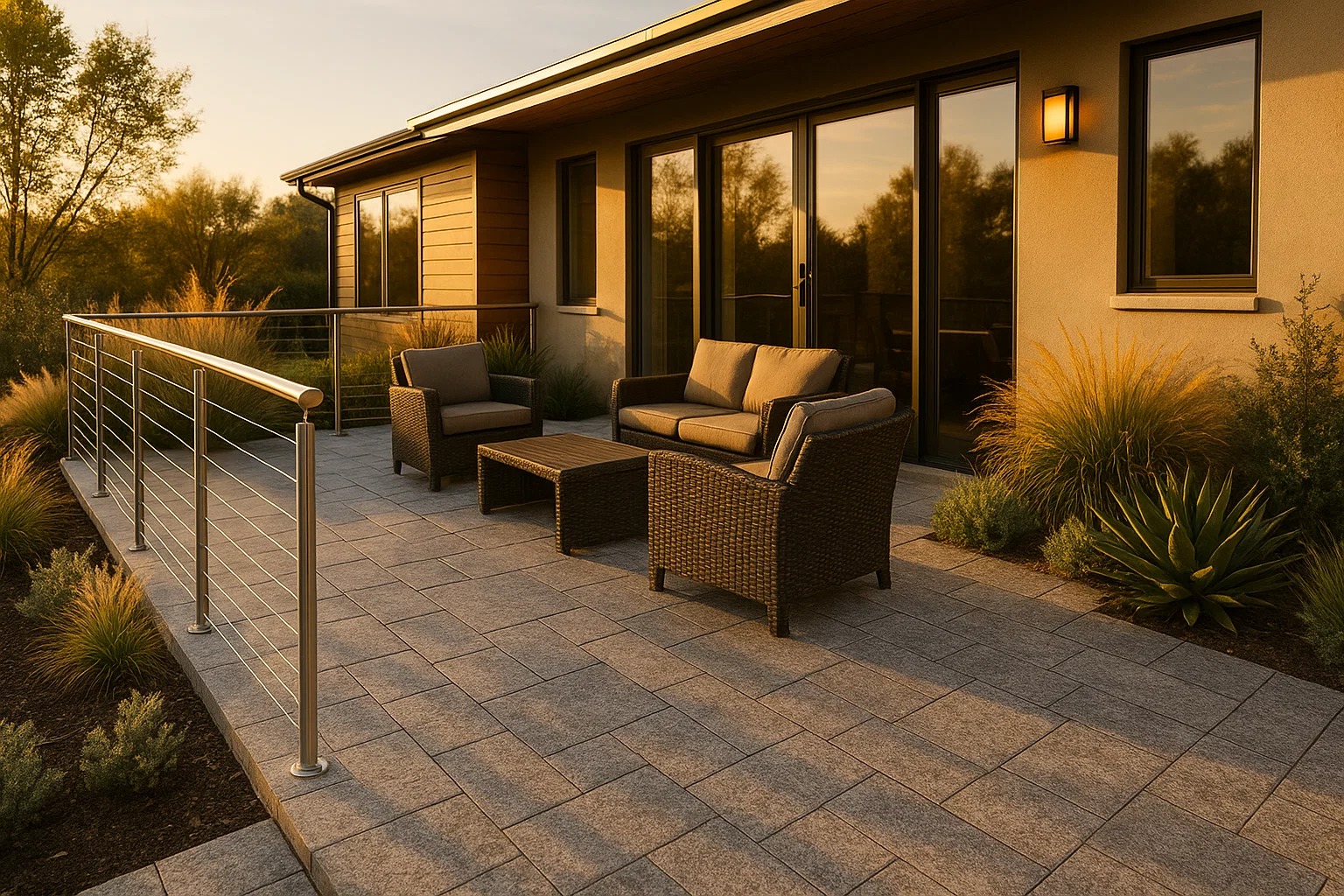
Metal elements, such as railing supports or pergola anchors, should always be fabricated from 316 marine-grade stainless steel or powder-coated aluminum, which resists corrosion far better than standard galvanized steel. Avoid untreated metals at all costs—they can corrode within months when exposed to salt air.
2. Salt and Moisture Management: The Hidden Battle
Coastal air is saturated with salt particles that settle on surfaces and attract moisture. Over time, this leads to efflorescence, corrosion, and surface spalling. To combat this, every coastal hardscape should be sealed with a high-performance, penetrating sealer specifically rated for salt and moisture resistance.
Penetrating sealers absorb into the stone or concrete pores and form a molecular barrier without creating a glossy film. This allows the material to “breathe,” releasing moisture vapor while blocking salt intrusion. Reapply every two to three years, or annually in areas with direct ocean exposure.
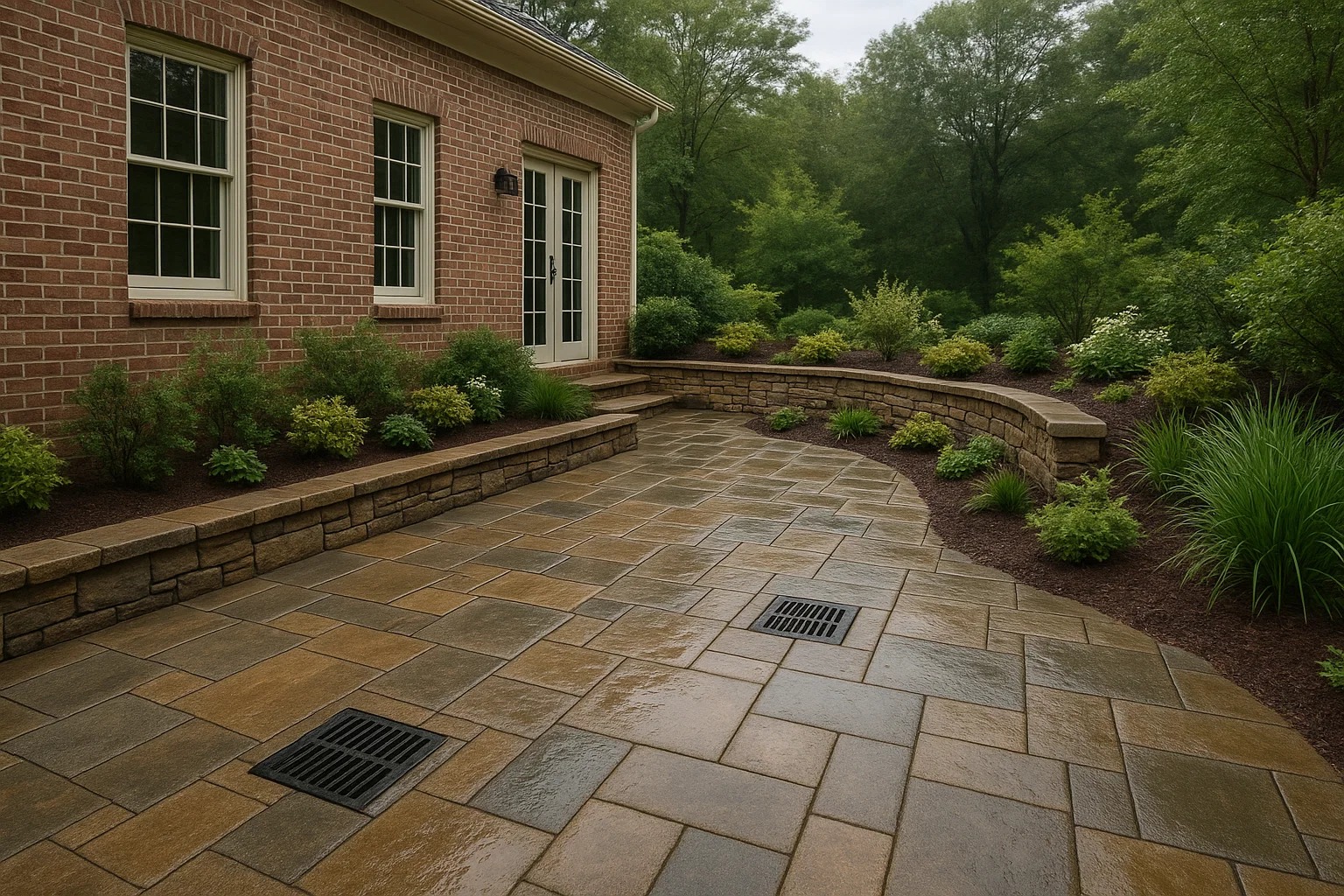
Drainage is another critical consideration. Incorporating French drains, gravel sub-bases, and channel drains ensures that water doesn’t pool under surfaces, reducing both hydrostatic pressure and salt concentration buildup beneath the structure.
Engineering Design That Defies Wind and Water
Aesthetic layouts mean little without structural integrity. Coastal properties face the dual challenge of high winds and flood surges. The key to coastal hardscape design that lasts is integrating wind resistance and water control from the ground up.
1. Foundation Depth and Reinforcement
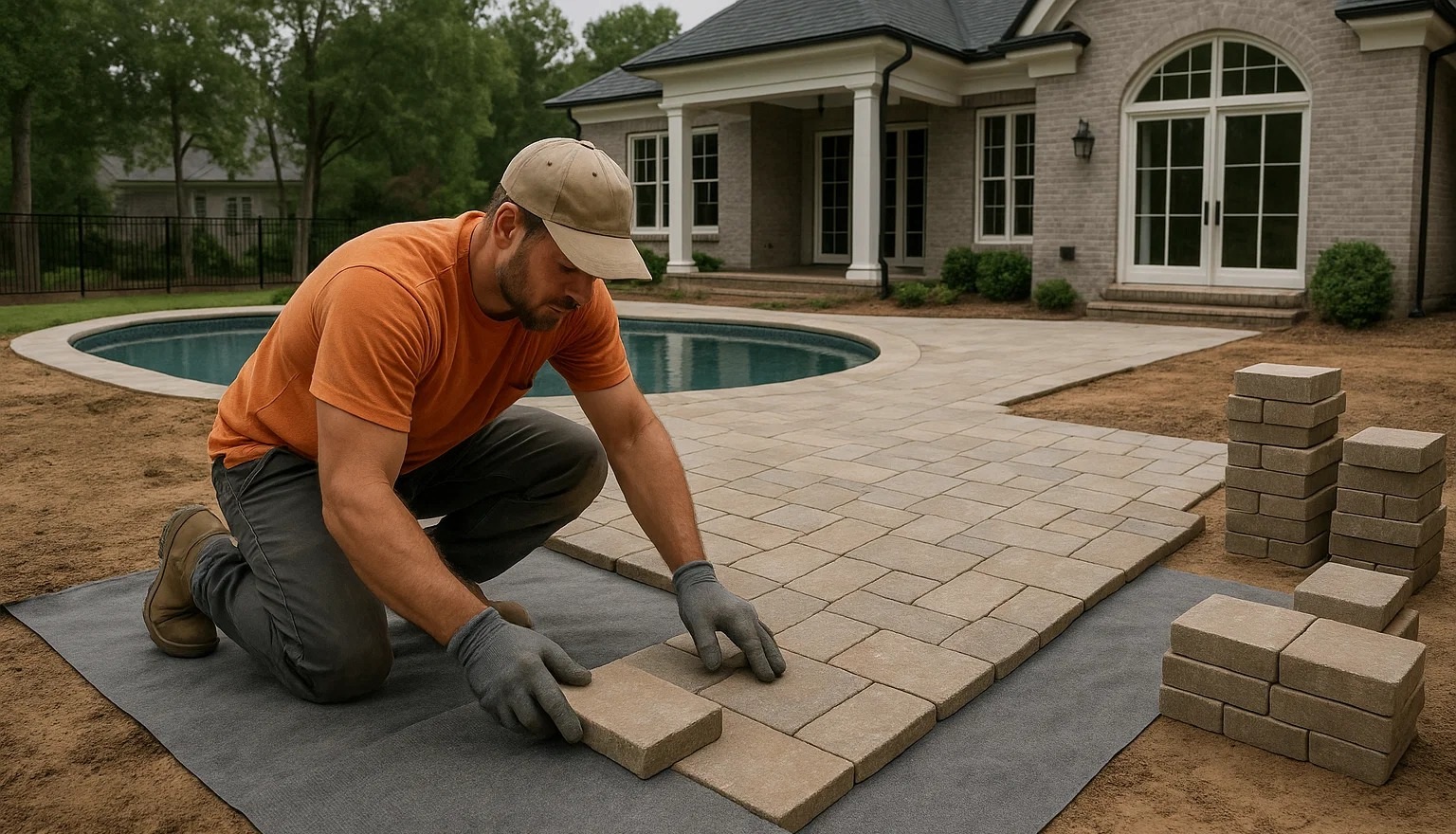
In areas prone to erosion or tidal flooding, hardscapes must be anchored into compacted, stabilized subgrades. Foundations should include geotextile fabrics between soil and base materials to prevent shifting or undermining from sand migration. For retaining walls or raised patios, use reinforced concrete footings with rebar tied into the structure to prevent uplift during storm surges.
Where high winds are common, lightweight or hollow elements should be anchored to reinforced slabs or footers. Even furniture pads or modular kitchens should include mechanical fasteners or embedded anchors to resist uplift forces.
2. Designing for Drainage and Flood Flow
Floodwater is inevitable in coastal regions—what matters is how effectively it moves through and around your property. Design hardscapes to work with water, not against it. Slight slopes (1–2%) direct water toward controlled exit points, while permeable pavers allow infiltration to reduce surface runoff.
Retaining walls should include weep holes and drainage gravel to relieve pressure during heavy rainfall. Where possible, integrate bioswales or rain gardens to absorb overflow naturally and return water safely to the soil.
3. Wind Barriers and Shelter Design
Wind erosion doesn’t just affect beaches—it can also degrade patios, loosen joint sand, and shift small stones. Plant native vegetation, dune grasses, or coastal shrubs as living windbreaks around exposed hardscapes. Strategic placement of low retaining walls or decorative stone planters can also disrupt wind patterns and protect more delicate features.
For outdoor kitchens or pergolas, orient structures parallel to prevailing winds and use vented materials that reduce drag. The more aerodynamic the design, the lower the risk of structural stress during hurricanes or tropical storms.
Maintenance: The Lifeline of Coastal Hardscapes
Even the most expertly built hardscape requires ongoing maintenance in a coastal environment. The combination of salt, sand, and UV radiation accelerates wear, making preventive care critical to long-term performance.
1. Cleaning and Rinsing: Regularly rinse stone and metal surfaces with fresh water to remove salt residue. Use low-pressure settings to avoid driving salt deeper into pores. For heavily soiled areas, mild neutral pH cleaners are ideal—avoid acidic solutions that can etch stone or weaken joint sand.
2. Sealing and Re-Sealing: Reapply sealers on a regular schedule, and inspect for areas where water no longer beads on the surface. Sealing not only prevents salt penetration but also guards against UV damage and color fading.
3. Joint Integrity: Check polymeric sand joints annually and refill areas where wind or rain has displaced material. Joint stability is essential in preventing paver movement and inhibiting weed or moss growth.
4. Metal Corrosion Checks: Inspect all metal fixtures, bolts, and connectors twice a year. Surface corrosion should be removed immediately with a mild abrasive pad and rust inhibitor. Reapply protective coatings if necessary.
5. Drainage Maintenance: Keep drains, grates, and weep holes clear of debris. Blocked drains cause water to back up beneath structures—one of the most common causes of long-term foundation damage in coastal regions.
Building for Tomorrow, Not Just for Today
Coastal properties demand a balance between form and function. The most successful designs don’t fight the natural environment—they adapt to it. By using marine-grade materials, implementing intelligent drainage and reinforcement systems, and maintaining a proactive care routine, homeowners can enjoy outdoor spaces that stay strong against salt, wind, and flood for decades.
If you’re considering upgrading your property before the next storm season, explore our Retaining Wall Construction Services and Drainage Upgrades.
At Precision Hardscape Construction, we understand the science and craftsmanship behind coastal hardscape design. From material selection to storm-proof installation, our team specializes in building outdoor environments that thrive in the Carolina climate. Whether you’re designing a new waterfront patio, a retaining wall built to withstand tides, or a resilient walkway for your coastal home, we deliver beauty that’s engineered to endure.
Call (843) 222-5377 or visit www.PrecisionHardscapeConstruction.com to schedule your consultation. Let’s build a hardscape that’s as strong and timeless as the shore itself.