
A well-designed outdoor space isn’t just an extension of your home—it’s a reflection of it. Whether you’re sipping coffee on a quiet morning or hosting a backyard gathering, your patio plays a central role in how your outdoor space is experienced. It needs to feel cohesive with your home’s structure and style, not like an afterthought. That’s where thoughtful hardscape design comes in.
Plain concrete patios offer flexibility, strength, and timeless appeal—especially when their shape and layout are intentionally chosen to match the design and lines of your home. The right layout can elevate a basic slab into a stunning, functional outdoor living space that enhances both aesthetics and property value. This article dives deep into the best shapes and layout strategies for plain concrete patios based on your home’s architecture—from modern and minimalist to classic Southern charm.
Choosing the Right Patio Shape for Your Home’s Style
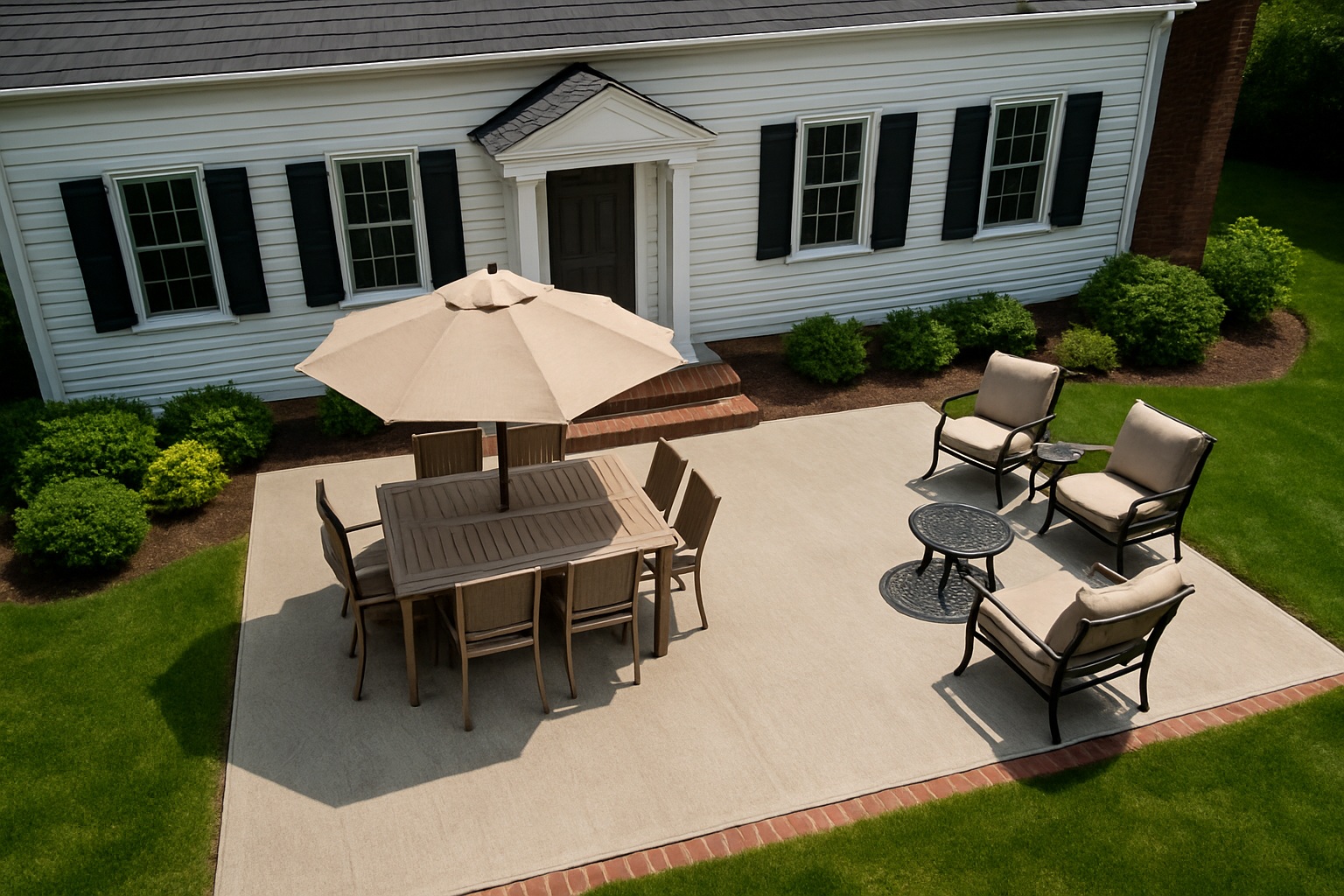
1. Rectangular and Square Patios: Clean Lines for Traditional & Colonial Homes
Straight-edged patios are a perfect fit for homes with symmetrical facades, gable roofs, or boxy architectural lines. Colonial, ranch, and many two-story traditional homes benefit from the formal simplicity of a rectangular or square patio that reflects the shape of the structure.
This layout is excellent for creating zones—such as dining areas, grill stations, or fire pits—within a defined grid. It also pairs well with pergolas or patio covers that share the same lines. Broom-finished concrete in this shape creates a sleek, practical space with clear edges that frame the yard.
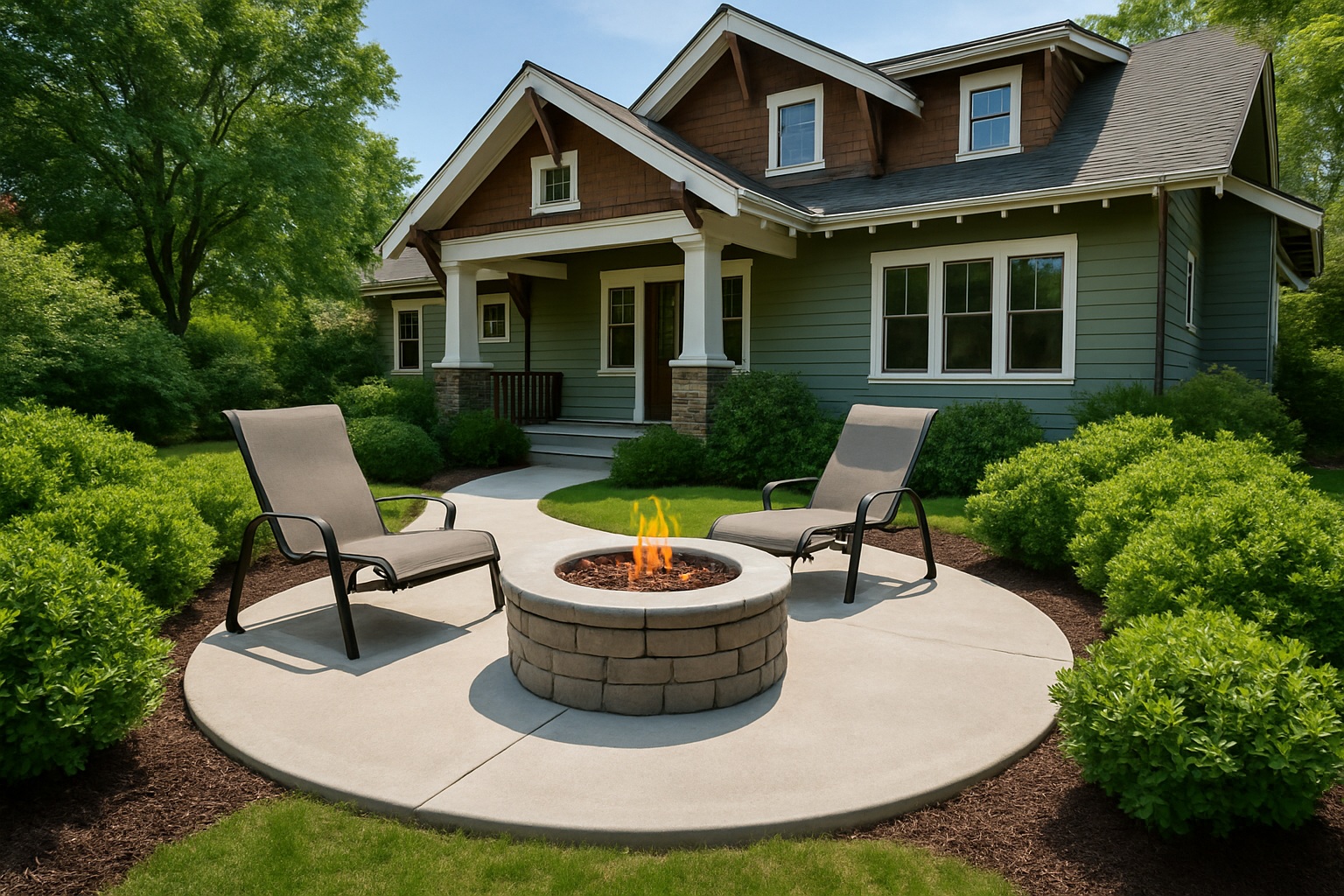
2. Curved or Rounded Patios: Organic Flow for Craftsman & Cottage Homes
If your home has arched windows, exposed wood elements, or a softer silhouette, curved patios will blend more naturally. A semi-circular or flowing kidney-shaped layout complements rustic or nature-inspired homes by echoing organic forms found in the landscape.
These patios soften the look of the hardscape and feel less rigid. They’re also ideal for homes with lush gardens or sloped backyards, as the curved lines can follow the topography and direct foot traffic intuitively.
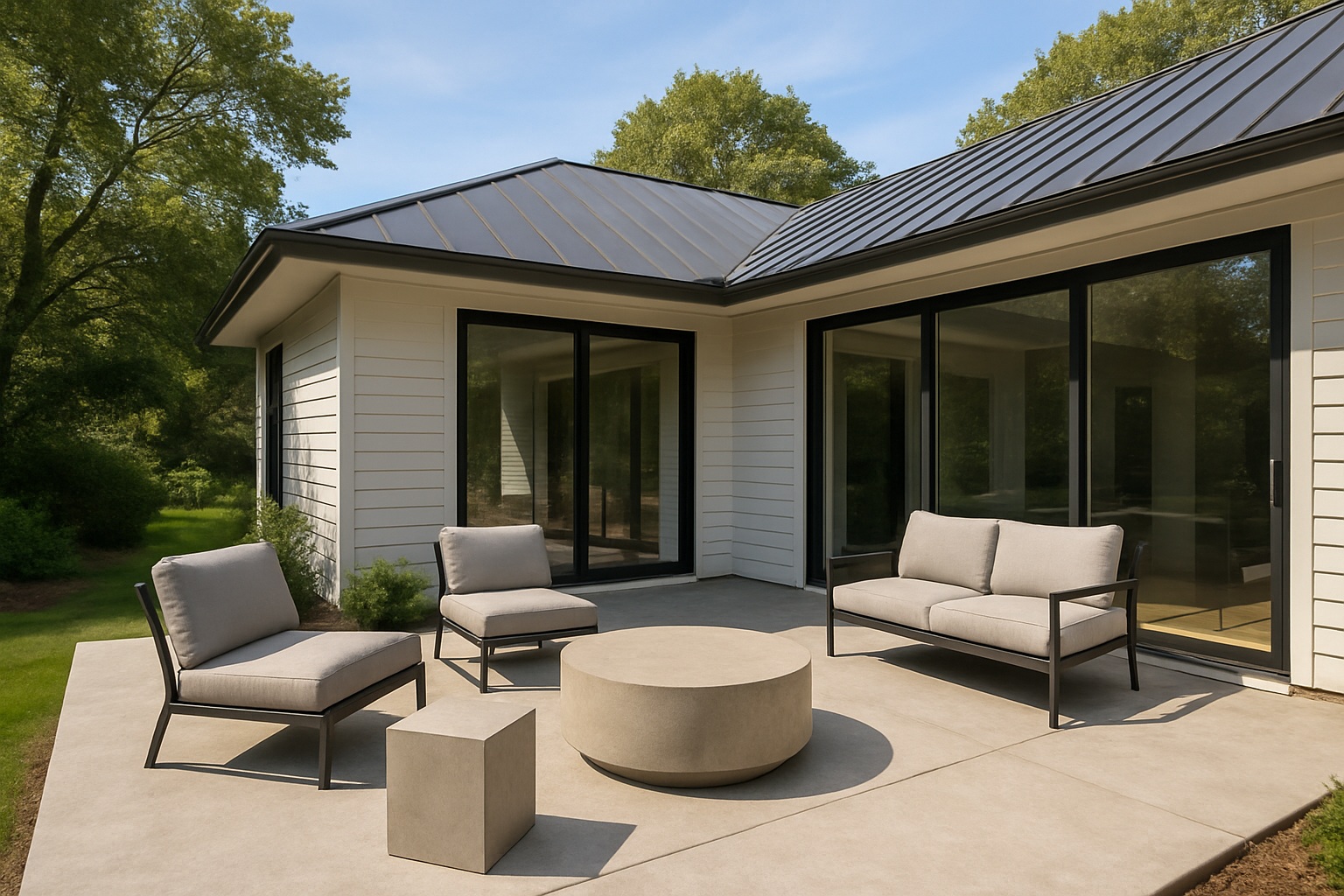
3. L-Shaped and Wraparound Patios: Expansive Living for Modern or Coastal Homes
Open-concept homes with large sliding doors, panoramic windows, or corner entrances benefit from L-shaped concrete patios that hug the structure. This layout invites the eye—and the feet—to move from inside to outside with a sense of continuity.
Wraparound patios can also provide separate activity zones (like a lounge space and an outdoor kitchen) while maintaining a cohesive look. A broom-finish surface adds texture and slip resistance, especially important for coastal homes that may experience morning dew or salt spray.
Strategic Placement and Sizing for Functionality
Think in zones. Regardless of shape, the most successful patio designs align with how you want to use the space. A typical 10×10 slab might be fine for two chairs, but if you’re adding a dining set, grill, or sectional sofa, you’ll need at least 12×16 feet or more. Keep at least 3 feet of clearance around furniture for movement and safety.
Orientation matters. In hot climates, place the patio on the east or north side of the home for natural shade during peak afternoon heat. In colder regions, a south-facing patio maximizes sun exposure. Also consider prevailing winds, views, and privacy from neighboring lots.
Blend hardscape with the landscape. Create smooth transitions between patio and lawn using low-maintenance plantings, stone edging, or a gravel buffer. This not only looks beautiful but also prevents erosion and splash stains on the concrete surface.
Don’t forget lighting and drainage. Proper slope is essential to prevent water pooling. A gentle slope of 1/8 inch per foot away from the home ensures drainage. Incorporate pathway lighting, recessed ground lights, or step lights early in the layout to maintain clean lines without surface clutter.
Finishing Touches for Architectural Harmony
Match your patio’s edge details to your home’s trim. For example, if your home features square wood trim or black metal railings, choose a straight, sharp-edged concrete finish. For brick homes, consider softened corners or curved edges to match the traditional character.
Use borders to anchor the patio visually. A plain concrete surface can be framed with brick pavers, stone edging, or saw-cut control joints that mirror the house’s roofline or window shapes. This creates cohesion without requiring stamped or colored finishes.
Outdoor furniture should echo architectural details. Mid-century modern homes might suit low-profile seating with metal frames, while Southern or Craftsman homes benefit from classic rocking chairs, wood benches, or wrought-iron tables. The patio shape should accommodate these styles comfortably.
Shape Your Patio to Match Your Home’s Character
A well-designed patio is more than a place to sit—it’s an architectural continuation of your home. When the shape, size, and layout align with your house’s style, the result is a space that feels natural, functional, and elegant. Even with basic poured concrete, the right design choices can turn your patio into the most inviting part of your property.
At Precision Hardscape & Construction, we help homeowners design and pour concrete patios that aren’t just durable—they’re intentional. We work with your home’s design, yard layout, and lifestyle to build a patio that feels like it was always meant to be there. Call (843) 222-5377 or visit www.precisionhardscapeconstruction.com to schedule your personalized patio consultation.