
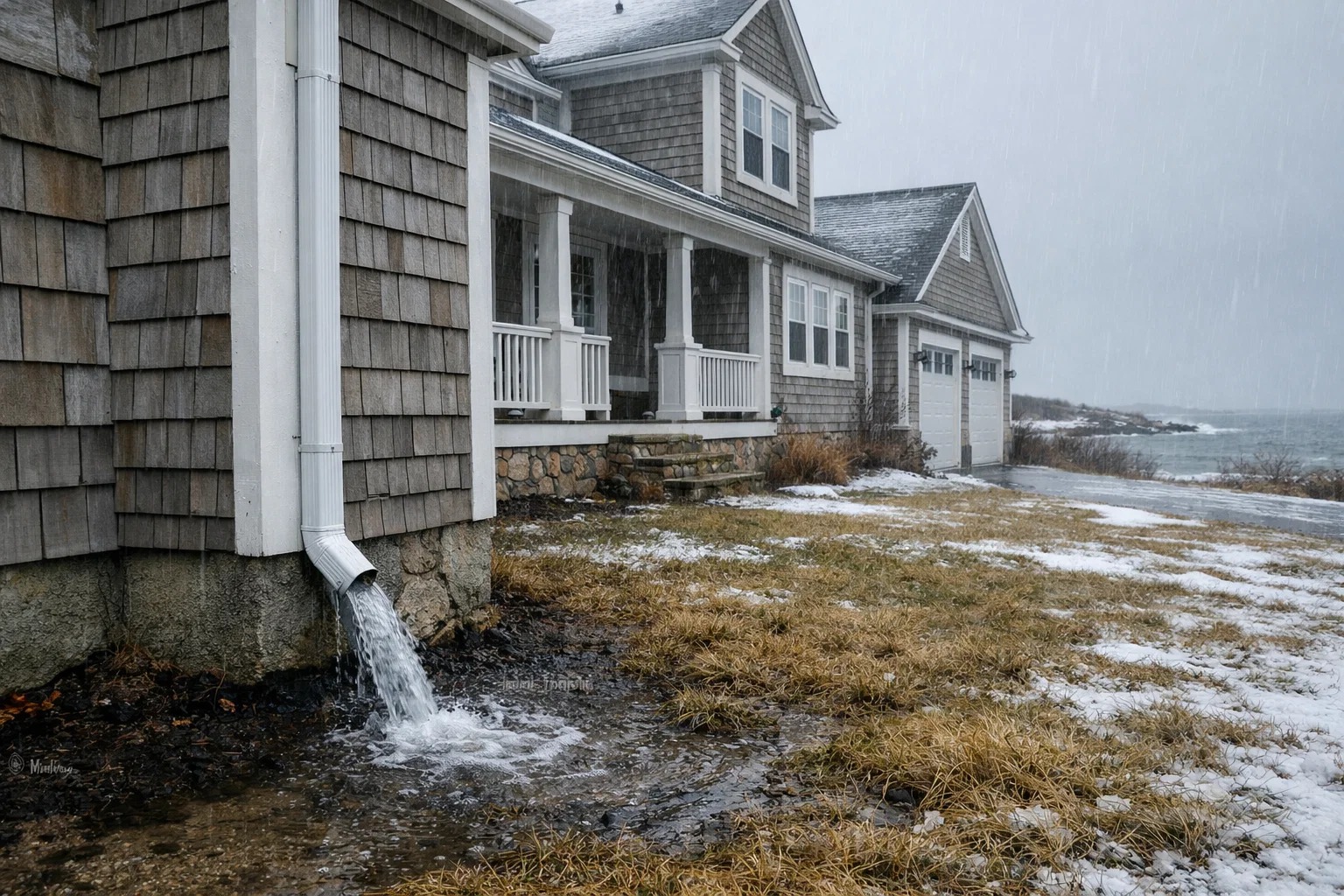
Many winter drainage problems don’t start in the yard — they start at the roofline.
Homeowners often assume that if water is pooling near the house or flowing across the lawn, the issue must be underground. In reality, poorly directed downspouts are one of the most common causes of winter drainage problems, especially for coastal homes in North and South Carolina.
In areas like Ash, Calabash, Carolina Shores, Sunset Beach, Little River, and North Myrtle Beach, winter rainfall combined with saturated soil makes these problems far more visible.
Why Winter Makes Downspout Problems Obvious
During warmer months, soil absorbs and evaporates water more quickly. In winter, that margin disappears. When downspouts release large volumes of water too close to the home, the ground becomes overwhelmed.
Winter conditions reveal this clearly:
-
Water flows across the yard instead of soaking in
-
Soil near the foundation stays damp for days
-
Mulch washes away or shifts
-
Low spots form where runoff repeatedly hits the ground
What seems like a minor detail can quietly create larger drainage failures over time.
Common Downspout-Related Drainage Issues
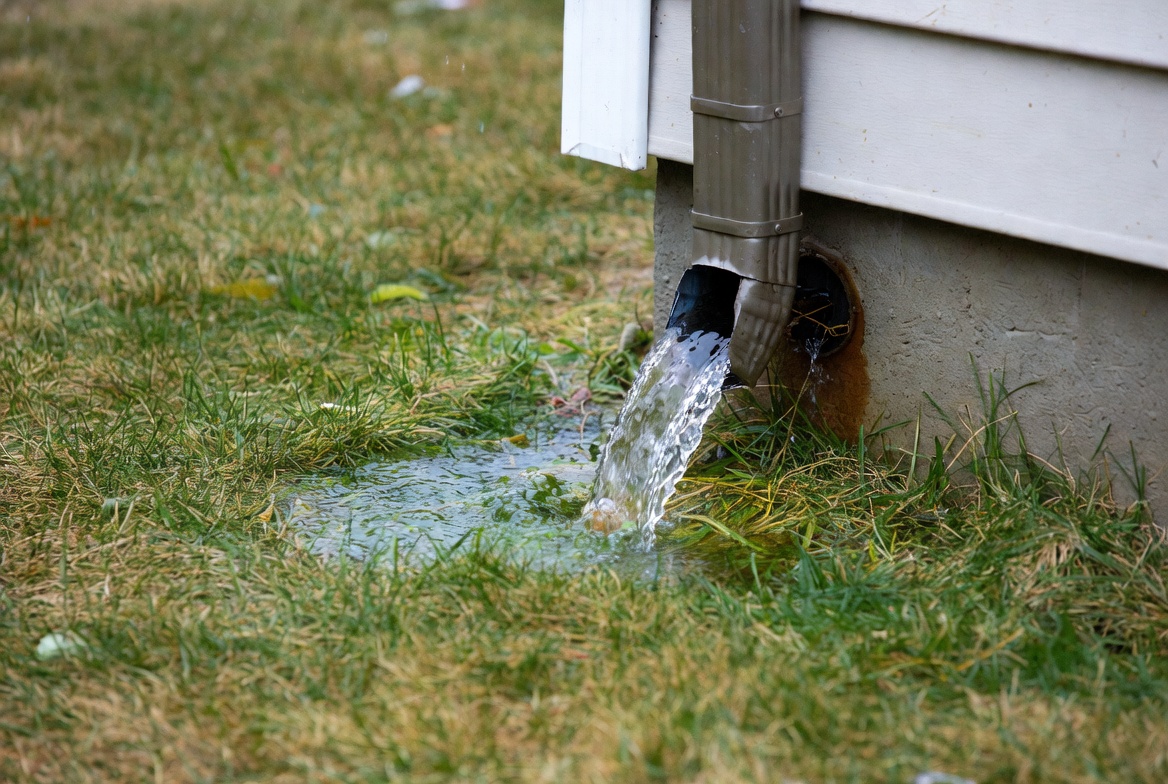
Discharge Too Close to the Foundation
When downspouts end near the base of the home, water has nowhere to go. Over time, this can contribute to foundation moisture, erosion, and crawlspace concerns.
Concentrated Runoff Paths
Repeated discharge in the same location creates channels in the yard, directing water toward low points or hardscape features.
Poor Integration With Yard Drainage
Even when a yard has a drainage system, downspouts that aren’t properly integrated can overwhelm it during heavy winter rain.
Why Simple Extensions Aren’t Always Enough
Plastic extensions or temporary fixes may help redirect water short-term, but they often fail to solve the underlying problem. In coastal environments, water must be managed in a way that accounts for soil conditions, slope, and available discharge areas.
Effective solutions often involve:
-
Redirecting downspout water away from the home
-
Integrating roof runoff into existing drainage systems
-
Adjusting grading to prevent pooling
-
Controlling water flow before it reaches problem areas
The goal is consistency — ensuring water behaves the same way during every rainfall, not just light storms.
Winter Is the Right Time to Address Roof Runoff
Winter rainfall patterns make it easier to see exactly where roof water goes once it hits the ground. This allows for accurate planning before spring rains increase volume and demand for contractors rises.
Addressing these issues early helps prevent repeat problems year after year.
A Coordinated Drainage Approach Protects the Whole Property
Roof runoff, surface water, and subsurface moisture all interact. Treating them as separate issues often leads to incomplete results. A coordinated drainage approach considers how water enters the yard, moves across it, and exits safely.
Precision Hardscape & Construction evaluates downspout and yard drainage issues for individual homes throughout Ash, Calabash, Carolina Shores, Sunset Beach, Little River, and North Myrtle Beach. Homeowners who suspect roof runoff is contributing to winter drainage problems can contact Precision Hardscape & Construction at (843) 222-5377 to schedule a professional evaluation and discuss long-term drainage solutions designed for coastal conditions.