
The Foundation of Lasting Outdoor Beauty
A thoughtfully designed landscape and hardscape does more than beautify your property—it stabilizes it. From patios and walkways to retaining walls and outdoor living areas, every element interacts with the natural terrain and water flow of your yard. As the fall season approaches and heavy rains become more frequent, protecting your property from erosion is not just a matter of appearance—it’s a matter of preserving the integrity and safety of your investment.
When stormwater runs unchecked across bare soil, it carries sediment away, destabilizes slopes, and undermines even the most solidly built hardscapes. This is why erosion control around hardscapes is essential for every homeowner, especially in the Carolinas where coastal rains and saturated soil can quickly cause damage. With proper planning, drainage, and reinforcement, you can create a landscape that not only looks stunning year-round but also resists the powerful forces of nature.
Understanding the Threat: How Fall Rains Affect Your Hardscape
As temperatures drop and the fall rains intensify, your outdoor areas face unique challenges. Excess water seeks the path of least resistance, and without proper erosion control strategies, it often finds its way beneath patios, walkways, and retaining walls. The result is soil washouts, shifting pavers, collapsed edges, and undermined foundations.
Water runoff from roofs, driveways, and slopes can concentrate in specific areas, increasing velocity and force. When it meets unprotected soil, it carves small channels that grow with each storm. These micro-erosions may seem harmless at first but quickly compromise the stability of adjacent hardscapes. The combination of poor grading, exposed soil, and insufficient drainage can transform a once-pristine outdoor area into a maintenance nightmare.
To combat these effects, homeowners must adopt an integrated approach that combines natural solutions—like planting and mulching—with engineered reinforcements such as retaining walls, geotextiles, and terracing.
Natural Erosion Control Solutions: Mulch, Planting & Ground Covers
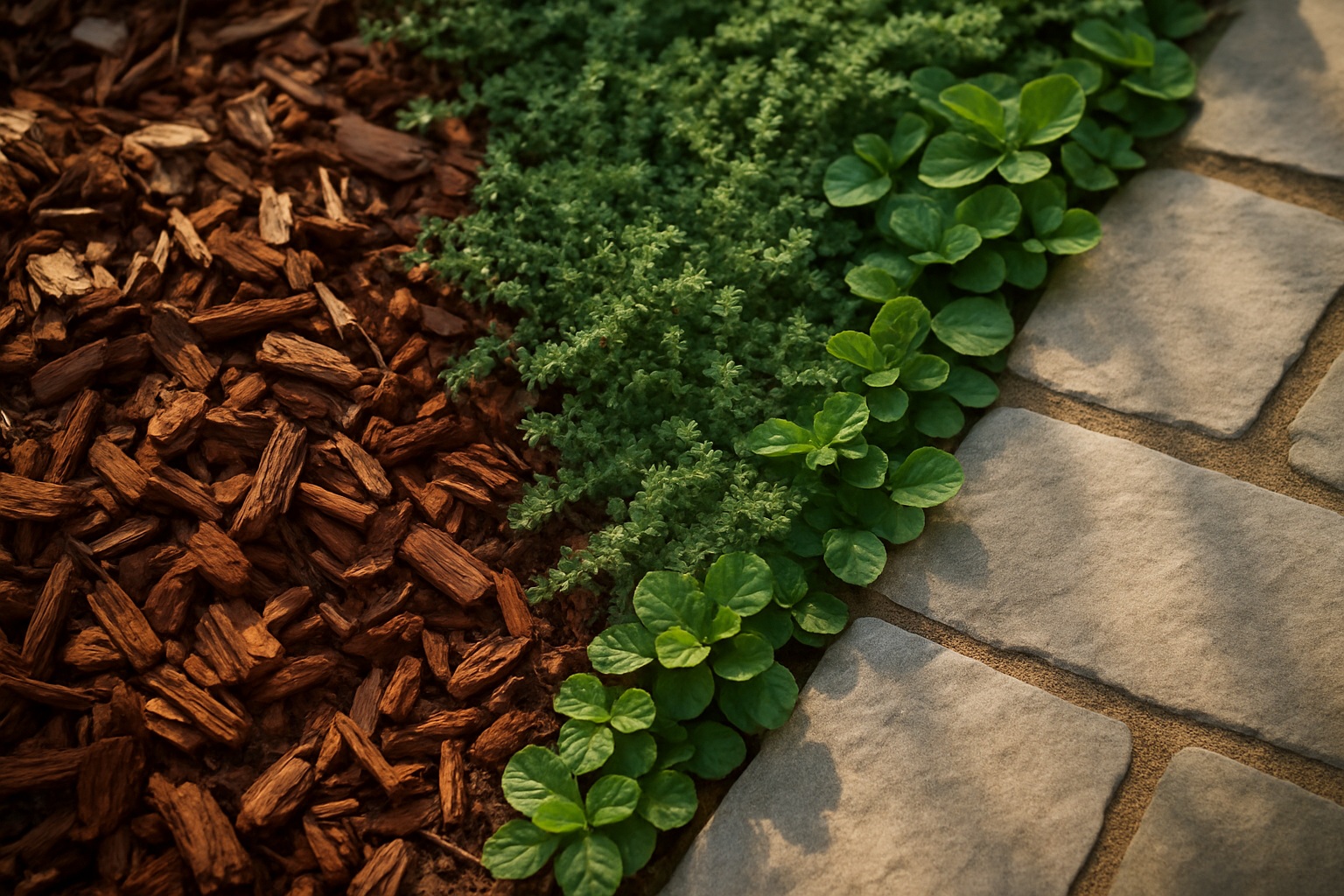
One of the most effective and aesthetically pleasing ways to fight erosion is through strategic planting. Deep-rooted vegetation stabilizes the soil by creating a network of roots that bind the earth together. Choose native grasses, shrubs, and ground covers that thrive in local soil conditions and can withstand periodic flooding or drought. Plants such as creeping juniper, liriope, and dwarf mondo grass are excellent for slopes and edges near patios or walkways.
Mulching plays an equally vital role. Organic mulches, such as shredded bark or pine straw, protect the soil surface from direct rainfall impact and reduce evaporation. As they decompose, they enrich the soil, improving water absorption and structure. Apply mulch in a 2–3-inch layer around plants and across exposed soil, ensuring it doesn’t pile directly against hardscape edges or structures.
For steeper areas, ground covers provide continuous protection. Plants like vinca minor, creeping phlox, or asiatic jasmine can spread quickly, forming dense mats that prevent soil displacement. When combined with landscape fabric beneath the topsoil, they create a long-lasting, low-maintenance erosion barrier.
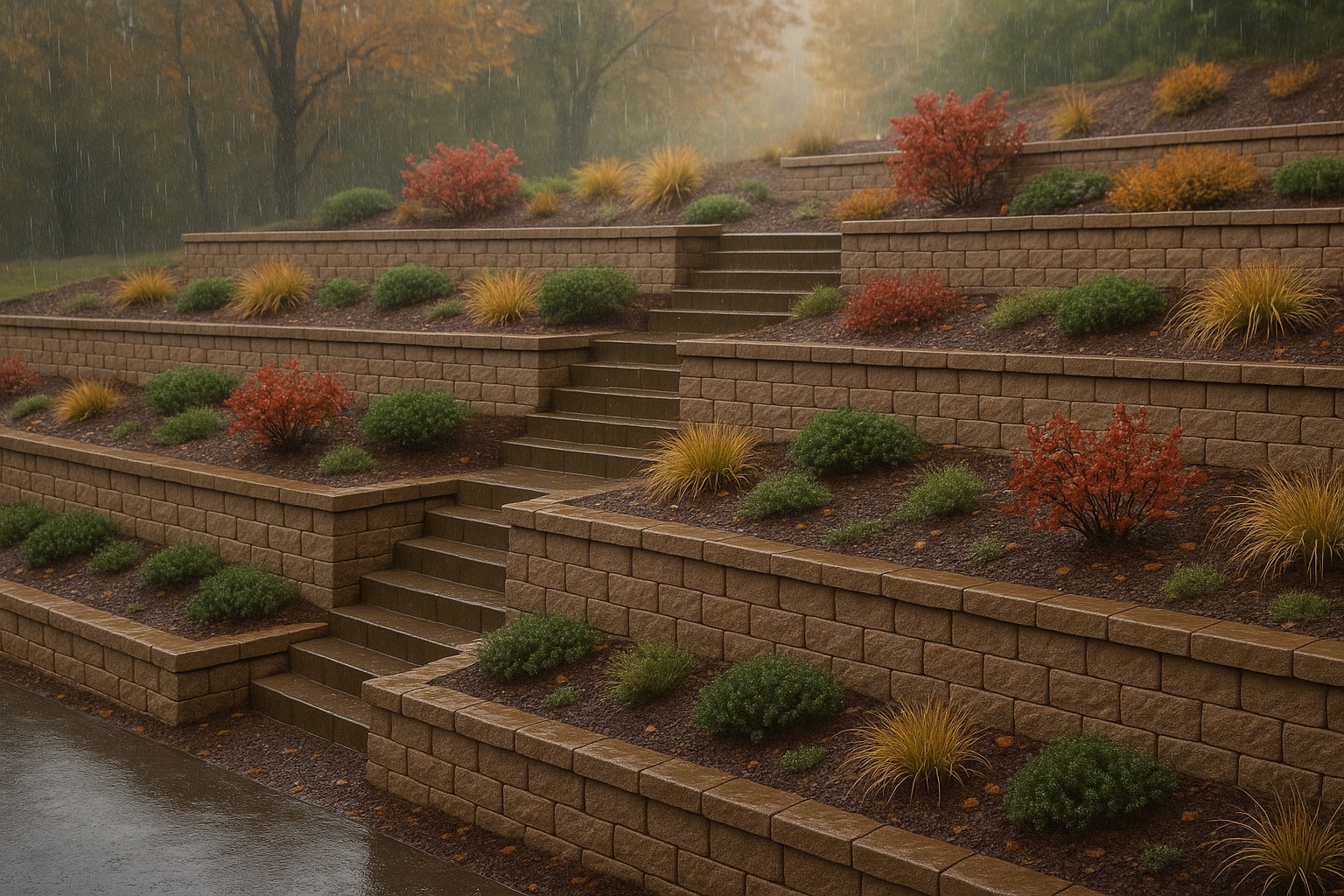
In larger landscapes, terracing can help slow down water flow. By dividing a slope into smaller, level sections supported by low retaining walls, terraces reduce runoff speed and encourage water infiltration. Each level acts as a mini catchment area, allowing moisture to soak in rather than wash away.
Engineered Reinforcements: Retaining Walls, Geotextiles & Drainage Systems
For properties with significant elevation changes or poor drainage, engineered erosion control systems are essential. Retaining walls not only create visual depth and definition but also hold soil in place on steep slopes. Properly designed walls should include drainage gravel, perforated pipes, and weep holes to prevent hydrostatic pressure—the buildup of water behind the wall that can lead to cracking or collapse.
Another powerful tool in erosion prevention is the use of geotextiles—permeable fabrics installed between soil layers to improve stability. They act as separators, preventing soil mixing and maintaining the integrity of your hardscape base. When placed beneath patios or walkways, geotextiles allow water to pass through while keeping the soil compact and intact.
Drainage control is equally crucial. Integrate French drains, channel drains, or catch basins to guide water away from vulnerable areas. For patio edges, install gravel-filled trenches beneath the border pavers to absorb excess moisture. These systems ensure that rainfall flows safely toward designated outlets instead of eroding the soil beneath your hardscape.
After major storms, inspect the area for early signs of erosion—exposed roots, gaps under pavers, or displaced mulch. Early intervention can prevent larger failures. Reapply gravel where needed, add fresh topsoil, and reseed or replant damaged areas promptly. For severe washouts, compact new soil in layers and reinforce it with landscape fabric before replacing vegetation or mulch.
Post-Storm Soil Stabilization and Maintenance
After heavy rains, the key to long-term stability is rapid recovery and reinforcement. Begin by evaluating drainage patterns to identify where water naturally collects or overflows. If certain areas repeatedly flood, consider reshaping the terrain or extending your drainage network.
Use erosion control blankets or coir mats on newly repaired slopes or bare ground. These biodegradable materials hold soil in place while allowing new vegetation to establish roots. For patios and retaining walls, inspect the joints and seams for movement—if polymeric sand has been washed out, replace it to prevent further erosion under the surface.
Another highly effective post-storm measure is applying stabilizing agents or soil binders. These eco-friendly products strengthen soil structure without harming plants. In areas with heavy runoff, combine them with riprap (large decorative stones) to create natural energy dissipation zones that reduce water velocity.
Seasonal maintenance ensures your erosion control system performs year after year. Clean drains, replenish mulch, prune plants to encourage healthy root systems, and check for clogged weep holes behind retaining walls. Preventive care now saves thousands of dollars in repairs later—and protects your property’s long-term value.
Protecting Your Hardscape Through Every Season
An effective erosion control plan is not a one-time fix—it’s an ongoing partnership between nature and design. By combining strategic planting, engineered drainage, and professional hardscape construction, you can ensure your outdoor spaces remain beautiful, functional, and secure. Every yard is different, and what works for one property may not work for another, which is why consulting with professionals who understand local soil and weather patterns makes all the difference.
At Precision Hardscape Construction, we specialize in designing and installing retaining walls, drainage systems, terraces, and erosion control solutions that stand up to the harshest Carolina weather. From preventive landscaping to storm recovery, our team builds with precision, durability, and artistry—protecting what you’ve built while enhancing your property’s natural beauty.
Call (843) 222-5377 or visit www.PrecisionHardscapeConstruction.com to schedule a consultation today. Let us help you fortify your outdoor space against the fall rains and every storm that follows.