
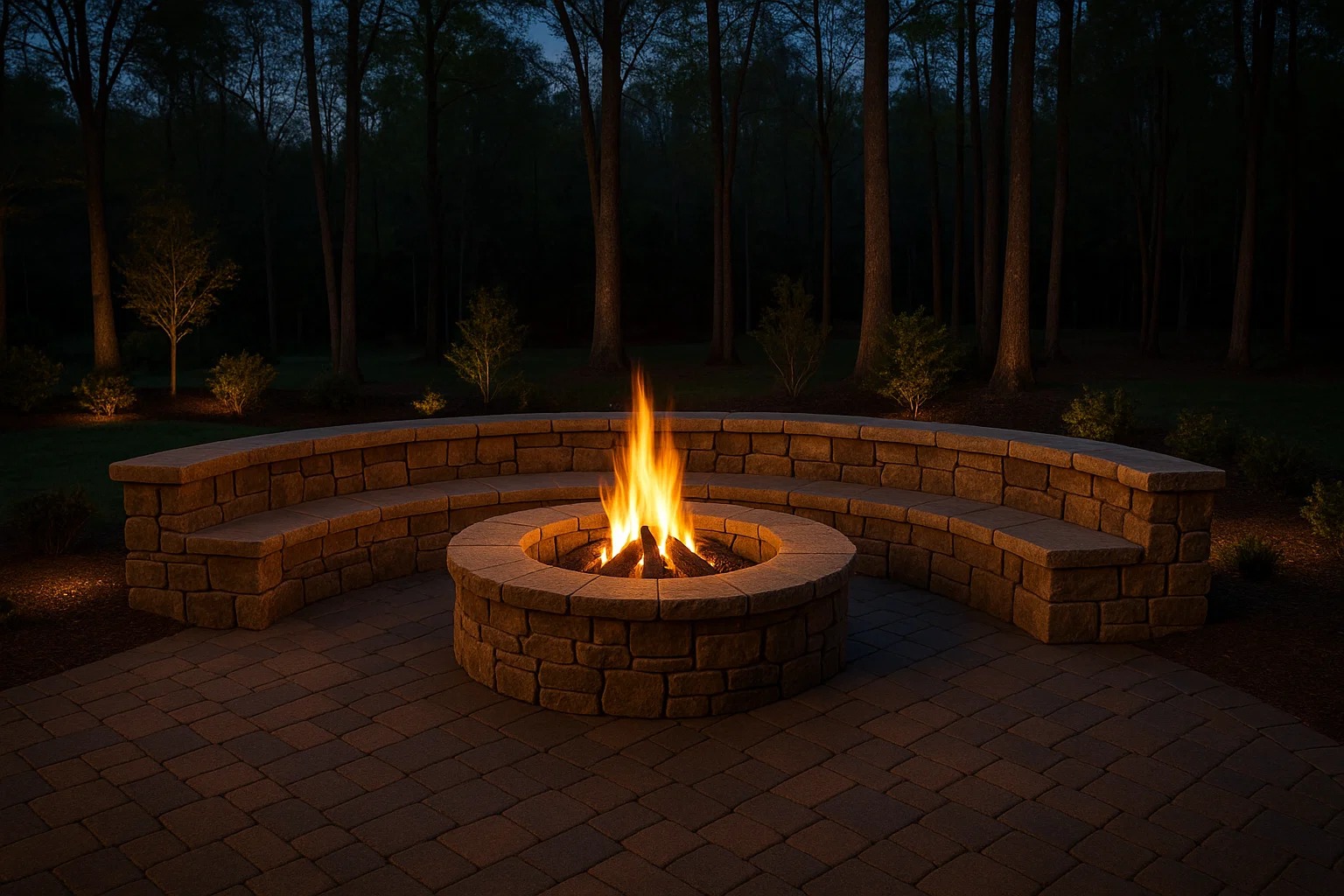
Make Your Carolina Backyard Warm, Inviting, and Safe This Winter
A fire pit can turn a crisp Carolina evening into the perfect setting for conversation, stargazing, or unwinding at the end of the day. Whether your fire feature is built from natural stone, pavers, or brick, it becomes a centerpiece of your outdoor living space — especially in fall and winter when temperatures dip.
However, enjoying the warmth means keeping safety and maintenance in mind. Fire pit safety in the Carolinas requires understanding wind patterns, ember control, fuel choices, maintenance routines, and how your fire feature integrates with landscaping and hardscape surfaces around it.
Why Winter Is the Best Time to Use and Maintain Your Fire Pit
Cool weather makes outdoor fireplaces and fire pits more enjoyable — and safer. In the Carolinas, humidity tends to drop in winter, reducing smoke retention, while evening temperatures settle into that perfect “bundled-up around the fire” range.
But, improper setup or neglect can lead to scorched pavers, cracked stone, drifting embers, or smoke flowing toward your home — instead of upward where it belongs.
(If your outdoor space feels underused in cooler seasons, see our guide: Outdoor Living Spaces That Work Year-Round: Fire Pits, Lighting & Covered Patios.)
Choose the Right Fuel: Wood, Gas, or Propane?
Wood-Burning Fire Pits
-
Natural, crackling warmth
-
Needs seasoned hardwood (oak, hickory, pecan)
-
Never burn pine — it pops and throws embers
Gas Fire Pits
-
Instant on/off control
-
No smoke, sparks, or wood storage
-
Requires professional installation & ventilation planning
Propane Fire Bowls
-
Portable and flexible
-
Great for patios where a built-in isn’t possible
General rule: If your patio is tightly enclosed or located near structures, gas is safer. Open yards with good airflow are better suited for wood-burning setups.
Placement Matters: Where (and How) to Position a Fire Feature
Your fire pit should be placed:
-
At least 10–15 feet from your home
-
Away from fences, overhangs, or low tree branches
-
On non-flammable surfaces such as stone pavers, gravel, or concrete
-
Never on grass, mulch, wood decks, or composite decking (unless approved fire pad is installed)
If you have seating walls or built-in benches, ensure they are placed at a comfortable arc around the fire for both warmth and breeze direction.
Protect Your Patio from Fire Heat & Ash
Heat can damage both stone and paver patios without proper protection.
Use:
-
Fire pit heat shields or spark guards
-
A steel insert ring inside masonry pits
-
A fire-resistant base layer under portable fire pits
Avoid:
-
Letting embers fall directly on pavers
-
Burning oversized logs
-
Allowing ash to accumulate in deep layers
Ash accumulation traps moisture — which can freeze overnight and cause paver heaving or surface spalling.
(If your patio already shows lifting, see our restoration guide: Protecting Your Patio & Walkways From Freeze-Thaw Damage.)
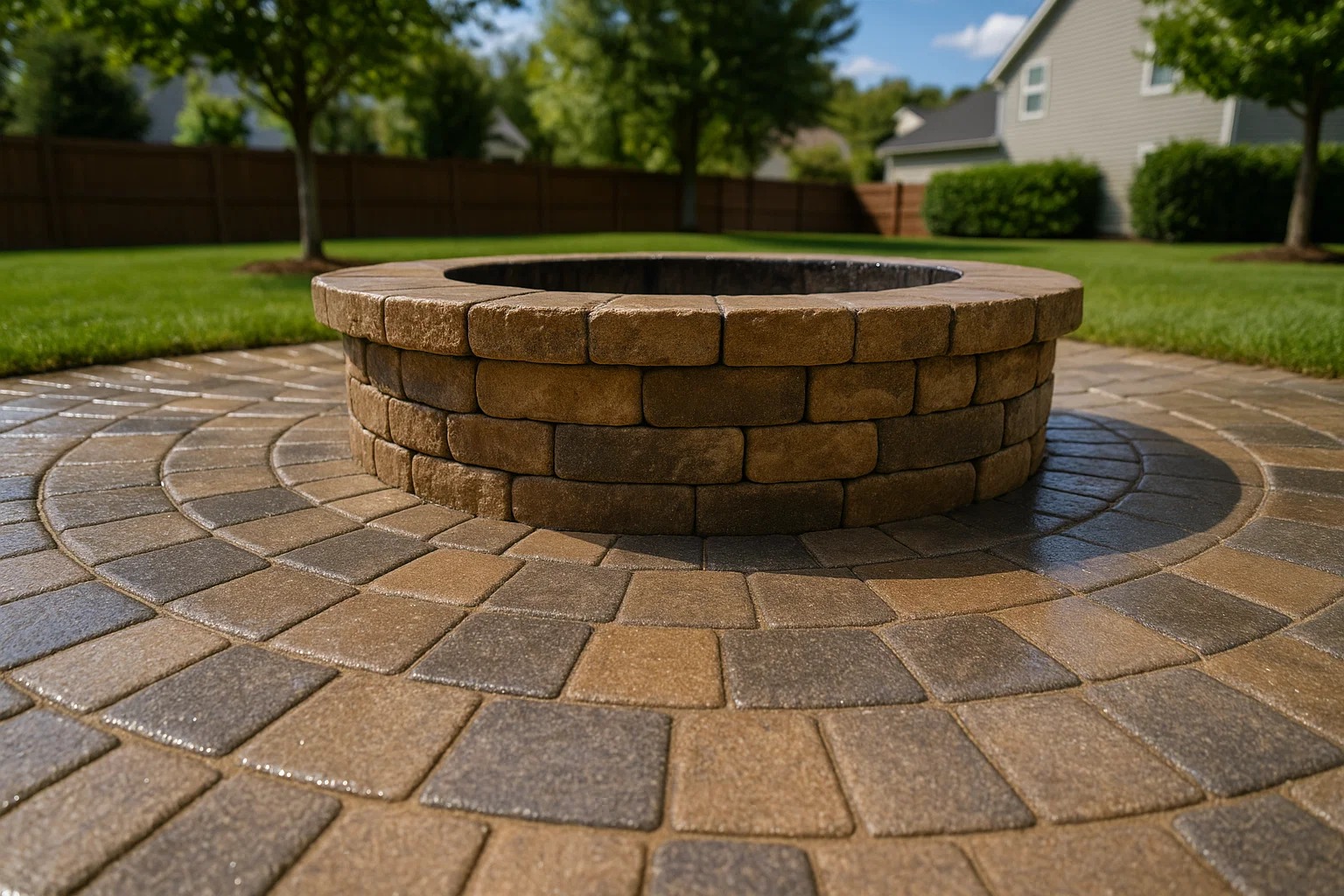
Fire Pit Winter Maintenance Checklist
Before Winter
-
Inspect stones or blocks for cracks
-
Refill missing or loose joint sand around adjacent pavers
-
Check airflow vents or gas lines for blockages
During Winter
-
Keep a weatherproof cover over the pit when not in use
-
Store wood in a covered, dry rack
-
Clear leaves — they ignite quickly
End of Season (Late Winter / Early Spring)
-
Remove ash completely
-
Clean soot stains using degreaser + soft scrub brush
-
Reseal surrounding pavers if needed
-
Inspect mortar joints or block alignment
If a fire pit shifts, tilts, or the stone veneer separates — professional resetting is required. That’s often caused by base movement from moisture or freeze–thaw cycles.
When to Call a Professional
Call a hardscape specialist if you notice:
-
Pavers sinking or rising around the pit
-
Gas fire pit ignition issues or irregular flame patterns
-
Cracked capstones or inner fire ring deterioration
-
Smoke blowing toward the house, not upward
These are signs of improper venting, airflow imbalance, or foundation shifting — all repairable when caught early.
Precision Hardscape Construction designs and repairs fire features that withstand coastal winds, winter moisture, and Carolina climate conditions.
Enjoy a Warmer, Safer Winter Outdoors
A well-built and well-maintained fire pit gives you a gathering space that works all season long. With a little preparation, you can enjoy cozy nights outside while protecting your hardscape investment for years to come.
To inspect, build, repair, or upgrade your fire pit, call (843) 222-5377 or request a consultation at:
www.PrecisionHardscapeConstruction.com
Serving North Myrtle Beach · Calabash · Sunset Beach · Shallotte · Ocean Isle Beach