
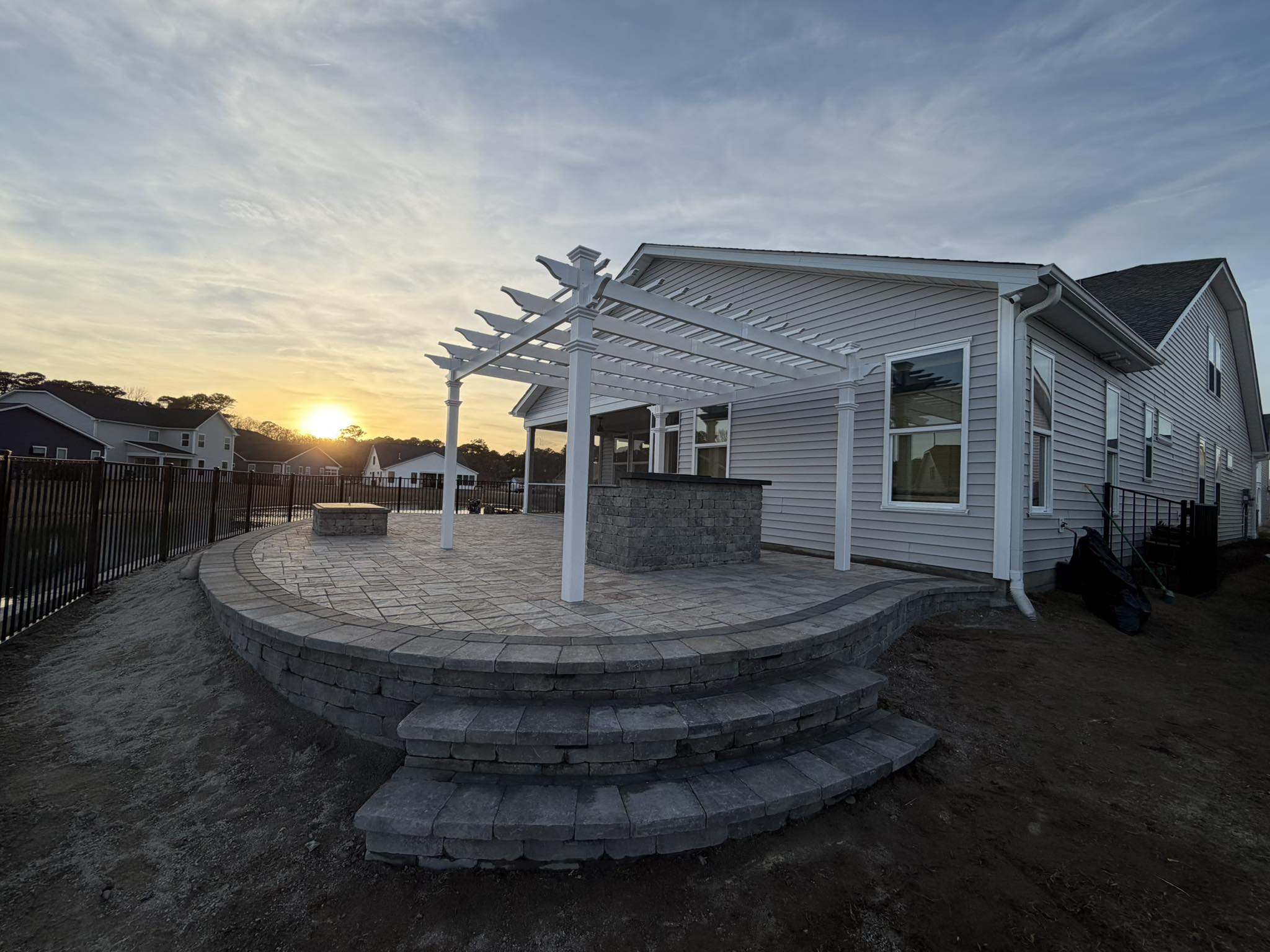
How one home went from plain concrete and bare grass to a complete, cohesive outdoor living environment — one precision detail at a time.
Project completed by Precision Hardscape & Construction LLC — Coastal Carolina
“They say the Devil’s in the details — but we don’t let him get in our way. Precision Style.”
That’s how Matt Jones and the team at Precision Hardscape & Construction described this project. Looking at the photos, it’s easy to see why.
📋 Table of Contents
- Project Overview: One Property, Five Hardscape Zones
- The Paver Driveway Extension
- The Foundation Walkway
- The Raised Paver Patio with Curved Steps
- The Pergola
- The Outdoor Kitchen and Bar Counter
- The Fire Pit
- How It All Works Together: The Design Approach
- Why This Matters in a Coastal Carolina Climate
- Pavers vs. Concrete: A Side-by-Side Look
- Frequently Asked Questions
- Work With Precision Hardscape & Construction
1. Project Overview: One Property, Five Hardscape Zones
Most hardscape projects focus on one area — a backyard patio, a new walkway, a driveway upgrade. This project is different. Precision Hardscape & Construction tackled a complete multi-zone transformation at a single coastal Carolina property, delivering five distinct but visually connected hardscape elements.
🚗 Driveway Extension
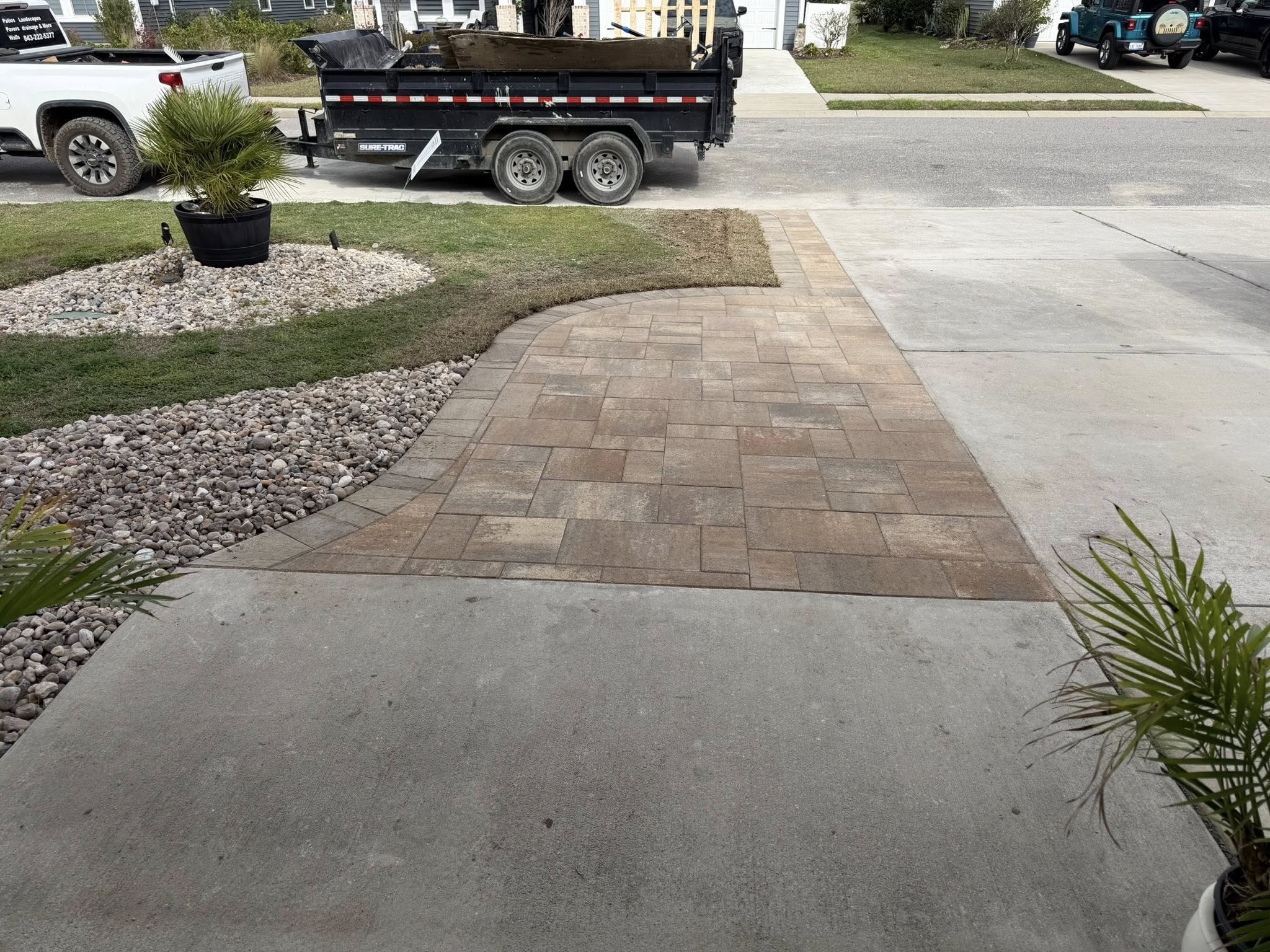
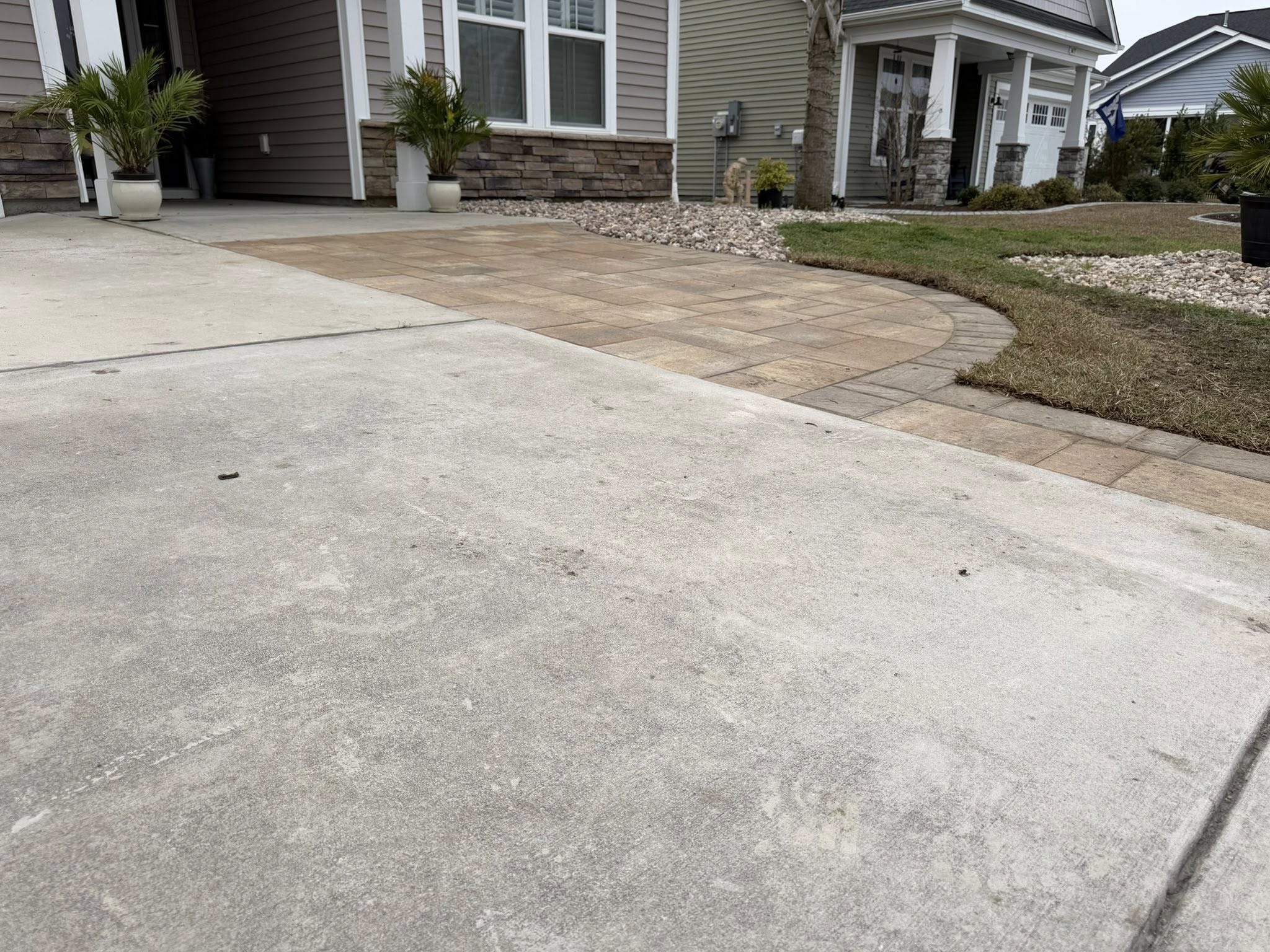
Large-format pavers added alongside the existing concrete driveway, with a curved transition edge and decorative rock landscaping.
🚶 Foundation Walkway
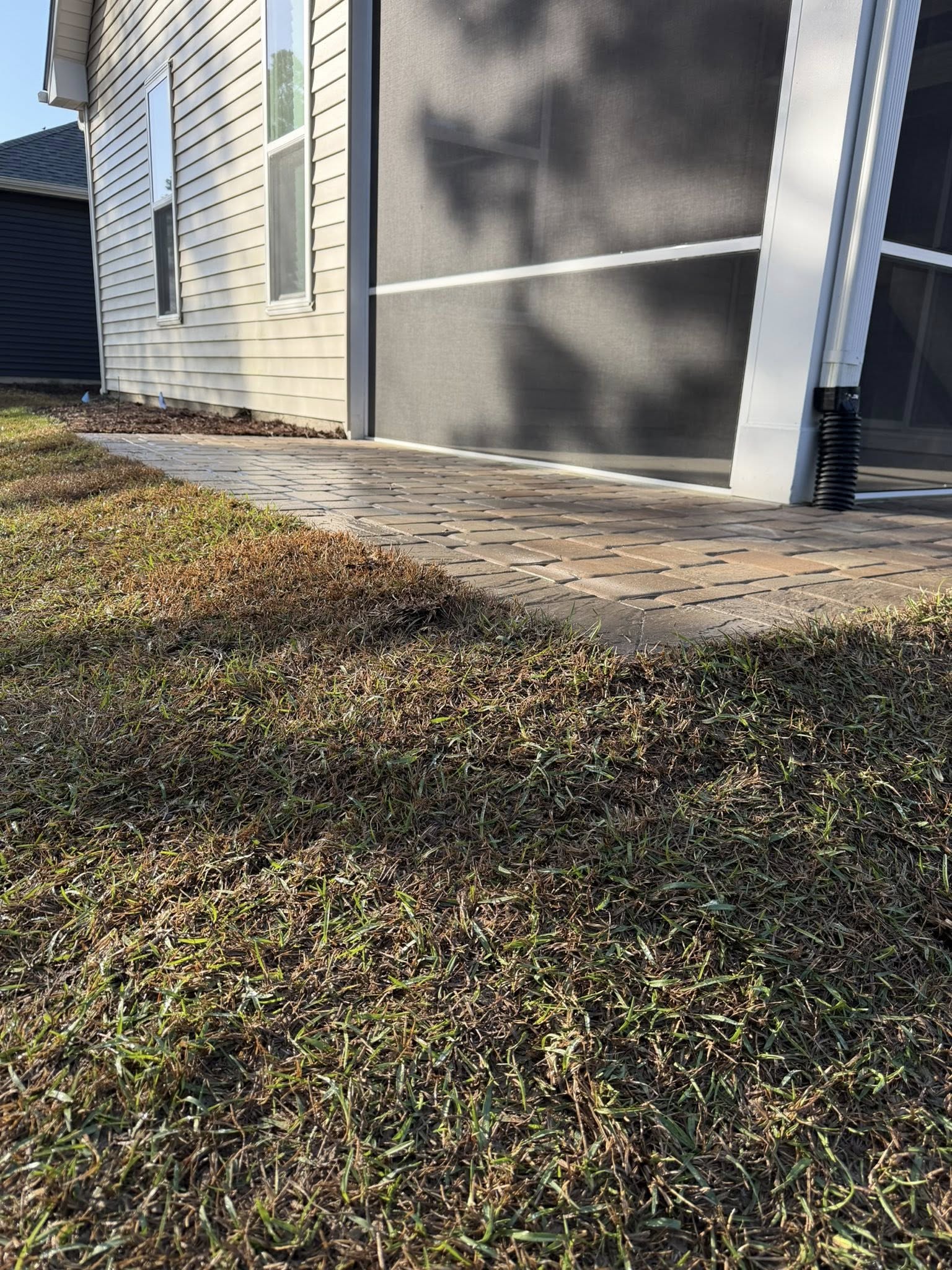
A paver walkway running along the house beside the screened enclosure, cleanly edged against the lawn.
🪨 Raised Patio
An elevated paver patio with curved multi-tier entry steps in matching stone, accessed from the yard below.
🌿 Pergola
A white vinyl pergola anchored over the patio, providing shade structure and architectural definition.
🍳 Outdoor Kitchen
A built-in stone outdoor kitchen and bar counter attached to the home’s exterior wall beneath the pergola.
🔥 Fire Pit
A square masonry fire pit positioned in the center of the patio seating zone, built in matching paver material.
The result is a property that feels completely finished — front, side, and back — with every element using a consistent material palette that ties the whole project together. This is what Precision Hardscape & Construction means by Precision Style: not just doing the work, but making sure every zone relates to every other zone.
2. The Paver Driveway Extension
When you pull up to this home, the first thing you notice is the driveway. The existing concrete pad is standard — flat, plain, slightly weathered. But running alongside it and extending toward the street is a band of large-format pavers in a warm, variegated earth-tone blend that immediately elevates the entire front of the property.
What Was Done
The team installed a paver driveway extension that runs the full length of the existing concrete driveway, from the garage apron down to the street. The paver section sits flush with the concrete surface — no trip hazard, no raised edge, just a clean seam where two materials meet. The outer edge curves naturally rather than cutting in a hard straight line, giving the front yard a softer, more designed look.
The Landscaping Integration
On the front yard side of the driveway extension, a decorative rock landscaping bed follows the curved edge of the pavers. The combination of warm-toned pavers, river rock, and palm plantings creates a cohesive front yard design that looks intentional from the street. The curve of the paver edge, the rock bed, and the plantings all work together as a single composition — this is exactly where the details make or break a project.
Why Pavers Alongside Concrete Work So Well
One of the most practical advantages of adding pavers alongside an existing concrete driveway is that you get significantly more usable surface area without demolishing what’s already there. In coastal Carolina neighborhoods where lots can be narrow and parking space is at a premium, a paver extension gives you additional width for a second vehicle, for turning around, or simply for visual balance. And because pavers flex with the ground rather than crack like concrete, the extension actually handles coastal Carolina’s sandy soil movement better than the original driveway does.
3. The Foundation Walkway
On the side of the home, adjacent to a screened enclosure, the team installed a paver walkway running along the foundation. This is one of those details that most homeowners don’t think about until they need it — and then wish they’d done it sooner.
What Was Done
The walkway uses the same paver family as the rest of the project, maintaining visual consistency across the property. It runs the length of the screened enclosure, cleanly edged against the lawn on one side and the home’s foundation on the other. The edge between the pavers and the grass is crisp and precise — a finishing detail that reflects the same care applied to the high-visibility backyard elements.
Practical Benefits of a Foundation Walkway
A paver walkway along the foundation does more than look good. In a coastal environment with frequent heavy rain, the strip of earth immediately adjacent to a home’s foundation is often the first place erosion and moisture problems show up. A walkway pitched slightly away from the house directs water away from the structure, reducing the risk of moisture intrusion. It also eliminates the muddy, worn path that develops in that zone when people regularly walk alongside the house — which in this property is the natural route between the driveway and the backyard patio.
4. The Raised Paver Patio with Curved Steps
The centerpiece of the backyard is the raised paver patio — and it’s the kind of installation that makes you stop and look twice. Shot at golden hour, the patio glows in the sunset light, but the craftsmanship would be just as impressive at noon.
The Elevation and Structure
The patio sits elevated above the surrounding grade — roughly two steps up from the yard. Raising the patio creates a visual separation between the outdoor living space and the lawn, giving the whole backyard a sense of hierarchy and intention. You step up into the outdoor room, the same way you step up into the interior of the home.
The Curved Steps
Where most raised patios use a simple straight stair, Precision Hardscape & Construction built a multi-tier curved staircase in matching paver material. The curve sweeps outward from the front of the patio, creating a broad, welcoming entry that’s both functional — easier to navigate with furniture or grills — and beautiful. Each step is consistent in height and depth, sitting on a proper compacted base so there’s no rocking or settling over time.
The Retaining Wall Perimeter
Around the raised section, a paver retaining wall holds the elevation and provides the structural edge of the patio. The wall uses the same stone family as the steps and the patio surface, creating a unified material story from ground level up. The top of the wall is finished clean, providing a casual perch and an edge that defines the space without enclosing it.
The Patio Surface
The patio surface uses a mixed-size paver pattern in a cool grey-taupe blend that complements the home’s siding and the white pergola. The mix of rectangular and square units laid in a structured but non-repetitive pattern gives the surface visual texture without being busy. There are no awkward cuts at the edges — the layout was planned from the center out so the border pavers are consistent and intentional.
5. The Pergola
A white vinyl pergola anchors the back third of the patio, extending out from the home’s exterior wall and providing overhead structure that turns the patio from a surface into a room.
Structure and Materials
The pergola is constructed from white vinyl — a smart material choice for coastal Carolina. Unlike wood, vinyl doesn’t rot, doesn’t require painting or staining, and doesn’t swell and shrink with humidity changes. It holds its bright white finish year after year without the maintenance burden a wood structure carries. The crossbeam and rafter ends are cut in a decorative profile — the kind of detail that signals craftsmanship over commodity construction.
Anchoring to the Patio
Pergola posts are anchored through the paver surface into concrete footings set below grade. A pergola that’s only surface-mounted — bolted to the top of a paver slab without a proper footing — is a structural liability in coastal Carolina wind events. Precision Hardscape & Construction plans pergola foundations as part of the patio design from the start, not as an afterthought.
6. The Outdoor Kitchen and Bar Counter
Built against the home’s exterior wall beneath the pergola, the outdoor kitchen and bar counter is the functional core of this outdoor living space. It’s constructed from the same stone material used on the retaining wall and steps — maintaining the consistent material palette that runs through the entire project.
Design and Construction
The counter is built at standard bar height, usable as a prep surface, a serving counter, and a bar where guests can sit on the patio side. The stone veneer matches the earth tones of the surrounding hardscape. The structure is built on a concrete block core — solid, permanent, and built to the same standard as any interior kitchen installation. This isn’t a prefab module dropped onto the patio. It’s a custom-built outdoor kitchen designed for this specific space and homeowner.
Why an Outdoor Kitchen Changes How You Use Your Yard
When the kitchen comes outside, the party stays outside. Nobody disappears inside to check on the grill or grab more food. In a climate like coastal Carolina’s — where outdoor living is viable most of the year — an outdoor kitchen turns a beautiful patio into a space that actually gets used every day.
7. The Fire Pit
Positioned in the open area of the patio in front of the pergola, the square masonry fire pit defines the lounge zone of the outdoor living space. It’s built from matching paver material, low-profile, and positioned to allow seating on all four sides.
Square vs. Round: Why This One Works
A square fire pit complements the architectural language of this project. The pergola has straight lines. The outdoor kitchen has straight lines. A round fire pit would introduce a competing curve at the center of the space. The square pit echoes the geometry of the surrounding elements and feels intentional.
Placement and Clearance
This fire pit is positioned far enough from the pergola structure to comply with clearance requirements, centered in the patio footprint so seating can be arranged naturally on all sides, and located so smoke direction carries across the open yard rather than back toward the house or into the screened enclosure.
8. How It All Works Together: The Design Approach
What separates this project from a collection of individual hardscape jobs is the unified design language that runs through everything. The same warm-toned paver family appears in the driveway extension, the walkway, the patio, the steps, and the retaining wall. The stone veneer on the outdoor kitchen matches the retaining wall. The white pergola anchors to the home’s white trim. Every element relates to every other element.
This kind of consistency doesn’t happen by accident. It requires planning the entire project as a single composition before installation begins — selecting materials that work together, designing each zone so it transitions naturally to the next, and executing every detail with the same level of care whether it’s a highly visible feature or a foundation walkway that most visitors won’t even notice.
The Precision Hardscape standard: every element of a project should look like it was always meant to be there — and like it was built to stay there forever. From the curve of a driveway edge to the height of a patio step, the details define the outcome.
9. Why This Matters in a Coastal Carolina Climate
Homeowners in Myrtle Beach, North Myrtle Beach, Little River, Calabash, Ocean Isle Beach, Sunset Beach, Shallotte, and Longs face a specific set of outdoor construction challenges. Understanding them is part of what Precision Hardscape & Construction brings to every project.
Sandy Soil and Settlement
Coastal Carolina’s sandy soil is free-draining but unstable under load. Structures built without proper compacted gravel base layers will settle, shift, and fail over time. Every element of this project was designed with coastal soil conditions in mind. Proper excavation depth, compacted aggregate base, and drainage planning are built into the process from the start.
Rainfall and Drainage
The coastal Carolina region receives significant annual rainfall, often in concentrated heavy events. Every hardscape surface in this project is pitched to direct water away from the home and toward natural drainage routes. The foundation walkway protects the base of the house. The raised patio elevation keeps water from pooling against the home’s rear wall.
Humidity and Material Durability
Coastal humidity accelerates the deterioration of materials not suited for the environment. The vinyl pergola won’t rot. The paver surfaces are moisture-resistant. The stone veneer on the outdoor kitchen holds its finish in coastal air. Material selection for coastal Carolina is a specific discipline — and it’s reflected in every choice made in this project.
10. Pavers vs. Concrete: A Side-by-Side Look
| Factor | Pavers | Plain Concrete |
|---|---|---|
| Durability in sandy soil | ✔ Flexible — moves with soil without fracturing | ✖ Rigid — cracks when soil shifts |
| Repairability | ✔ Individual units replaced as needed | ✖ Cracks difficult to repair cleanly |
| Aesthetic options | ✔ Colors, textures, patterns, sizes | ✖ Limited — grey slab or stamped finish |
| Lifespan | ✔ 30–50+ years with proper installation | ✖ 15–25 years before significant degradation |
| Property value impact | ✔ Strong positive — buyers respond to quality hardscape | Neutral — expected, not distinctive |
| Maintenance | Seal every 2–4 years, occasional joint sand refresh | Seal periodically, crack repair as needed |
| Heat retention | Moderate — lighter tones reflect heat better | ✖ High heat absorption in summer sun |
| Drainage | ✔ Joint drainage + proper pitch manages runoff well | Requires careful pitch — no joint drainage |
11. Frequently Asked Questions
Ready to Transform Your Property?
Whether you’re envisioning a full outdoor living space like this one or starting with a single upgrade, Precision Hardscape & Construction LLC designs and builds projects crafted to last in the coastal Carolina environment.
Every project gets the same attention to detail — from the curve of a driveway edge to the anchor depth of a pergola footing.
precisionhardscapeconstruction.com
Serving Myrtle Beach · North Myrtle Beach · Little River · Longs · Calabash · Sunset Beach · Ocean Isle Beach · Shallotte