
Protect Your Landscape — and Your Investment
A retaining wall is more than a landscape feature — it is a structural system designed to hold soil in place, manage water movement, and stabilize slopes. In the Carolinas, where winter brings steady rainfall, saturated soils, and repeated freeze–thaw cycles, retaining walls take on enormous pressure. Without proper maintenance, even a well-built wall can begin to lean, crack, or collapse.
Retaining wall winter preparation ensures your wall remains stable when the ground gets wet and heavy. Addressing drainage, grading, and structural stress now can prevent erosion, property damage, or costly reconstruction in spring.
Why Retaining Walls Fail in Carolina Winters
When soil becomes waterlogged, it becomes heavier. This increases hydrostatic pressure — the force water exerts behind the wall. Combine that with the freeze–thaw cycle expanding soil and stone, and walls experience stress from multiple directions.
Early damage signs often begin in winter — but aren’t visible until spring. The sooner the issue is identified, the easier (and less expensive) it is to correct.
(If you have visible erosion around your yard already, see: Preventing Winter Erosion: Protecting Slopes, Walls, and Soil.)
Step 1: Inspect the Wall for Warning Signs
Walk your wall line after rain or on a sunny day when the ground is soft. Look for:
-
Leaning or bulging sections
-
Cracks running through blocks, stone, or mortar
-
Separation where the wall meets steps or patios
-
Soil gaps forming behind the wall
-
Efflorescence (white mineral stains — indicates trapped moisture)
-
Water pooling at the base
Any of these indicates increasing structural pressure — and requires correction before winter rainfall intensifies it.
Step 2: Verify Proper Drainage Behind the Wall
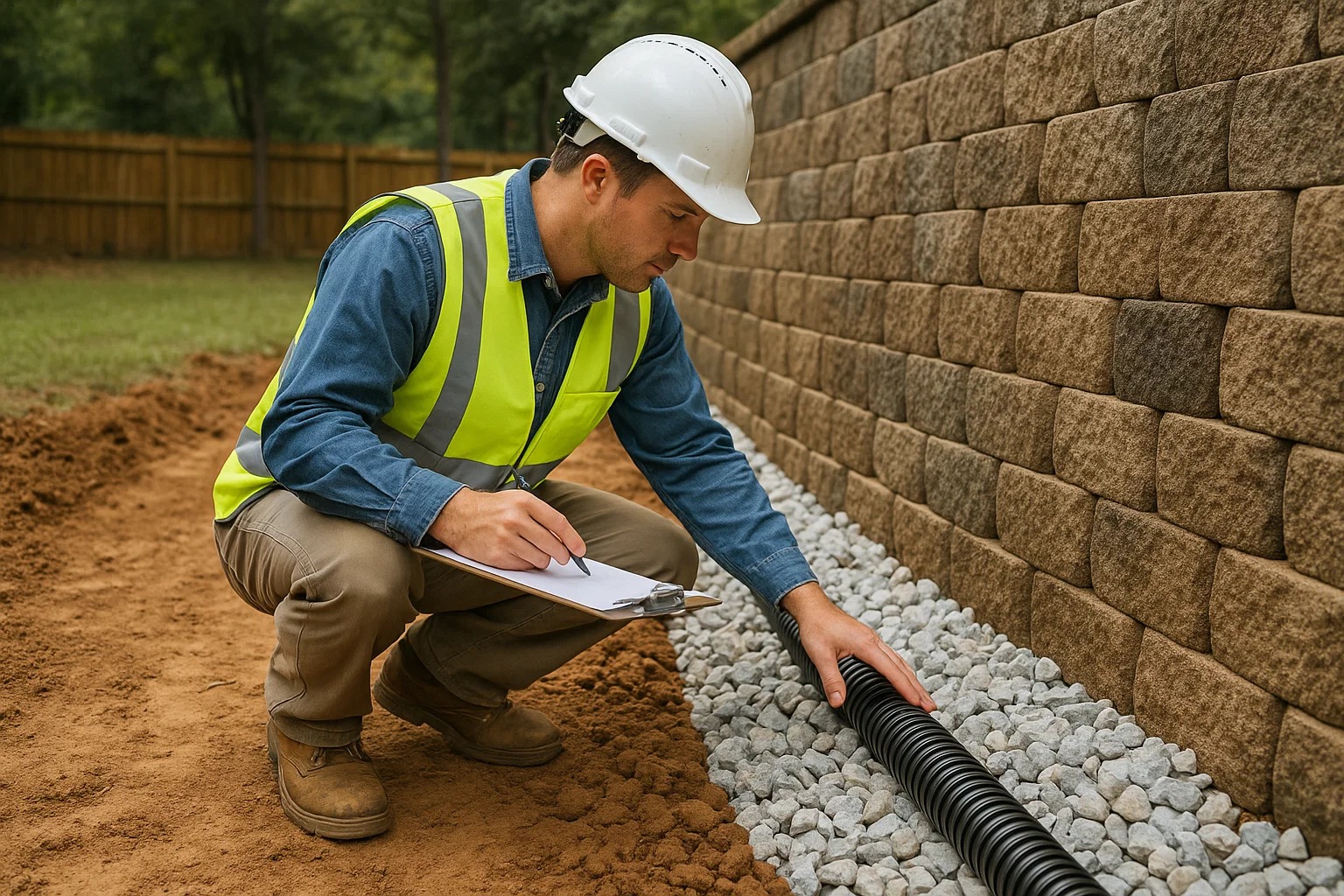
Drainage systems are the single most important defense against wall failure.
A properly-built retaining wall should include:
-
Gravel backfill behind the wall
-
Perforated drainage pipe (French drain) at the base
-
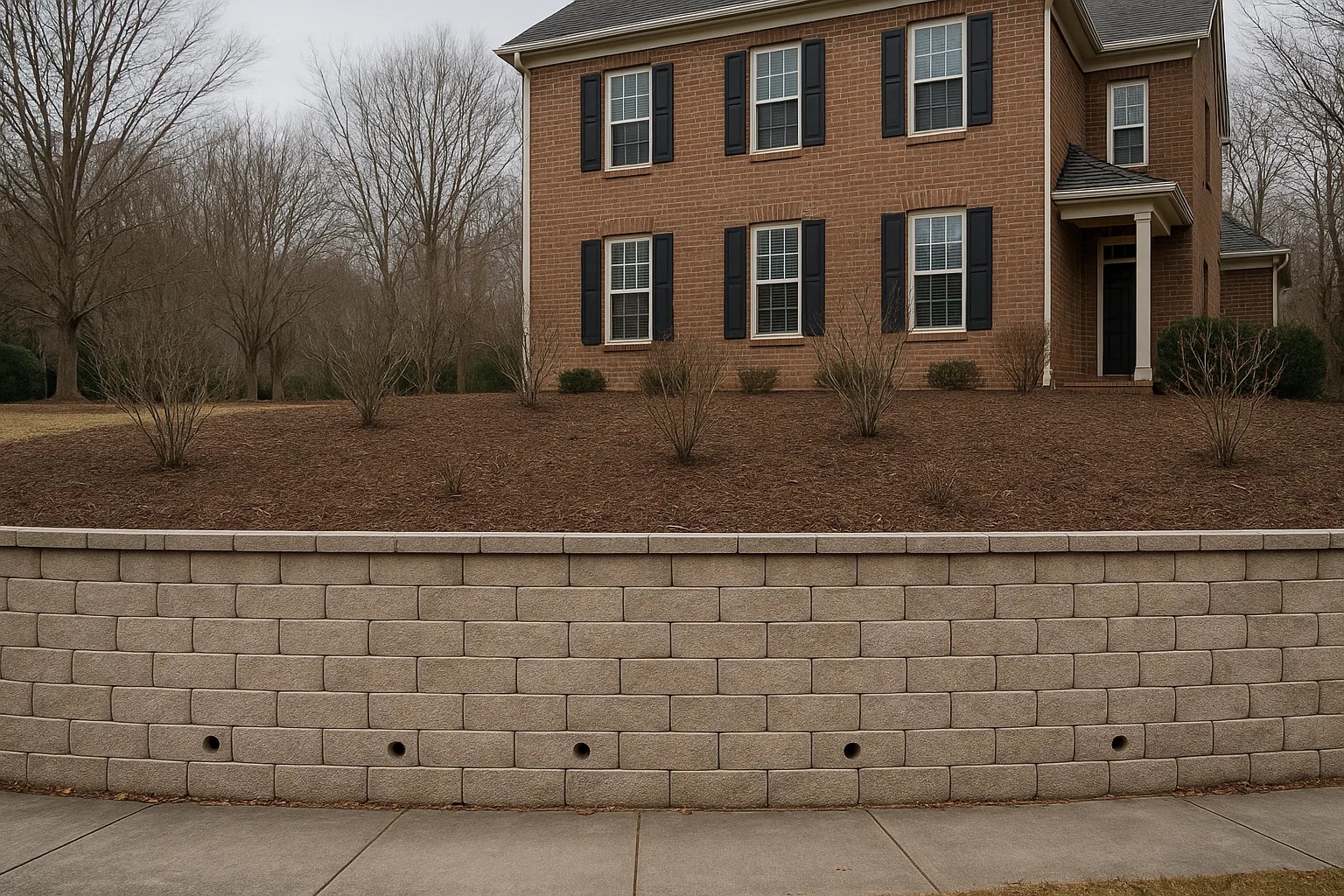
Weep holes or drainage channels for water release
Over time, these can clog with sediment or roots — or they may not have been installed correctly in the first place.
Check for:
| Issue | What It Means | What to Do |
|---|---|---|
| Water seeping through block joints | Pressure buildup | Have drainage pipe inspected |
| No drainage outlet visible | Wall may have no exit for water | Add weep holes / drainage |
| Soil washing out at ends | Water flow path is misdirected | Re-grade and add outlet control |
For full drainage correction, see our service page:
Drainage & Erosion Control Solutions
Step 3: Improve Soil Stability Around the Wall
Retaining walls cannot work alone — they require stable soil and vegetation.
Add:
-
Mulch or pine straw to protect topsoil and slow runoff
-
Root-dense groundcovers (creeping juniper, liriope, pachysandra) to reinforce slopes
-
Terraced plant beds to reduce steep grade pressure
This ties directly into our earlier guide on plant-based winter resilience:
Best Evergreen Plants & Shrubs for Low-Maintenance Carolina Yards
Step 4: Seal or Repair Wall Surfaces
Whether your wall is block, stone, or brick, moisture can penetrate surface pores and expand during freezing nights.
Apply a breathable penetrating masonry sealer
This allows vapor to escape, but prevents water absorption — reducing freeze–thaw cracking.
If cracks exceed 1/8 inch, or the wall leans more than 2 degrees, stop and call a professional — these are signs of structural compromise.
When a Retaining Wall Needs Professional Help
You should call a hardscape specialist if you observe:
-
Leaning increasing over time
-
Cracks growing or extending into multiple courses
-
Soil bubbling, soft spots, or sinkholes behind the wall
-
Water continuously weeping or flowing from the base
-
Pavers or patios adjacent to the wall shifting
At that point, the issue is likely sub-base failure or hydrostatic overload, which requires expert reinforcement — not DIY patching.
Secure Your Retaining Wall Before Winter Goes Full Swing
Preparing your retaining wall now ensures your entire landscape stays stable through the wettest part of the season. A wall that performs well in winter will protect your yard, hardscape, and home foundation for years to come.
Precision Hardscape Construction specializes in retaining wall inspection, reinforcement, drainage correction, and full rebuilds designed for Carolina soil and weather conditions.
Call (843) 222-5377 or request an evaluation at
www.PrecisionHardscapeConstruction.com
Serving North Myrtle Beach · Calabash · Shallotte · Ocean Isle Beach · Sunset Beach