
Landscaping and hardscaping are the backbone of curb appeal and everyday usability. The plants bring color and life, but it’s the paths, patios, and grading that decide how comfortably a space works after a thunderstorm or a week of steady rain. When hard surfaces shed water the right way, lawns stay healthy, foundations stay dry, and outdoor living stays enjoyable.
Patios and walkways built with basic concrete can last for decades—if drainage is handled correctly. Poor slope, clogged gutters, or compacted soil will push water toward your home, causing puddling, heaving, algae growth, and foundation stress. The solution isn’t complicated: combine smart design (slope and grading) with the right surface drains, subsurface drains, and landscape features so water always has a safe place to go.
Grade, Slope, and Subbase: The First Line of Defense
Start with proper slope. A concrete patio or walkway should fall ⅛″–¼″ per foot away from structures so water naturally runs off the slab. That tiny tilt is invisible to the eye but powerful against puddles. Around the perimeter, the adjacent soil should also slope away from the slab and the home—no “bowls” where water can sit and soak.
Build on a stable, draining subbase. Under every slab belongs a compacted crushed-stone base (typically 4–6 inches). Stone opens pathways for water, keeps the slab supported, and helps prevent settlement. In areas with soft soils or high water tables, a geotextile fabric between soil and base prevents the stone from sinking and keeps the system draining over time. Think of it as a permanent filter that keeps the subbase clean.
Direct the Roof Water Before It Becomes a Problem
Downspouts are often the hidden culprit. If roof runoff dumps next to a patio or path, it will overwhelm any surface. Extend downspouts 10 feet or more away from hard surfaces using solid PVC runs or flexible piping. Where allowed, tie them into a dry well, daylight outfall, or a municipal storm connection. The goal is to move roof water off-site safely, before it ever reaches your hardscape.
Control splash and erosion. At downspout outlets, add a splash block, river rock pad, or catch basin to dissipate energy and reduce trenching through planting beds. This simple upgrade preserves mulch, prevents stains on concrete, and keeps walkways cleaner—and safer—after storms.
Choose the Right Drain System for the Job
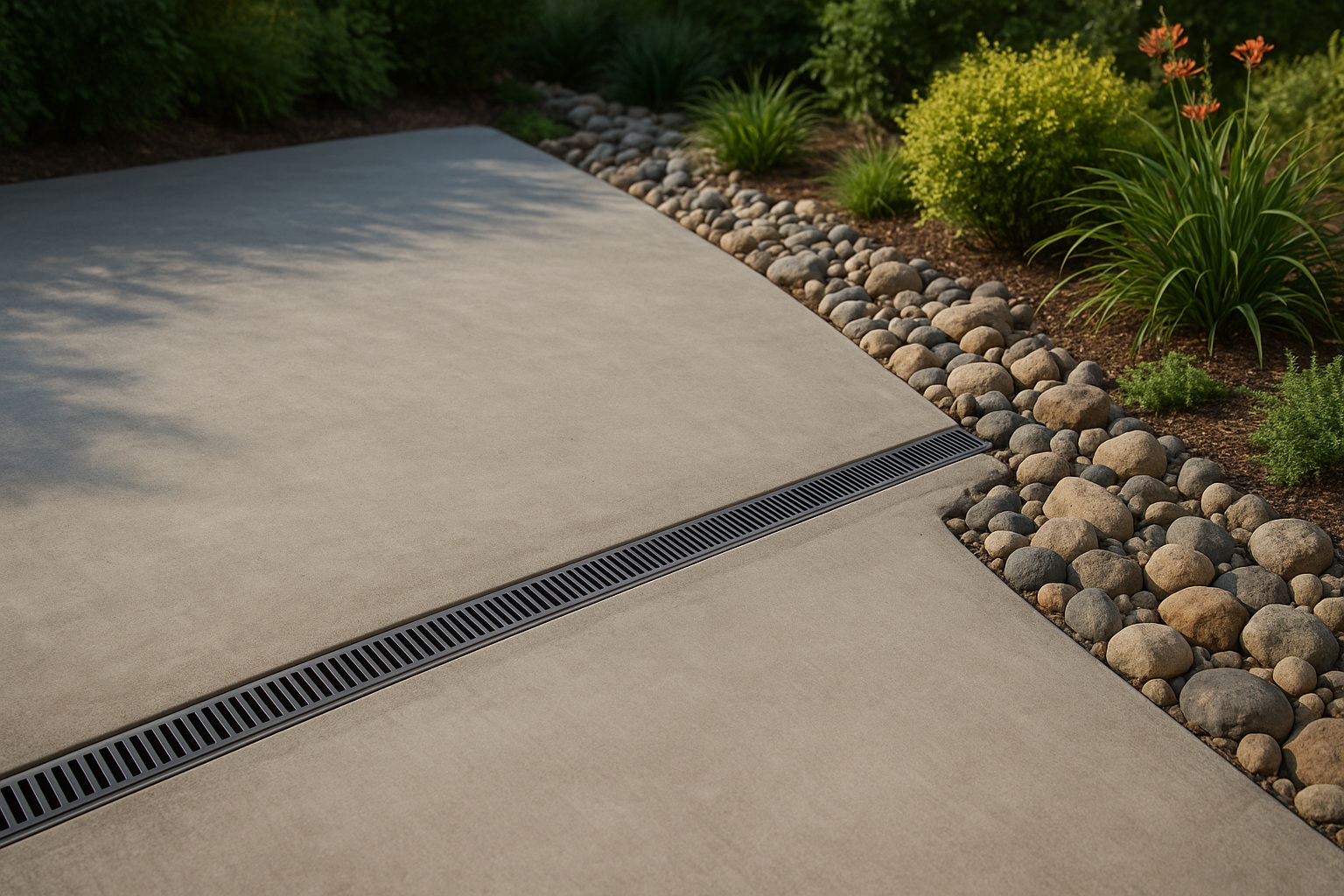
Surface water in traffic areas → Channel (trench) drains.
Along the low edge of a patio or across a walkway that collects sheet flow, insert a channel drain with a durable grate. It catches water at the surface and routes it away through solid pipe. Place it where flow naturally concentrates—often at the patio/yard transition or under a door threshold.
Localized puddles → Area (yard) drains and catch basins.
If water always finds the same spot, install area drains connected to an underground discharge line. Aim for several small inlets rather than one big one; redundancy helps during leaf season and heavy downpours.
Soggy soils → French drains (perforated pipe + stone).
When the ground stays saturated, a French drain lowers the water level in the soil. Lay perforated pipe in a gravel trench wrapped with geotextile, keeping the perforations at 4 and 8 o’clock so water flows in, not mud. French drains are ideal along the high side of a patio or parallel to a walkway crossing a wet yard.
Hard edges and steps → Weep paths and relief cuts.
At retaining edges, seat walls, or step risers, integrate weep holes or a hidden drain mat behind the concrete to relieve hydrostatic pressure. Water trapped behind vertical elements pushes on the slab and stains surfaces; a simple outlet path prevents this.
Blend Drainage with Landscaping for a Clean, Finished Look
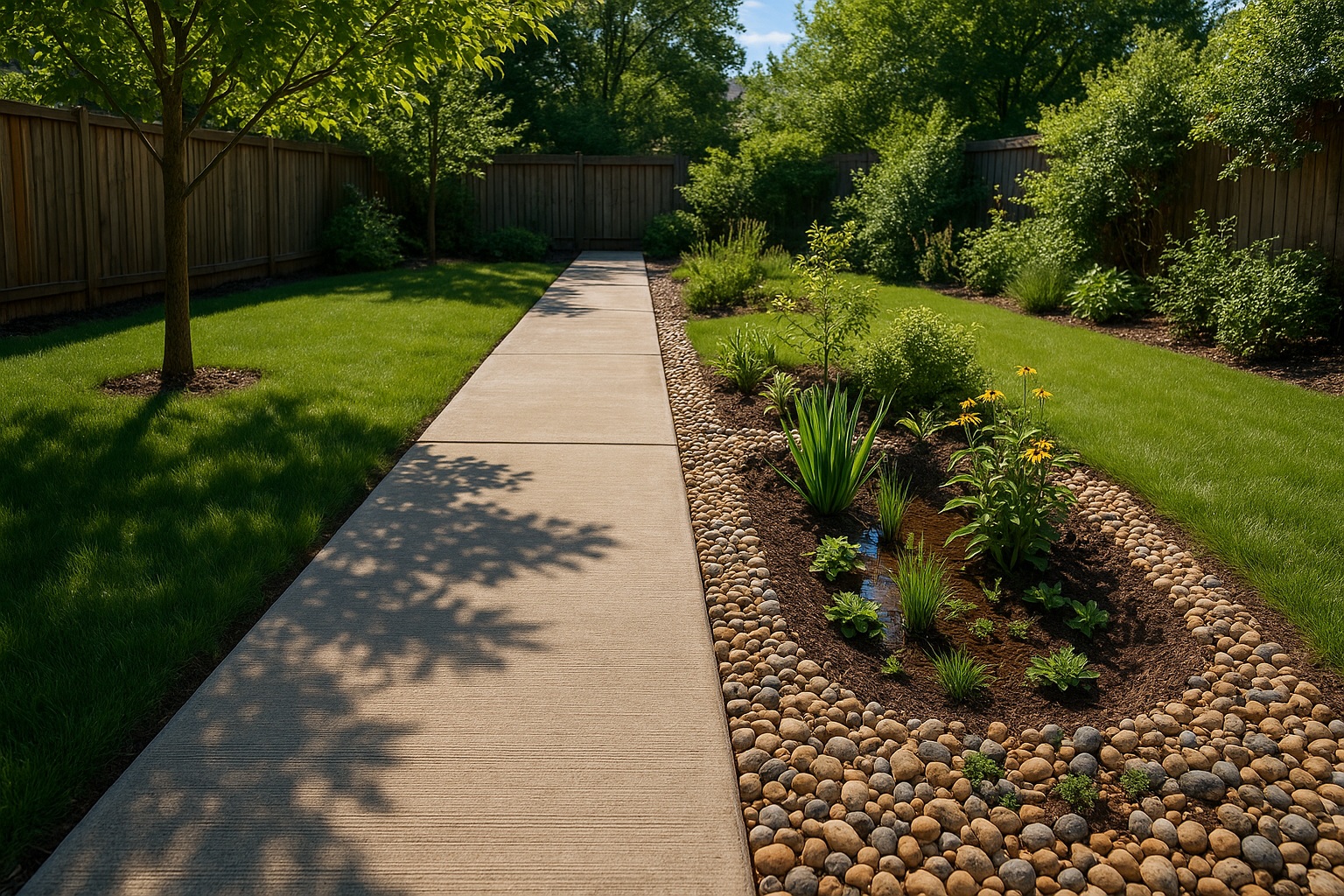
Create destinations for water that look intentional. A rain garden, bioswale, or stone dry creek accepts water from channel drains or downspouts and disperses it across a planted area that tolerates wet-to-dry cycles. This is both functional and beautiful, especially in the coastal Carolinas where heavy bursts of rain are common.
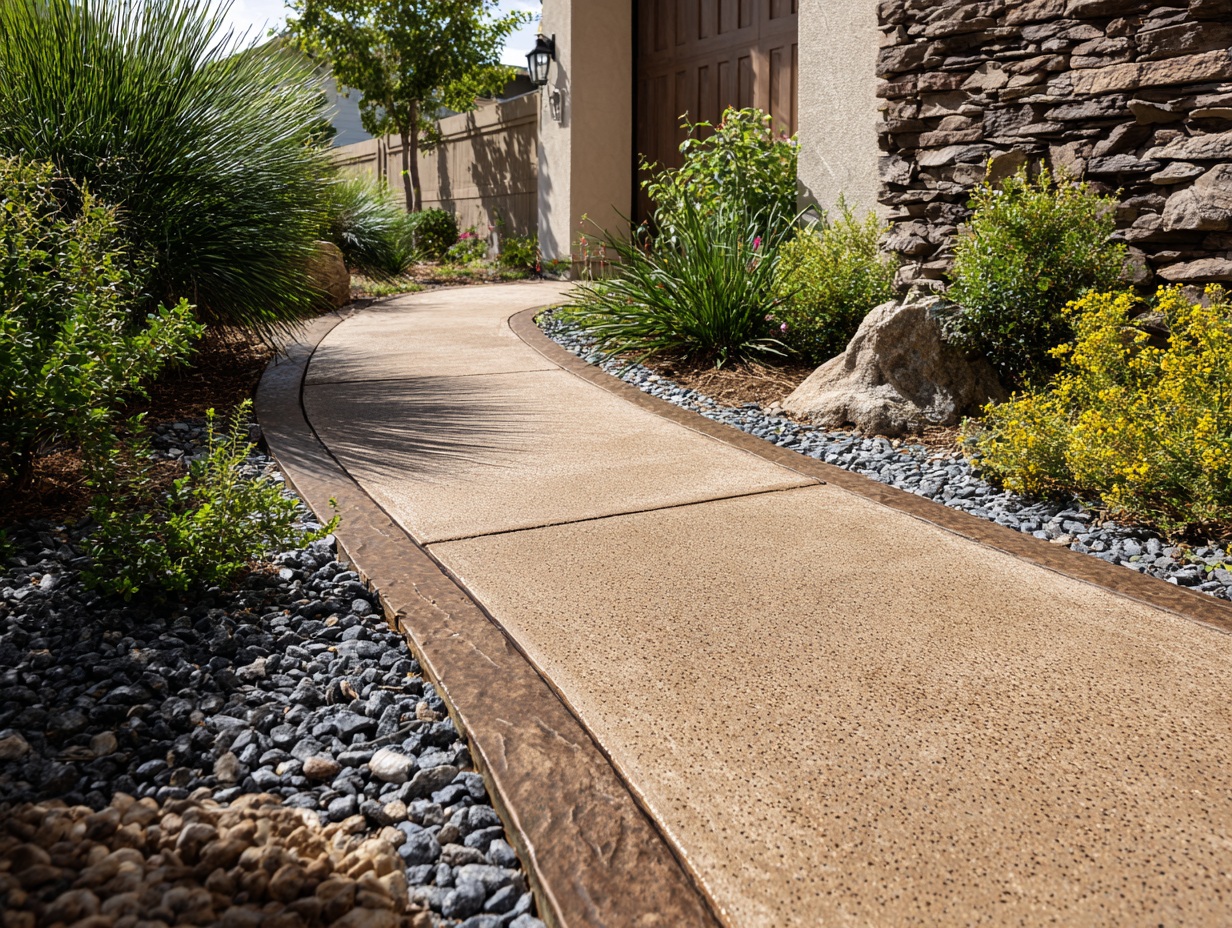
Edge the slab to protect its finish. A 3–6 inch strip of decorative gravel between concrete and planting beds prevents mulch stain, keeps soil splash off the slab, and speeds surface drying. Pair with broom-finish concrete for traction and quicker runoff, reducing algae growth in shaded spots.
Drain Once, Enjoy for Decades
Water will always take the easiest path—make sure it’s away from your patio and walkways. With the right slope, subbase, and a mix of surface and subsurface drains, you stop problems before they start. Tie roof runoff into planned outlets, give groundwater a place to go, and use landscape features to finish the story gracefully. Done right, your concrete stays safer, cleaner, and stronger through every season.
Precision Hardscape & Construction designs and installs drainage-forward patios and walkways for long-term performance on the Grand Strand and in Brunswick County. If you’re seeing puddles, slippery algae, or settling, we’ll diagnose the cause and build a permanent fix—fast. Call (843) 222-5377 or visit www.precisionhardscapeconstruction.com to schedule your on-site assessment.