
Building Strength and Beauty Through Landscape Harmony
Every well-designed yard tells a story of balance—between the living and the built, the flexible and the fixed. Landscaping and hardscaping together create the visual and structural backbone of a property, transforming ordinary spaces into functional outdoor environments that endure through every season. While stone patios, retaining walls, and walkways offer stability and form, the soft elements—trees, shrubs, and ground cover—breathe life into the design. Yet, the true artistry lies not just in combining them aesthetically, but in ensuring that your softscape and hardscape resilience work together to defend against erosion, heavy rainfall, and shifting soils.
As storms grow more frequent and weather becomes unpredictable, integrating natural and structural systems is no longer optional—it’s essential. Strategic plant placement, proper grading, and thoughtful use of retaining walls and terraces can prevent erosion, buffer wind, and preserve the integrity of your stonework for decades. Below, we explore how professional landscaping techniques can create outdoor spaces that are not only beautiful but built to last.
Deep-Rooted Protection: Planting Choices That Strengthen Your Landscape
Strong landscapes start underground. The secret to long-lasting softscape and hardscape resilience lies in plant selection and root structure. Plants with deep, fibrous roots stabilize the soil, preventing washouts and undermining around patios, steps, and retaining walls. Native species are particularly effective since they’re adapted to local rainfall patterns and soil types.
For slopes or elevated areas above hardscapes, consider switchgrass (Panicum virgatum) or little bluestem (Schizachyrium scoparium)—both are native grasses with root systems that extend several feet underground. They not only hold soil in place but also withstand drought and seasonal storms. Juniper varieties like Blue Rug Juniper are ideal for ground cover on slopes, providing year-round greenery while forming dense mats that resist erosion.
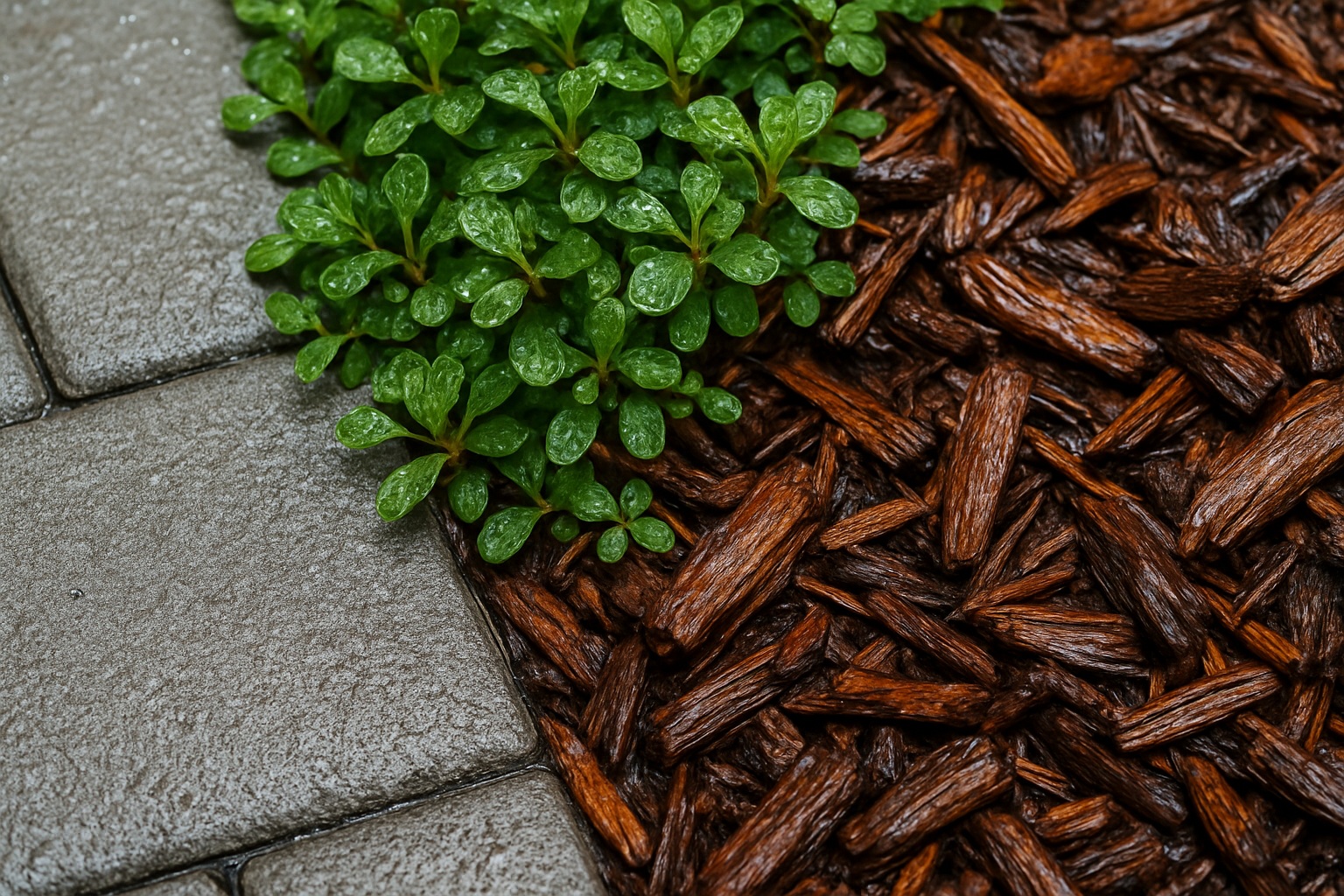
Along the edges of stone patios and walkways, low-growing perennials such as creeping thyme, sedum, or mondo grass serve a dual purpose: they soften the transition between hard and soft surfaces and prevent soil from shifting during heavy rains. For larger properties, strategically placed wind-buffering trees such as live oaks, hollies, or southern magnolias can protect hardscape structures from debris and storm gusts.
Planting in layers—tall canopy trees, mid-height shrubs, and ground covers—creates a natural barrier system. Each layer captures rainfall, filters runoff, and slows erosion. When properly designed, these systems complement drainage channels and French drains, working in tandem to protect the foundation of your hardscape installations.
Intelligent Design: Zoning and Drainage Around Hardscape Elements
A common mistake in residential landscaping is planting too close to stone structures without considering root spread or water movement. Effective zoning ensures that vegetation supports your hardscape rather than threatens it. Deep-rooted trees should be planted well away from retaining walls and patios, as expanding root systems can push against foundations, causing cracking or displacement. Use root barriers when planting near walkways to guide growth downward rather than outward.
Drainage integration is another cornerstone of resilient design. Water should always flow away from stone surfaces to prevent pooling and sub-surface erosion. Integrate graded planting beds and mulched swales between lawns and hardscapes to intercept and absorb runoff. Avoid overwatering near stonework; use drip irrigation or soaker hoses instead of sprinklers to maintain soil moisture without creating pressure against retaining walls.
The goal is a cohesive system where plants and hard materials complement each other’s function. For example, a raised terrace supported by a retaining wall can feature shallow-rooted ornamentals or perennials, while deeper-rooted shrubs are planted below to reinforce the slope. Around patios, buffer planting zones can act as sponges—absorbing excess water before it reaches the paver base. These thoughtful transitions ensure that each section of the yard performs a role in maintaining long-term structural stability.
The Strategic Role of Retaining Walls, Terraces, and Planting Beds
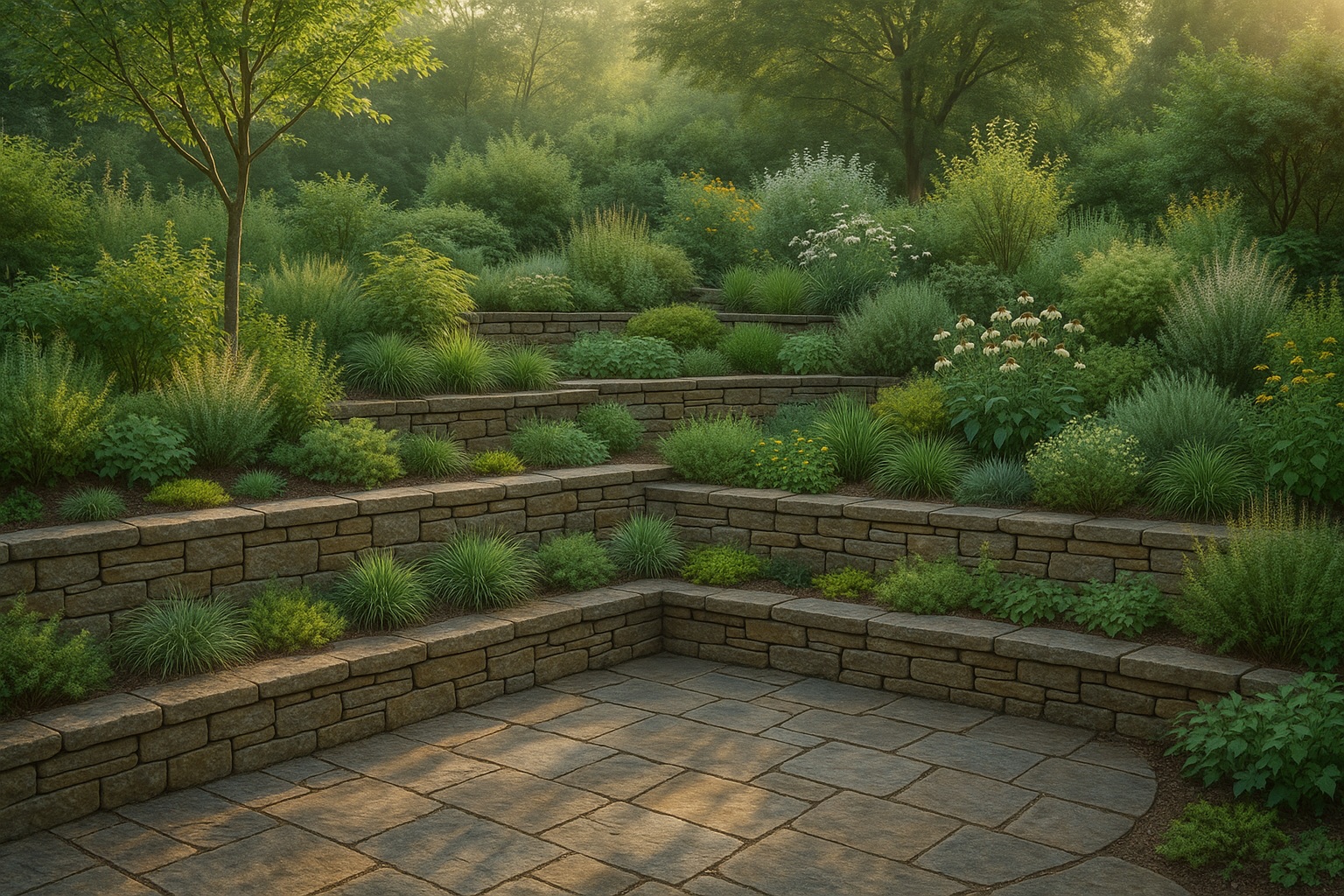
In properties with elevation changes or sloped terrain, retaining walls and terraces are vital to both design and durability. These structures prevent soil movement and allow for controlled water redirection. But they achieve their full potential only when paired with smart planting. Incorporate planting beds at the base or top of retaining walls to stabilize soil and diffuse rainfall impact. Choose species like ornamental grasses, liriope, or creeping junipers, which can tolerate shallow soil depth and full sun exposure.
Terracing creates multiple levels of usable space, turning steep slopes into attractive, functional gardens. Each terrace slows down water runoff while allowing for specific plant zones—native shrubs in the upper levels to control erosion and moisture-loving perennials in lower beds to absorb runoff. Adding decorative stone or river rock borders enhances drainage while connecting visual themes across levels.
To protect stone surfaces from moisture penetration, ensure every retaining wall includes proper backfill, drainage gravel, and perforated pipes. These prevent hydrostatic pressure—the invisible force that can push against walls or shift stones. For added resilience, use geotextile fabric between soil and drainage material to keep sediment from clogging the system. This pairing of natural and engineered elements creates a balanced ecosystem that withstands both heavy rain and long dry spells.
Designing for the Long Game: Sustainable Landscape Maintenance
Resilient landscapes are living systems that evolve over time. Maintaining the synergy between softscape and hardscape requires regular care. Seasonal inspections should include checking for drainage blockages, soil settlement, and plant overgrowth near stone edges. Trimming back roots and vegetation prevents them from encroaching on paved surfaces and walls.
Refresh mulch layers annually to maintain soil moisture and erosion control. Reapply sealants to stone surfaces every few years to protect against weathering and moisture absorption. When storms pass through, inspect planting zones for washouts or exposed roots and recompact soil where necessary. Simple, consistent maintenance extends the life of both your plants and your hardscape structures.
For homeowners seeking a more eco-conscious approach, rain gardens and bioswales are excellent additions. These features collect and filter runoff naturally, reducing erosion while recharging groundwater. They work beautifully beside driveways or patios, bridging the functional and aesthetic aspects of landscape design.
Where Strength Meets Beauty
The most enduring landscapes are those that blend structure with softness—where stone and soil, roots and rock, coexist in perfect equilibrium. By designing with both softscape and hardscape resilience in mind, homeowners can enjoy outdoor environments that not only look spectacular but also stand firm through years of storms and changing seasons. Thoughtful planting, proper zoning, and strategic construction transform your property into a cohesive ecosystem of strength and beauty.
At Precision Hardscape Construction, we specialize in creating custom landscapes that unite nature and design. From retaining walls and terraces to planting beds and drainage systems, our team ensures every element of your property works together for maximum stability, sustainability, and visual impact. Protect your investment with intelligent design and craftsmanship that endures.
Call (843) 222-5377 or visit www.PrecisionHardscapeConstruction.com to schedule your consultation today. Build resilience, beauty, and balance into your outdoor spaces—because true design lasts long after the storm passes.