
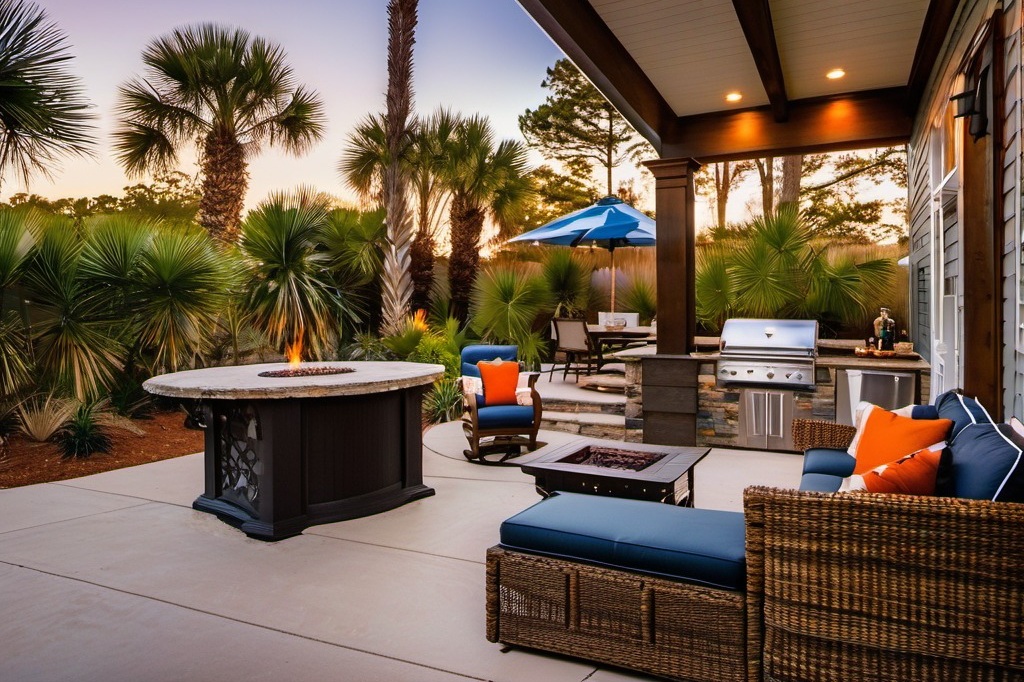
Outdoor living has become one of the most sought-after home upgrades. Homeowners want more than a grill on the patio—they want a true extension of their home where cooking, dining, and entertaining happen seamlessly outdoors. In coastal regions like North Myrtle Beach, Little River, and Brunswick County, outdoor kitchens add not just functionality, but a resort-like lifestyle right in your backyard.
The Carolina climate poses unique challenges for outdoor spaces. High humidity, salty coastal air, sudden summer storms, and blazing sunshine all test the durability of outdoor kitchens. The key is choosing materials, layouts, and features designed specifically to withstand these conditions while still providing comfort, beauty, and long-term value.
Durable Materials That Resist Coastal Conditions
Concrete and Masonry for Structure
-
Plain poured concrete slabs provide a solid foundation for kitchen layouts, resisting shifting or settling.
-
Masonry block bases wrapped in stone or stucco hold up better to humidity and salty air than wood framing, which can warp and rot.
Countertops Built for Outdoors
-
Granite and concrete countertops stand up to heat, rain, and sun.
-
Avoid porous or untreated natural stones, which may stain or degrade.
-
For budget-conscious builds, sealed concrete counters provide durability and style at a lower cost.
Appliances Designed for the Elements
-
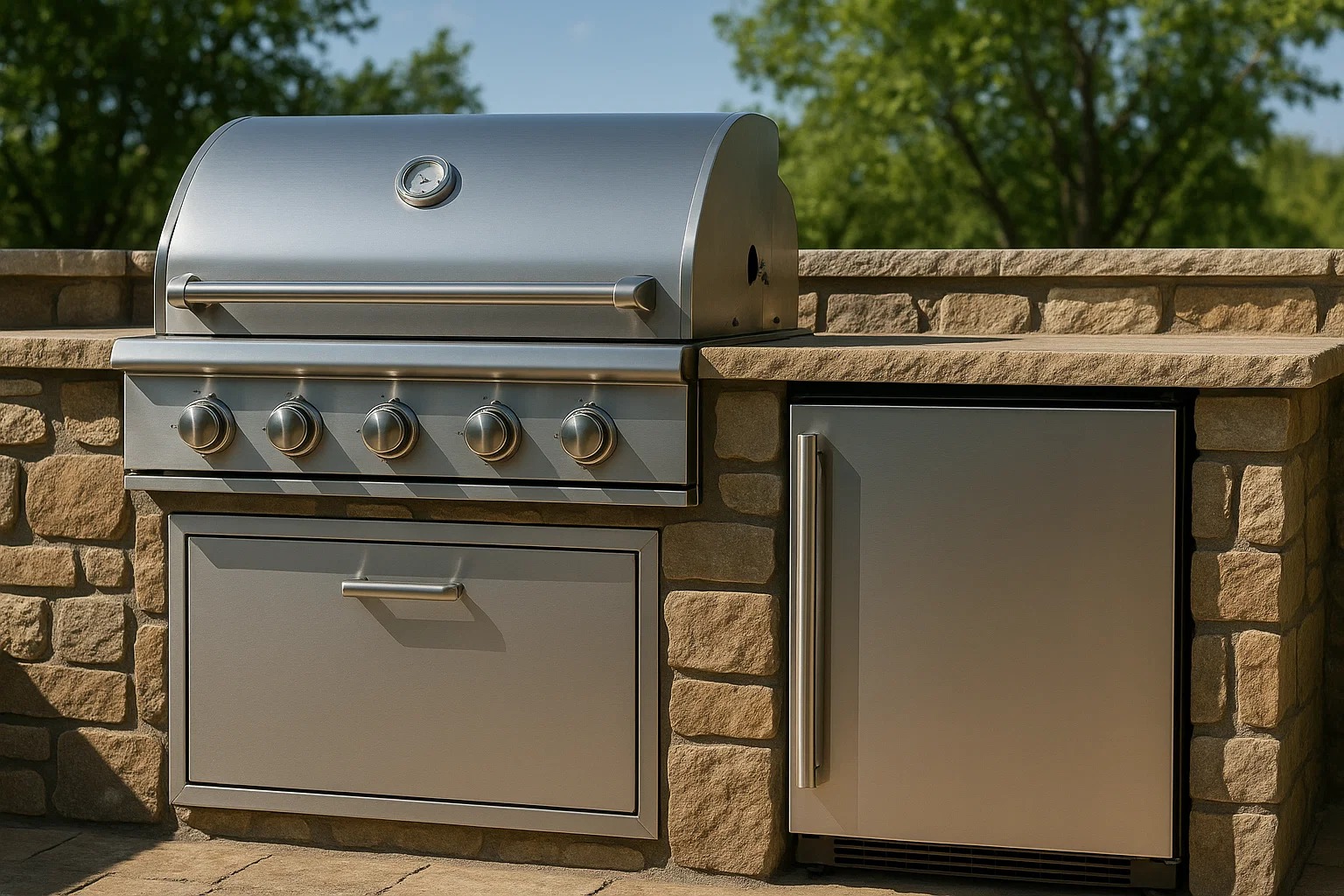
Always choose stainless steel, marine-grade appliances. Standard indoor appliances will corrode quickly in salt-heavy air.
-
Built-in grills, refrigerators, and sinks rated for outdoor use ensure longevity and reduce maintenance headaches.
Smart Design for Functionality and Comfort
Plan the Layout for Workflow
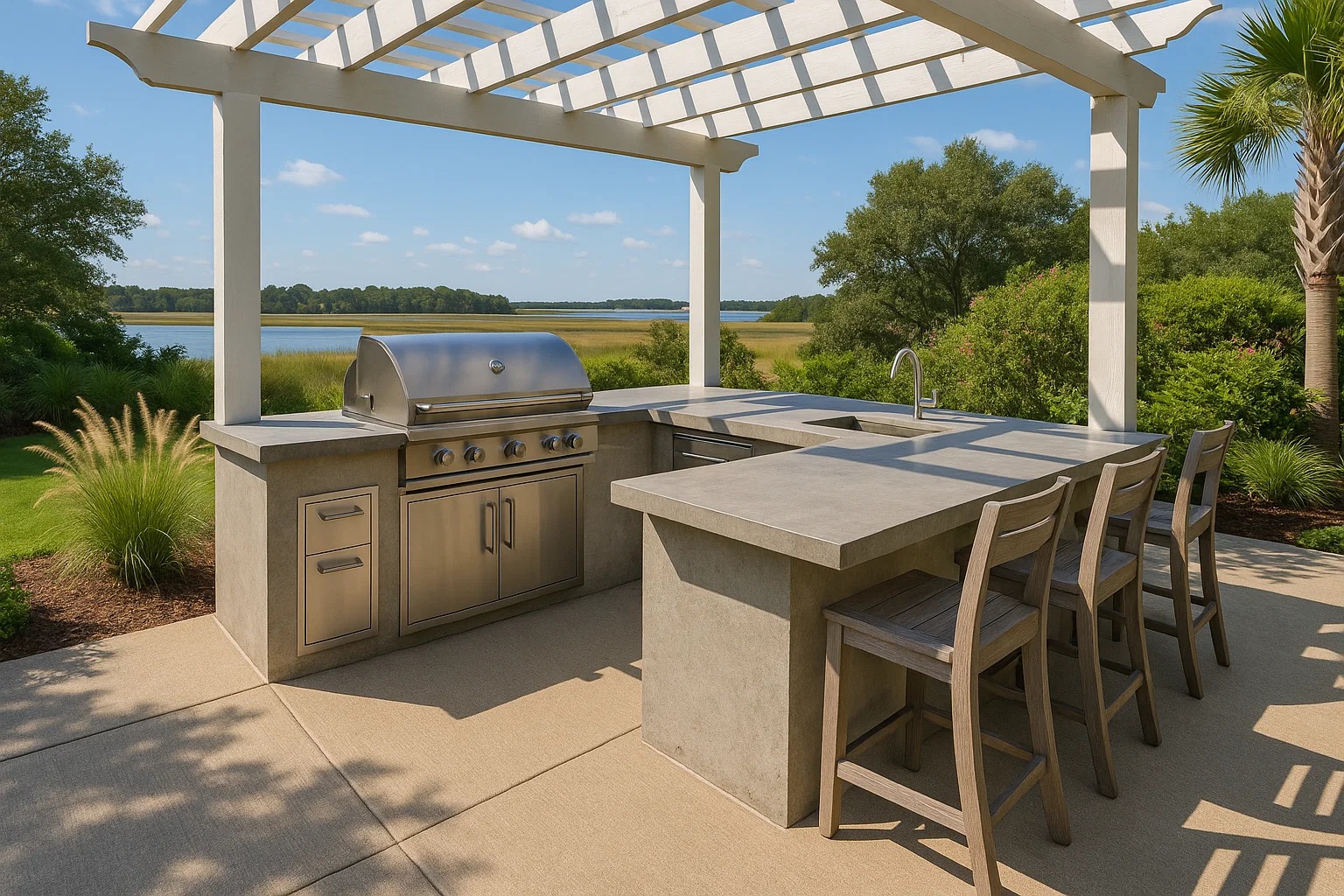
Use the “kitchen triangle rule”—position the grill, sink, and refrigerator within easy reach. This minimizes steps and creates efficiency. Add plenty of counter space for food prep and serving.
Shelter from the Elements
-
A pergola or pavilion keeps the area shaded and cool while protecting appliances and counters from direct UV exposure.
-
Consider retractable awnings or roll-down shades to adapt to changing conditions.
Drainage and Flooring
-
A concrete patio with a subtle slope (⅛″ per foot) ensures rainwater drains away instead of pooling.
-
Slip-resistant broom-finish concrete or textured pavers make the surface safer in wet conditions.
Comfort Features
-
Add ceiling fans under covered spaces for air circulation.
-
Low-voltage LED lighting or solar lights make the space usable into the night while adding ambiance.
Finishing Touches for a Coastal Retreat
Incorporate Natural Elements
Complement the concrete and stone structure with landscaping—palms, ornamental grasses, or native flowering shrubs—for a coastal feel.
Add Entertainment
Outdoor kitchens become gathering spots when you include extras like a fire pit, bar seating, or outdoor TV rated for weather exposure.
Year-Round Use
A well-designed kitchen can serve as a four-season retreat. Add patio heaters or a fireplace for cooler months, and overhead fans or misting systems for hot summer days.
Built to Last, Built for Living
An outdoor kitchen is an investment in lifestyle, property value, and durability. By choosing the right materials, layout, and protective features, you can build a space that not only survives the Carolina climate but thrives in it. Whether you’re hosting summer cookouts or cozy fall dinners, a well-constructed outdoor kitchen becomes the centerpiece of your backyard.
At Precision Hardscape & Construction, we specialize in building outdoor kitchens that balance beauty with resilience. From custom layouts to weather-ready materials, we’ll design and install a kitchen built to last. Call (843) 222-5377 or visit www.precisionhardscapeconstruction.com to start planning your outdoor cooking space today.