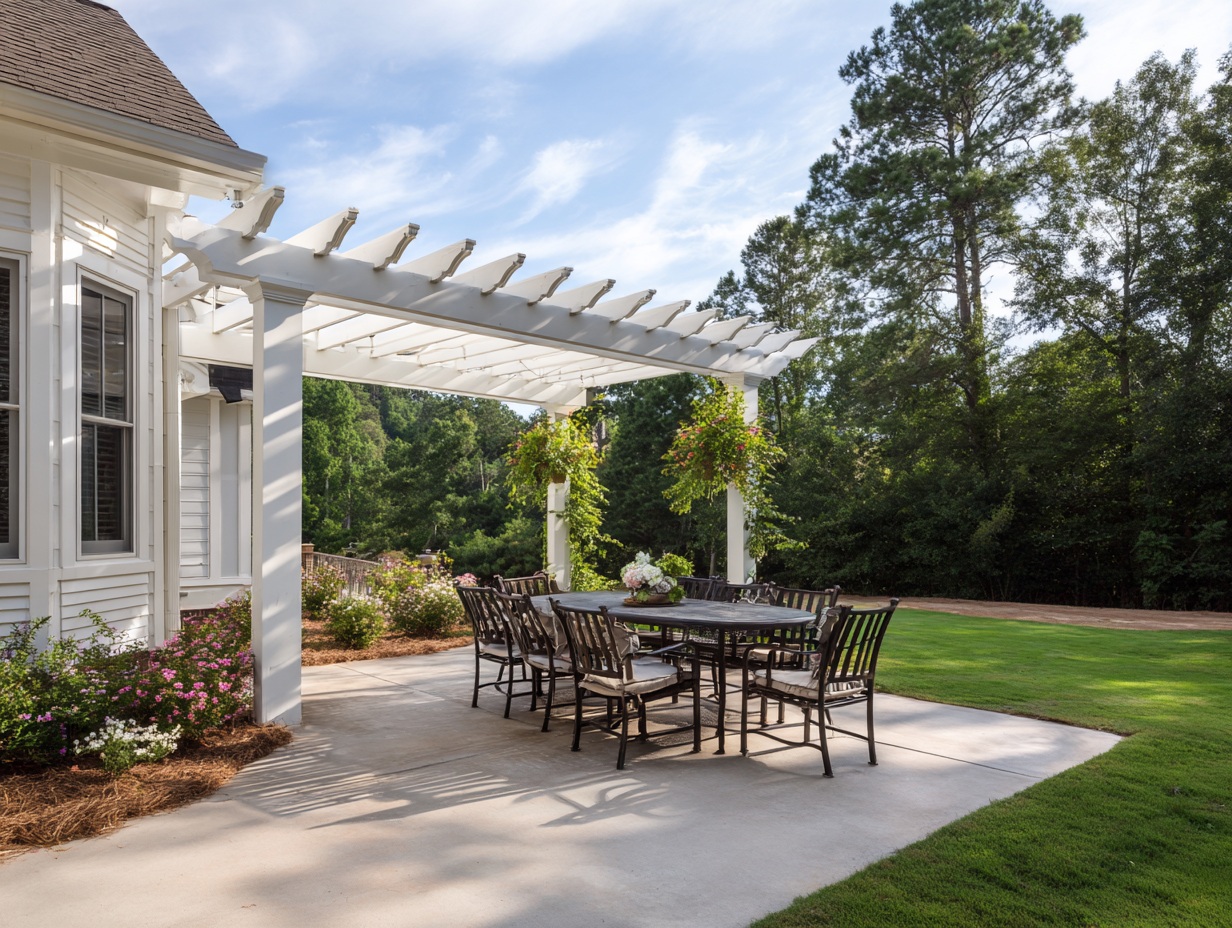
Backyards are no longer just lawns with a grill. For many homeowners, the patio has become the heart of outdoor living—where family dinners, summer parties, and quiet mornings take place. Choosing the right surface is one of the most important decisions when creating a patio. The two most common options are plain poured concrete and pavers. Both can be beautiful, but the right choice depends on your budget, lifestyle, and long-term goals.
Plain concrete patios offer strength and simplicity, while pavers provide flexibility and decorative appeal. In coastal Carolina homes, factors like weather, maintenance, and cost play a big role in the decision. Here’s how the two stack up against each other.
Durability and Lifespan
Plain Concrete
-
A properly poured concrete patio lasts 30–40 years or more.
-
Strong resistance to heavy loads and weather when reinforced and sealed.
-
Vulnerable to cracking over time, but control joints and proper installation limit damage.
Pavers
-
Individual pavers can shift under pressure but are easy to replace if one cracks.
-
When installed correctly on a compacted base, a paver patio can last 50 years or more.
-
More prone to weeds and uneven settling if not maintained.
Verdict: Concrete offers a seamless, sturdy surface, while pavers have the edge in long-term repair flexibility.
Installation and Cost
Plain Concrete
-
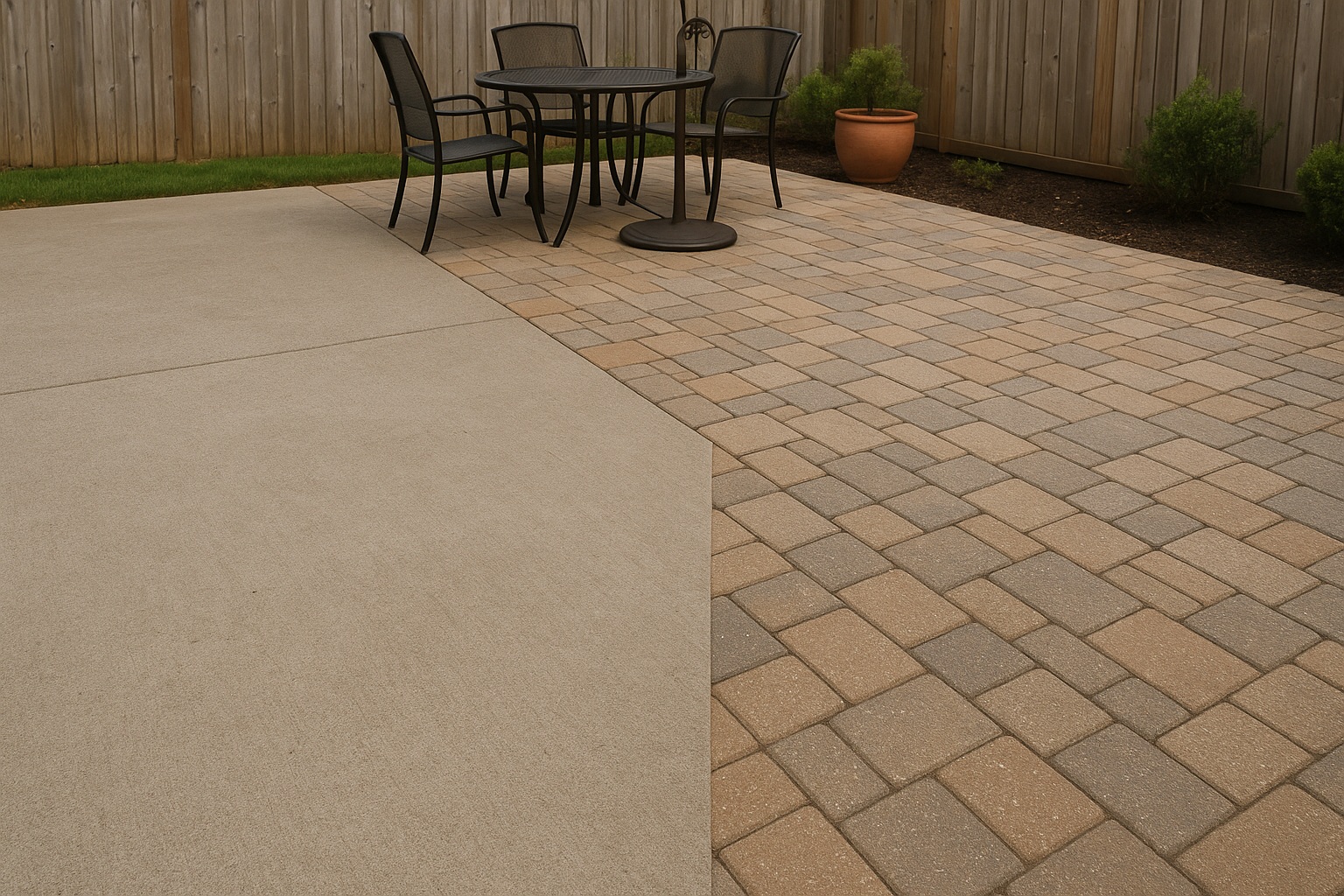
Lower installation cost: typically $4–$7 per square foot.
-
Quicker installation: most patios can be poured in one to two days.
-
Requires professional equipment for pouring and finishing.
Pavers
-
Higher upfront cost: usually $8–$15 per square foot.
-
Labor-intensive installation: each paver is laid by hand.
-
Easy for DIY projects, though professional installation ensures better results.
Verdict: Concrete wins for affordability and speed; pavers require a bigger upfront investment.
Appearance and Design Flexibility
Plain Concrete
-
Clean, simple, and versatile—blends with any home style.
-
Can be finished with a broom texture for traction.
-
Decorative upgrades (stains, stamping) are optional but raise cost.
Pavers
-
Wide range of colors, shapes, and patterns available.
-
Easy to create unique, decorative designs.
-
Maintains consistent look without sealing, though color can fade over time.
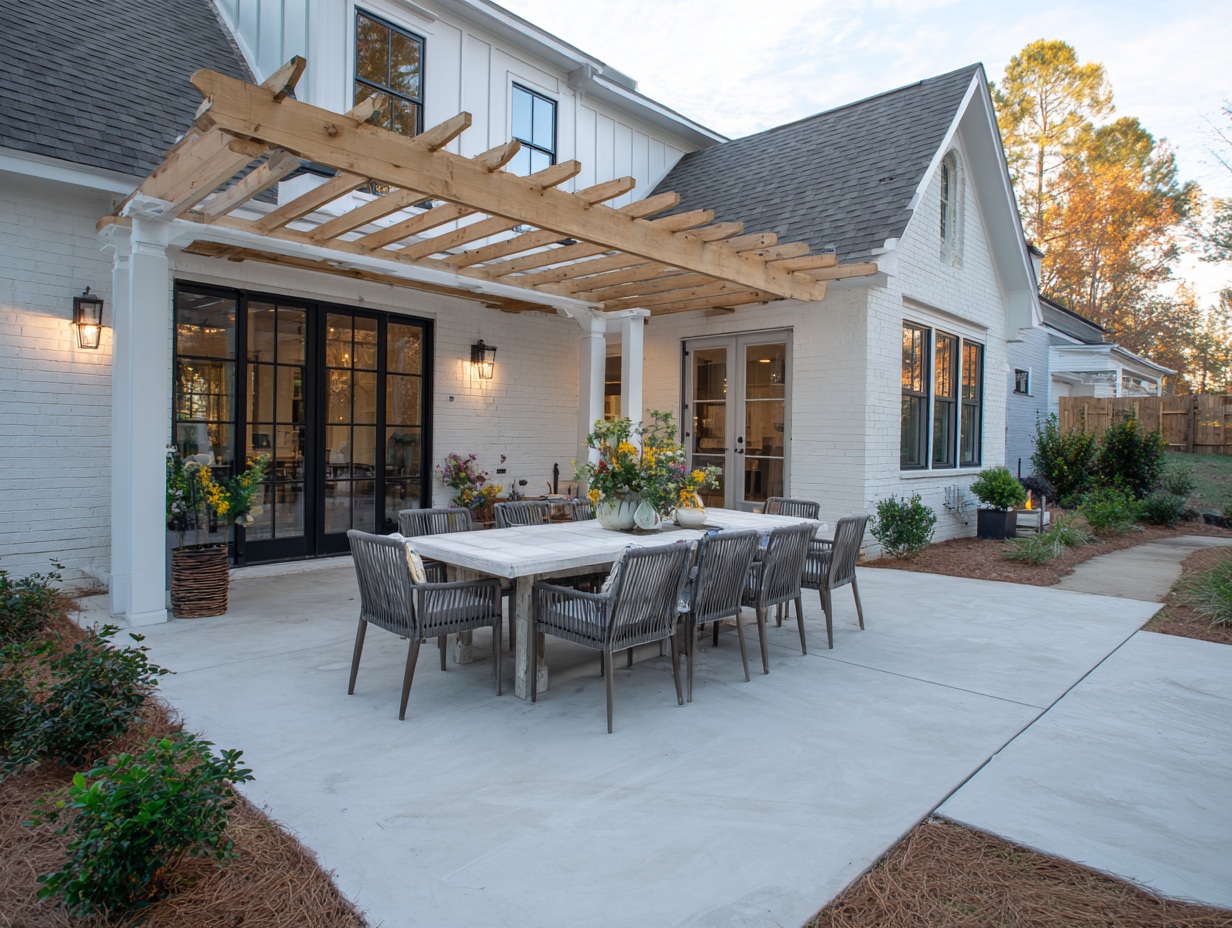
Verdict: Pavers win on aesthetics, but plain concrete offers timeless simplicity and the option to accessorize with landscaping and furniture.
Maintenance Needs
Plain Concrete
-
Seal every 3–5 years to prevent stains and moisture intrusion.
-
Hairline cracks can be repaired easily with sealants.
-
Easy to sweep and pressure wash.
Pavers
-
Regular sweeping and occasional re-sanding of joints required.
-
Weed control and settling adjustments may be needed.
-
Stains can be more noticeable but individual pavers can be swapped.
Verdict: Both require maintenance, but concrete is easier overall with fewer routine tasks.
Which Option is Right for You?
-
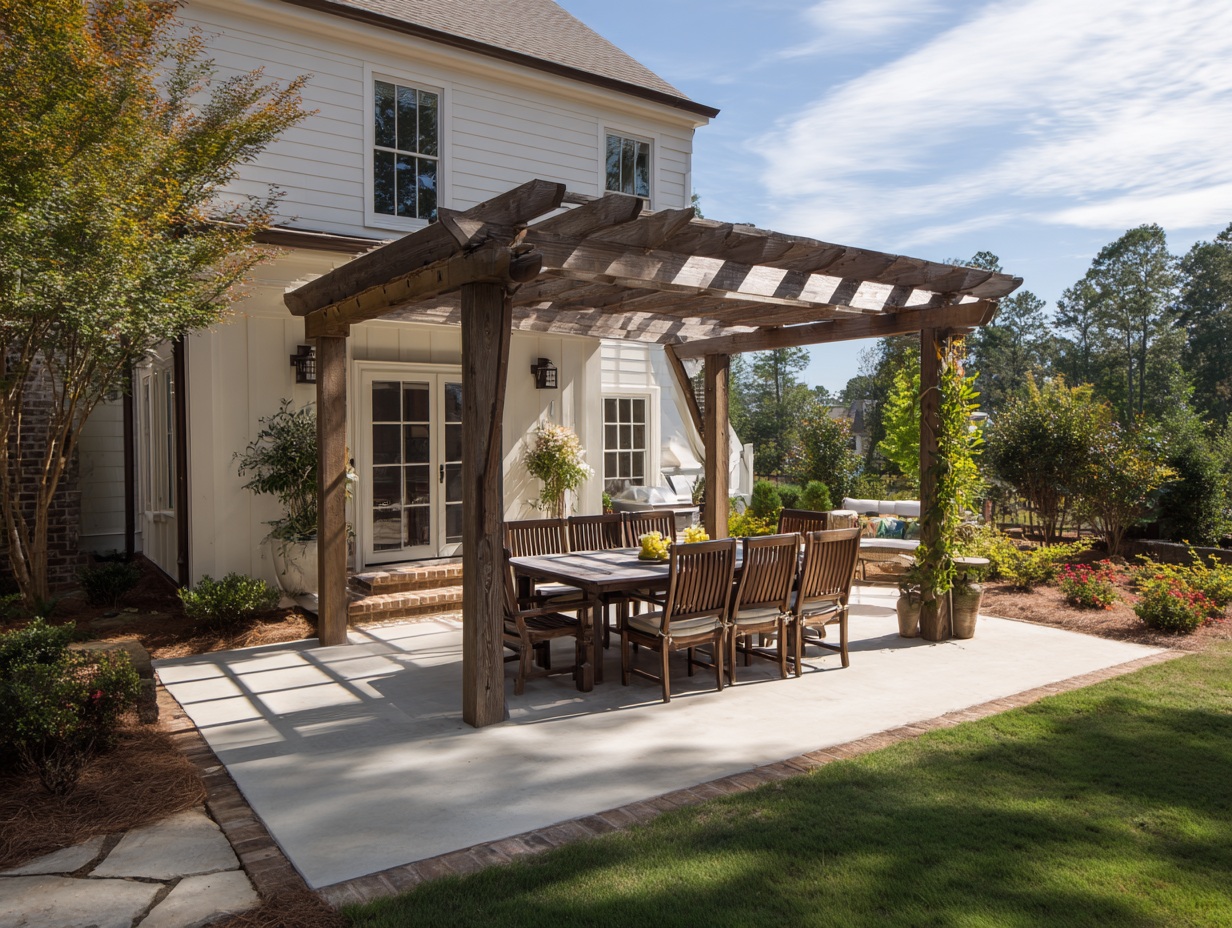
Choose plain concrete if you want a low-cost, durable, and low-maintenance patio that provides a clean backdrop for outdoor furniture and landscaping.
-
Choose pavers if you value decorative design, flexibility, and long-term repairability and are willing to invest more upfront.
For many coastal Carolina homeowners, plain concrete is the smarter choice, offering strength against humidity, storms, and salt air while keeping maintenance and cost manageable.
A Patio That Fits Your Lifestyle
Both plain concrete and pavers have their advantages, but the right choice depends on your budget, style, and how you plan to use the space. A patio should be built to last while complementing your home and lifestyle.
At Precision Hardscape & Construction, we specialize in plain poured concrete patios that combine strength, simplicity, and affordability. Our team ensures proper installation for long-lasting results in the Carolina climate. Call (843) 222-5377 or visit www.precisionhardscapeconstruction.com to explore the best option for your backyard project.