
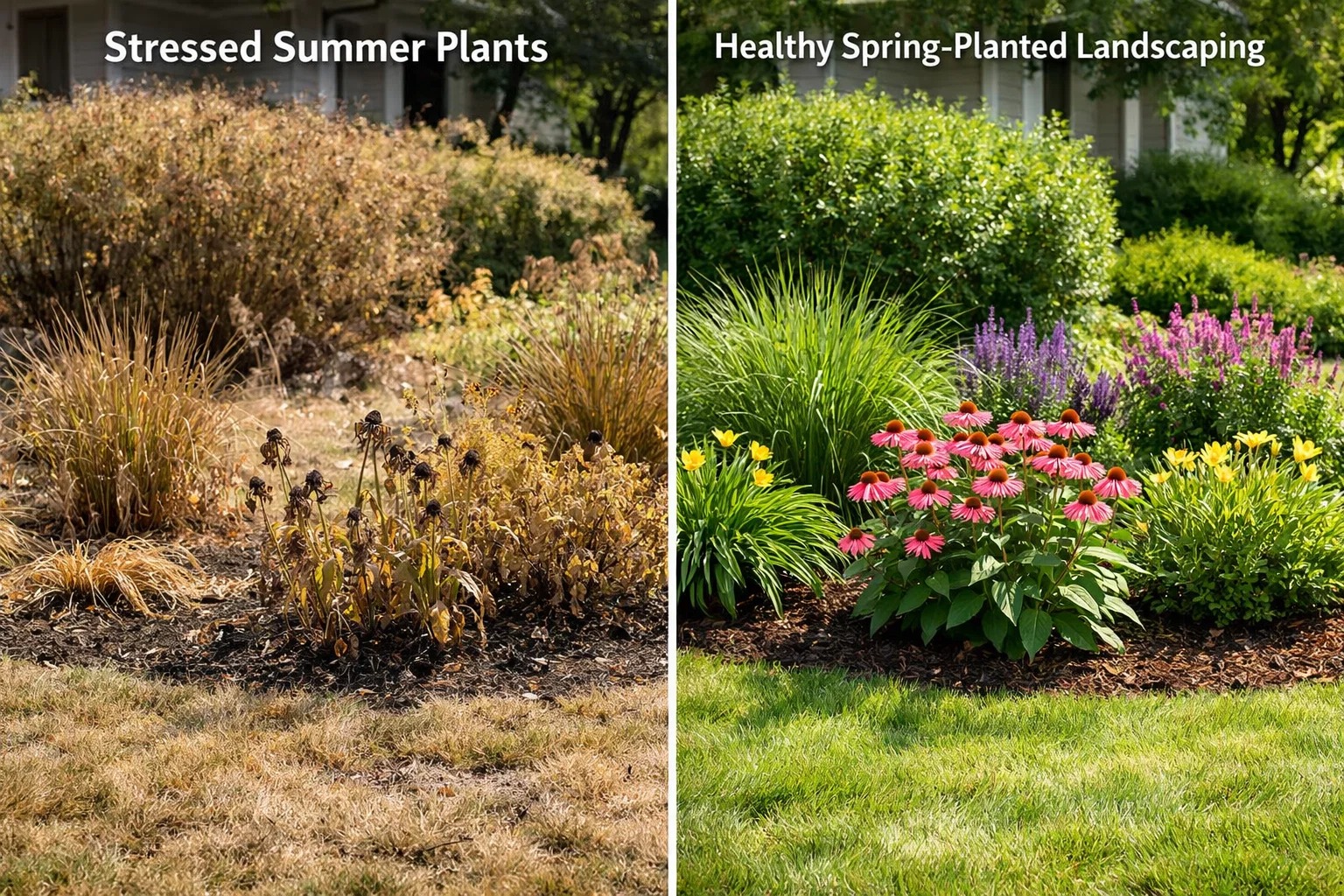
Every homeowner wants a healthy, vibrant landscape — yet many struggle with wilting plants, yellow leaves, fungal diseases, and pest infestations as soon as summer arrives. While fertilizers and treatments often get the blame, the real cause is frequently poor planting timing.
Planting before the summer heat allows plants to strengthen naturally, build internal resistance, and adapt to their environment before extreme temperatures, humidity, and pests arrive. In North Carolina’s climate, early planting is one of the most powerful strategies for preventing disease, minimizing pest pressure, and ensuring long-term plant health.
Why Heat and Humidity Trigger Plant Disease
North Carolina summers combine high heat with heavy humidity — the perfect breeding ground for fungal diseases, mildew, root rot, and bacterial infections. Newly planted landscapes are especially vulnerable because their roots are shallow and their immune systems are weak.
Common problems caused by late planting include:
- Leaf scorch
- Root rot
- Powdery mildew
- Mold growth
- Fungus infestations
Plants installed in spring develop stronger cellular structures and deeper roots, making them far more resistant when these threats appear.
How Early Planting Strengthens Natural Plant Immunity
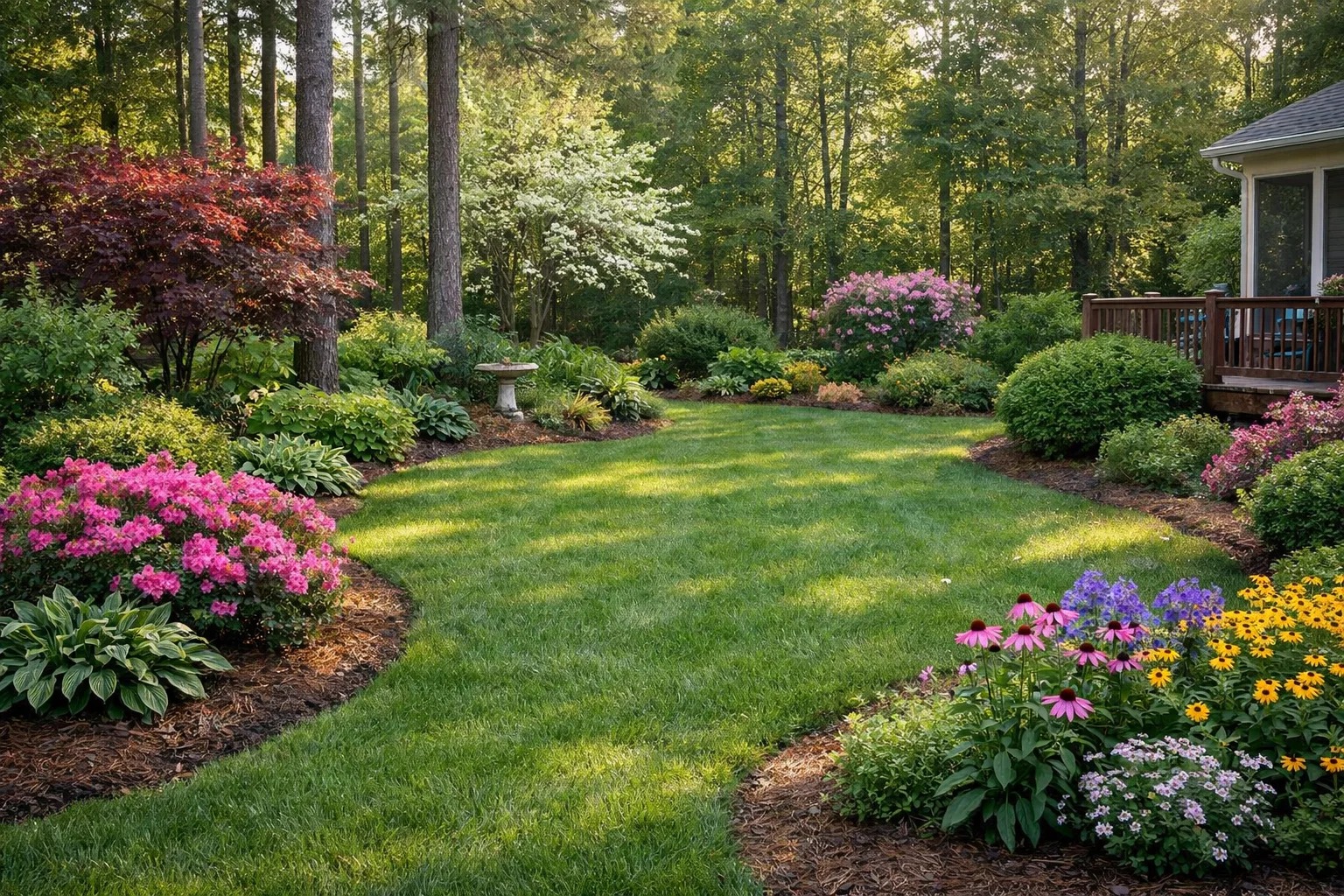
Just like people, plants perform best when they are not under constant stress. Spring planting gives plants time to gradually adapt to sunlight, soil conditions, and moisture levels — strengthening their natural defenses.
This leads to:
- Thicker leaf structure
- Healthier stem development
- Increased nutrient absorption
- Stronger resistance to disease
Well-established plants are naturally more capable of defending themselves without relying heavily on chemical treatments.
Reduced Pest Pressure Through Healthy Growth
Pests are drawn to weak, stressed plants. When landscapes are installed during extreme heat, plants release stress signals that attract insects such as aphids, mites, whiteflies, and beetles.
Spring planting helps:
- Reduce plant stress
- Encourage balanced growth
- Strengthen tissue density
This makes plants less attractive to pests and lowers the risk of infestation throughout summer.
Better Air Circulation and Soil Conditions
Early planting allows for proper spacing, root development, and soil preparation. These elements improve airflow between plants and enhance drainage — both critical factors in disease prevention.
Benefits include:
- Reduced fungal growth
- Improved oxygen flow to roots
- Healthier soil microbiome
- Lower moisture stagnation
Healthy soil and airflow create a naturally protective environment for your landscape.
Less Chemical Dependency, More Natural Beauty
When landscapes are planted at the right time, they require fewer chemical interventions. Reduced reliance on fungicides, pesticides, and fertilizers means:
- Safer environments for children and pets
- Healthier soil biology
- More sustainable landscaping practices
- Lower long-term maintenance costs
Spring planting encourages strong natural growth — not chemical dependency.
Building Landscapes Designed to Thrive in Carolina Summers
Successful landscapes aren’t just planted — they are strategically planned. Professional timing, soil preparation, and plant selection work together to create outdoor spaces that thrive even under North Carolina’s demanding summer conditions.
Let Precision Hardscape & Construction Protect Your Landscape Health
At Precision Hardscape & Construction, we design and install landscapes specifically for North Carolina’s climate challenges. Our planting schedules and installation methods focus on disease prevention, plant strength, and long-term beauty.
📞 Call Matt Jones at (843) 222-5377
🌐 Visit www.precisionhardscapeconstruction.com
Schedule your consultation today and let us build a landscape that stays healthy — even in peak summer heat.