
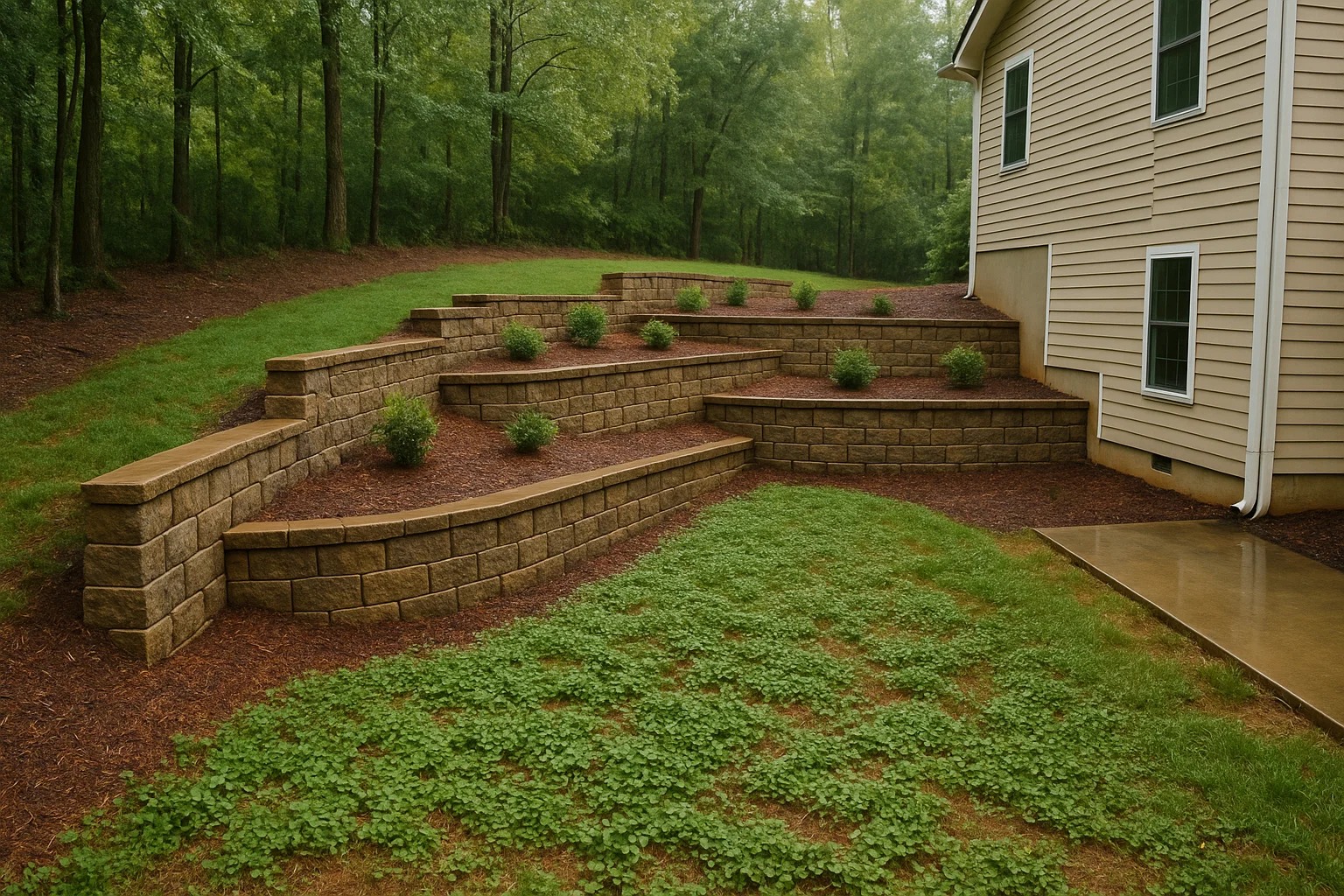
Keep Your Carolina Property Stable and Storm-Ready
The Carolinas’ charm lies in their rolling landscapes, sandy soils, and mild winters — but when those late-season rains hit, they can quickly turn yards into muddy messes. Winter erosion control in the Carolinas is about more than appearance; it’s about protecting your property’s foundation, preventing slope failure, and preserving the strength of your hardscapes.
Unchecked erosion can weaken retaining walls, undermine patios, and displace soil around walkways or driveways. The good news is that with smart design, simple maintenance, and professional reinforcement where needed, homeowners can safeguard their yards from the heavy rains that often arrive between late fall and early spring.
Understanding Erosion in Carolina Landscapes
In both North and South Carolina, the combination of rainfall, clay-rich soil, and uneven terrain makes erosion a year-round concern — but it’s particularly dangerous during the cool, wet months when vegetation is sparse and root systems are dormant. Without protective ground cover or engineered drainage, water flows freely over the surface, carrying soil downhill and pooling around hardscape edges.
This runoff can lead to:
-
Soil displacement near patios, steps, and walkways
-
Paver and stone settling from washed-out base material
-
Slope instability on uneven or tiered properties
-
Drainage clogs that redirect water toward your home’s foundation
To prevent these costly problems, it’s essential to blend softscape solutions (like plantings and mulch) with hardscape reinforcements (like retaining walls and grading systems) before the winter rains arrive.
(See our related post on Outdoor Living Spaces That Work Year-Round: Fire Pits, Lighting & Covered Patios for more ideas on preparing your backyard for the colder months.)
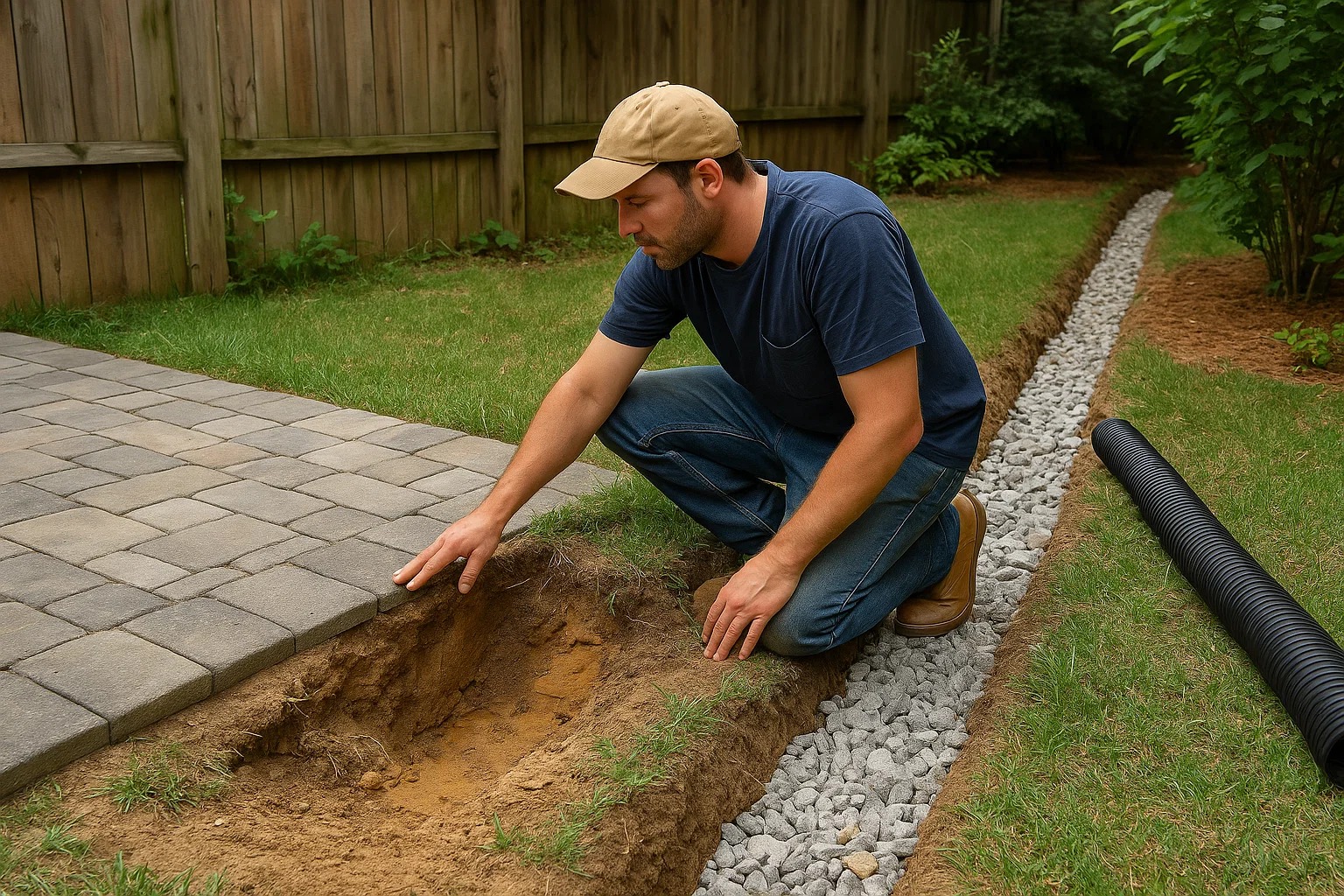
Step 1: Strengthen Soil with Mulch, Plants, and Ground Cover
Bare soil is the number-one enemy of stability. Start by covering exposed areas with organic mulch, pine straw, or decorative gravel to reduce the impact of rain. These materials absorb water, slow runoff, and keep soil in place.
For long-term erosion resistance, introduce deep-rooted native plants that thrive in Carolina climates.
-
For slopes: Use creeping juniper, liriope, or creeping phlox for strong root networks.
-
For garden beds and edges: Plant ornamental grasses or evergreen shrubs that stay green through winter.
-
For heavily shaded areas: Opt for ferns or vinca minor, which hold moisture while stabilizing topsoil.
Planting now gives roots time to establish before the heaviest rain months — turning softscape into a natural erosion barrier.
Step 2: Use Retaining Walls and Terracing for Stability
Retaining walls are more than decorative; they’re one of the most effective defenses against erosion. Properly built walls reduce slope steepness, slow water flow, and prevent soil from collapsing or shifting.
Modern wall systems include:
-
Segmental retaining walls: Built with interlocking concrete blocks for strength and drainage.
-
Natural stone walls: Aesthetic and durable, blending seamlessly with Carolina architecture.
-
Terraced landscapes: Multiple low walls that divide large slopes into manageable, plantable sections.
Behind every wall, a drainage layer of gravel and perforated pipe is essential. This prevents hydrostatic pressure buildup — one of the main causes of wall failure during prolonged rainfall.
If your existing retaining wall leans or shows cracks, it’s time for an inspection. A small repair now can prevent a full collapse after a few weeks of steady winter rain.
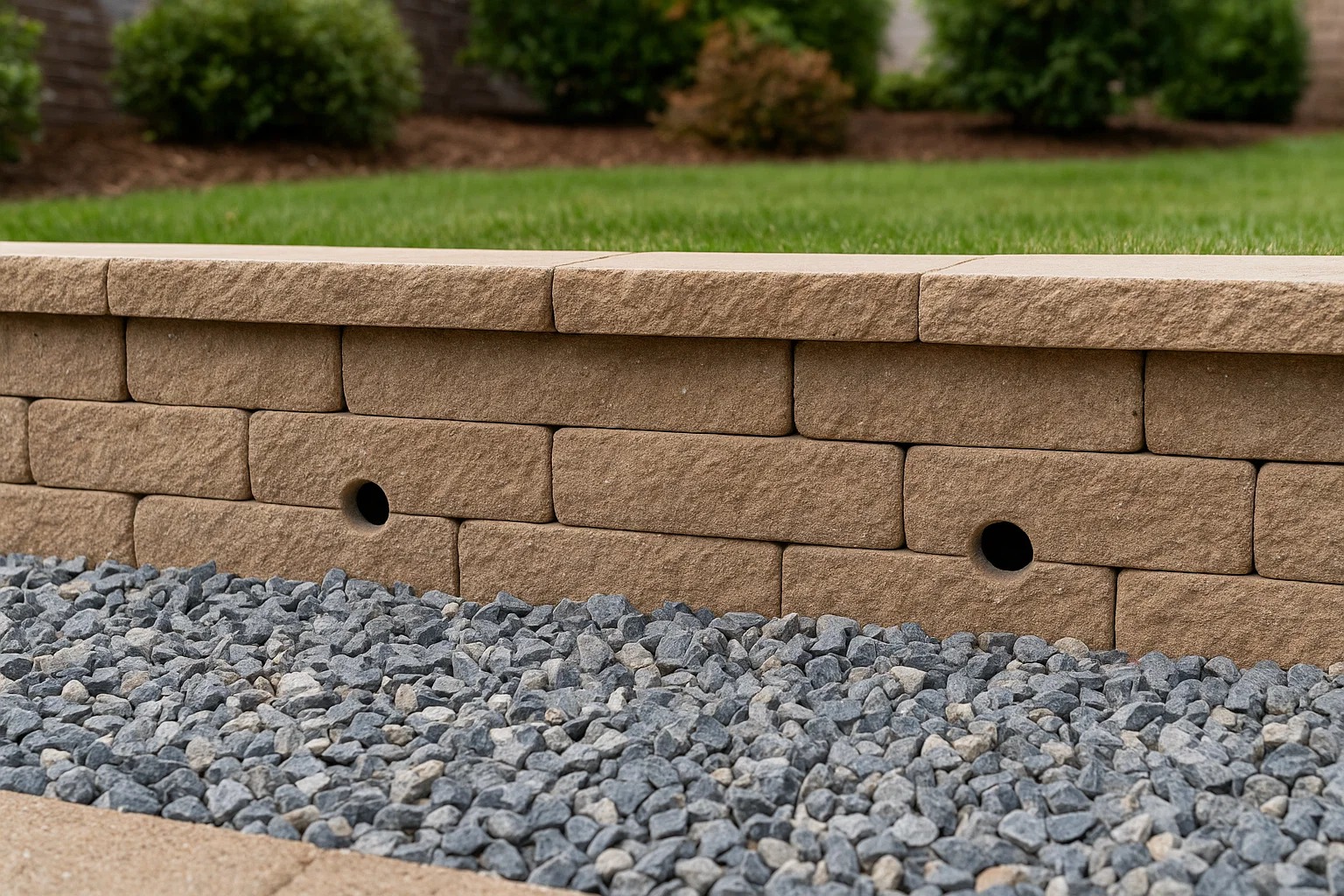
Step 3: Grade and Drain Like a Pro
The unsung hero of erosion control is proper grading. Your yard should direct water away from foundations, patios, and walls — never toward them.
Inspect your property after a rain:
-
Are puddles forming near the house or walkways?
-
Is water cutting small channels into your mulch beds or lawn?
-
Does runoff pool behind walls or steps?
If the answer is yes, you likely need drainage improvements such as:
-
French drains or swales to redirect surface water.
-
Catch basins and grates to collect heavy runoff.
-
Permeable pavers that allow rain to soak into the soil instead of running off.
A professional hardscape contractor can fine-tune your grading and install these systems to ensure lasting protection.
Step 4: Post-Storm Soil Stabilization
After heavy rainfall, inspect your property for early signs of erosion:
-
Gaps behind retaining walls.
-
Exposed roots or soil displacement.
-
Settling around patios or walkways.
-
Clogged drains or sediment buildup.
Small issues can often be resolved with backfill, new mulch, or re-seeding. However, if your yard shows significant washouts, call a professional immediately to prevent long-term structural damage.
At Precision Hardscape Construction, our team specializes in drainage correction, retaining wall reinforcement, and slope restoration. We help Carolina homeowners strengthen their landscapes against winter storms — restoring stability, beauty, and peace of mind.
Keep Your Yard Secure Through Every Season
Erosion may be invisible at first, but its damage compounds over time. Taking proactive steps today — from installing proper drainage and retaining walls to maintaining healthy plant cover — ensures your property stays stable through winter and beyond.
For more guidance on winter erosion control in the Carolinas, contact Precision Hardscape Construction today at (843) 222-5377 or visit www.PrecisionHardscapeConstruction.com. We proudly serve Calabash, Sunset Beach, Ocean Isle, Shallotte, and North Myrtle Beach, helping homeowners protect what matters most.