
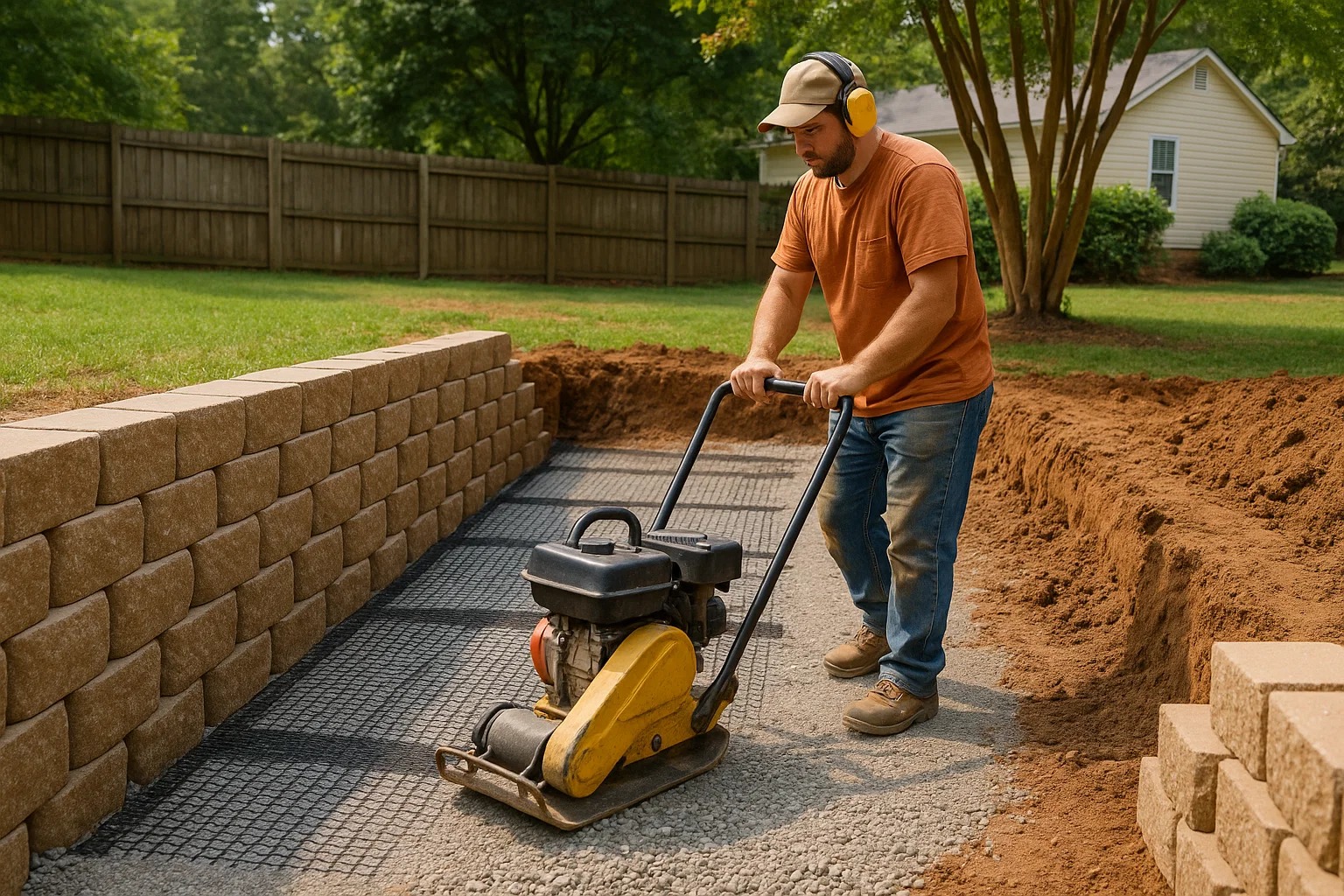
The Foundation of a Safe and Beautiful Landscape
Strong landscaping starts with stability. A well-built retaining wall doesn’t just shape the terrain—it protects it. These structures hold back soil, manage elevation changes, and prevent erosion that can damage foundations, driveways, or patios. But when heavy rain or flooding hits, even the most attractive wall can fail if it wasn’t engineered correctly. True strength in outdoor construction begins beneath the surface—with proper retaining wall drainage and stability systems that allow your wall to resist pressure, movement, and the test of time.
In the Carolinas, where sudden downpours and saturated ground are common, designing a retaining wall that can withstand hydrostatic pressure is essential. Without adequate drainage or reinforcement, water buildup behind the wall acts like a slow-moving wrecking ball, pushing, bowing, and cracking stone or concrete until it collapses. The good news? With the right engineering, materials, and maintenance, your retaining wall can perform flawlessly through every storm season.
Understanding the Science Behind Retaining Wall Failure
When water collects behind a retaining wall, it creates hydrostatic pressure—the invisible force that builds as soil becomes saturated. A gallon of water weighs about 8.3 pounds; multiply that by thousands of gallons trapped behind your wall, and the result is immense lateral stress. Walls not designed to release this pressure inevitably fail over time.
1. Inadequate Drainage Systems:
The number one cause of failure is poor or missing drainage. A properly engineered wall includes drainage gravel, perforated drainpipes (also known as French drains), and weep holes that let water escape. Without these features, water accumulates behind the wall, turning compacted soil into a heavy, unstable mass.
2. Poor Backfill Material:
Some builders use leftover soil or clay as backfill, which absorbs water and expands. This traps moisture instead of letting it flow freely away from the wall. A professional installation uses 3/4-inch angular gravel or crushed stone behind the wall to encourage fast drainage and prevent settlement.
3. Lack of Geogrid Reinforcement:
Walls over four feet high need geogrid reinforcement—a flexible, synthetic mesh that ties the wall face into the soil behind it. This reinforcement acts like a horizontal anchor, distributing pressure evenly and improving stability, especially on sloped terrain.
4. Insufficient Base Preparation:
Every strong wall starts with a compacted base of crushed stone or gravel. Without this, the structure can settle unevenly during heavy rain, leading to cracks, bulging, or total collapse.
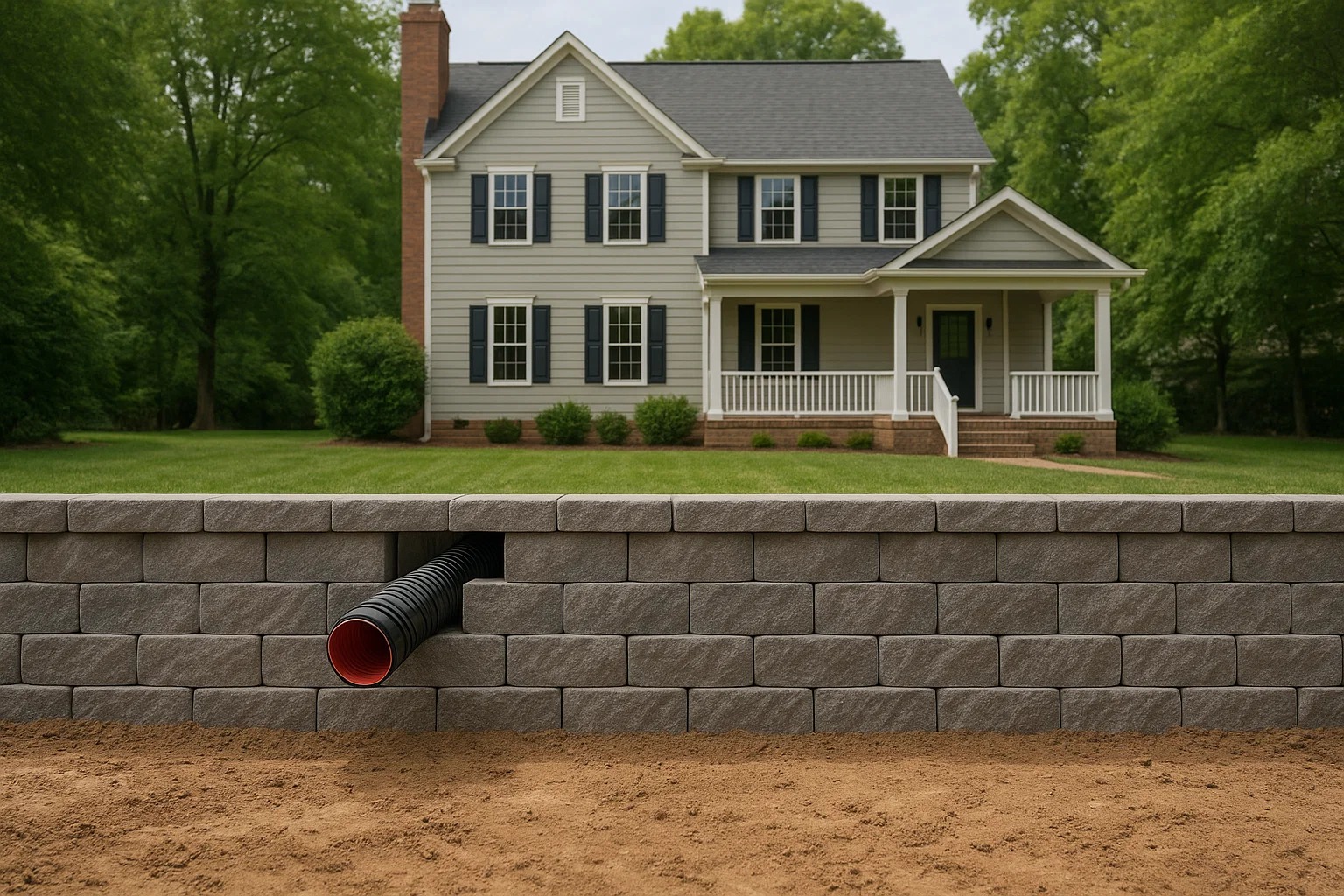
How to Engineer Retaining Walls That Last
A wall that’s built to last combines drainage precision, structural reinforcement, and soil compatibility. Proper engineering doesn’t just prevent disaster—it preserves beauty and function for decades.
1. Build on Solid Foundations:
Start with a trench that’s deep enough for one full course of blocks below grade (typically 6–8 inches) and fill it with compacted crushed stone. This creates a stable footing and promotes quick water drainage beneath the wall. For taller or load-bearing walls, reinforced concrete footings may be required.
2. Design Effective Drainage:
Behind the first row of blocks, place a 4-inch perforated drainpipe wrapped in landscape fabric to prevent clogging. Slope the pipe to daylight or to an outlet where water can escape freely. Backfill with drainage gravel up to one foot from the wall face, then top with soil. If possible, include weep holes at the base every 4–6 feet to release trapped water pressure during storms.
3. Include Geogrid at the Right Intervals:
For walls higher than 4 feet, install geogrid layers between every two to three rows of blocks, extending back into the slope as specified by the manufacturer. This reinforcement locks the wall and the soil together, greatly improving resistance to sliding or tilting under wet conditions.
4. Choose the Right Materials:
High-quality concrete blocks, segmental retaining wall systems, or natural stone are designed to interlock and resist shifting. Avoid cheap, thin garden edging blocks that lack structural integrity. If aesthetics matter, consider a stone veneer over a concrete core—you’ll get both strength and beauty.
5. Control Surface Water Above the Wall:
Install gutter extensions, swales, or catch basins to divert roof runoff and lawn drainage away from the wall’s backfill area. Preventing excess water from ever reaching the wall is the simplest way to avoid hydrostatic pressure.
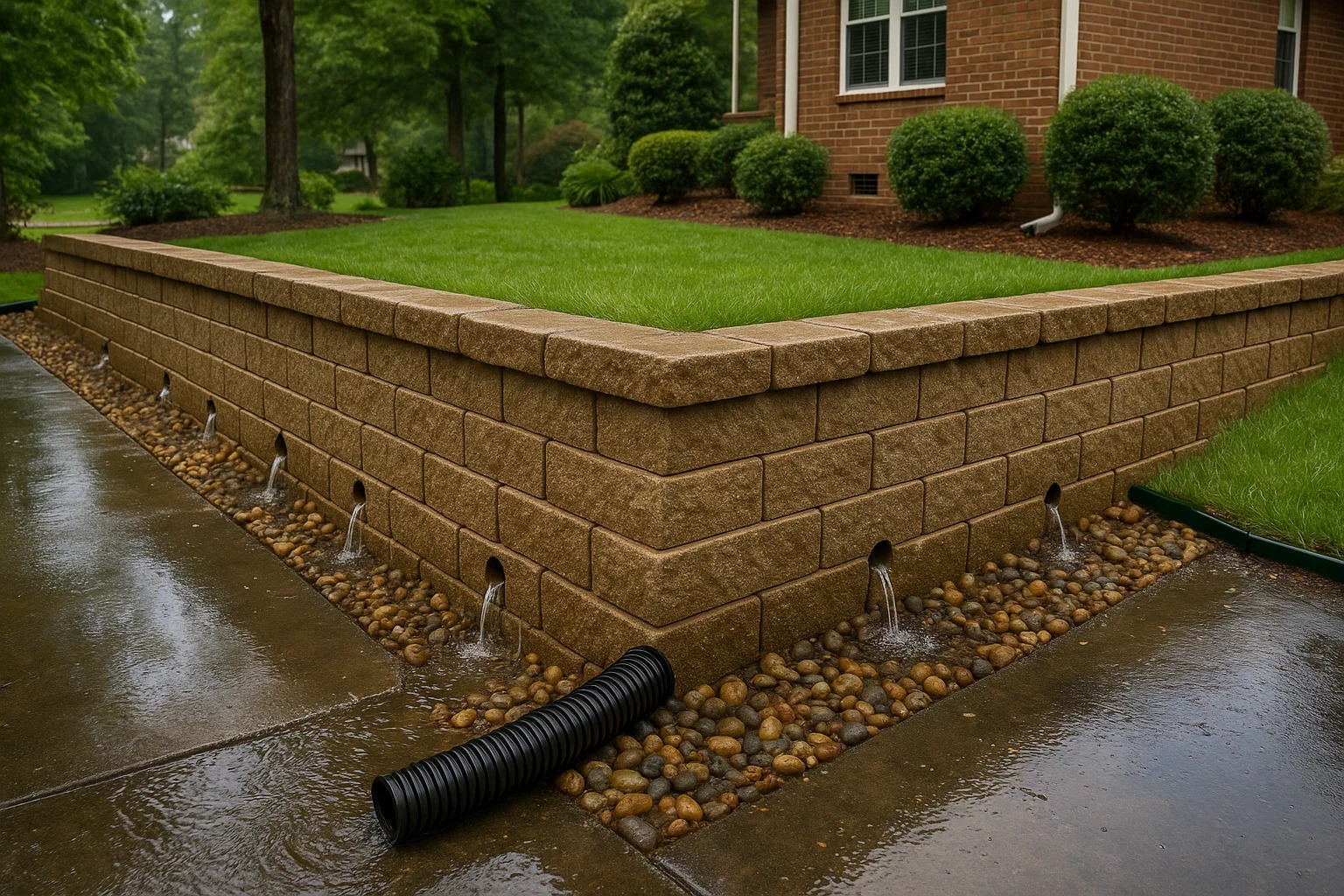
Maintenance and Inspection Tips for Long-Term Strength
Even perfectly built walls need maintenance to stay effective. Seasonal checks help identify early warning signs before they escalate into major repairs.
-
Inspect After Every Major Storm: Look for signs of leaning, cracking, or bulging. Even minor shifts can indicate drainage failure beneath the surface.
-
Keep Drains and Weep Holes Clear: Debris or soil buildup can block outlets, trapping water behind the wall. Regularly flush drainpipes if necessary.
-
Recompact Surrounding Soil: Heavy rains can erode soil near the wall’s top, reducing stability. Replace and compact any lost soil or mulch promptly.
-
Watch for Efflorescence or Mold: White powdery residue or dark streaks indicate trapped moisture, signaling that your drainage layer may need attention.
-
Re-seal Natural Stone Walls: Use breathable, penetrating sealers to prevent excessive water absorption and freeze-thaw damage in colder months.
By addressing minor issues early, homeowners can avoid costly reconstruction later—and contractors can preserve their reputation for quality work.
Engineering for the Carolinas: Smart Design for Local Conditions
In North and South Carolina, clay-heavy soils, coastal rainfall, and sloped terrain create unique challenges for retaining walls. Clay holds water, increasing hydrostatic pressure, while coastal humidity accelerates material degradation. That’s why local experience matters—each soil type, slope angle, and drainage path requires tailored engineering solutions.
If you’re considering upgrading your property before the next storm season, explore our Retaining Wall Construction Services and Drainage Upgrades.
At Precision Hardscape Construction, we’ve designed and built retaining walls that not only add curb appeal but also provide decades of structural reliability. From engineered retaining walls with geogrid reinforcement to stormwater redirection systems, our projects are built to perform under pressure—literally. Whether you’re replacing a failing wall or planning a new installation, we engineer every layer to endure the Carolina climate.
Call (843) 222-5377 or visit www.PrecisionHardscapeConstruction.com to schedule a consultation. Let’s design a wall that keeps your landscape secure, stable, and stunning—through every storm.