

Standing Water Near Your Foundation?
During winter, many homeowners notice something unsettling after a stretch of rain: water lingering near the foundation of the home. It may appear along the base of exterior walls, near walkways, or in low areas close to crawlspace vents. While this can seem harmless at first, persistent standing water near a foundation is often a sign of a drainage issue that should not be overlooked.
In coastal regions like Brunswick County and the Grand Strand, winter conditions frequently bring drainage problems to the surface, making this the ideal time to identify and address them.
Why Water Collects Near Foundations in Winter
Winter rainfall behaves differently than summer storms. Cooler temperatures reduce evaporation, and already-saturated soil has limited capacity to absorb additional moisture. In areas such as Ash, Calabash, Carolina Shores, Sunset Beach, Little River, and North Myrtle Beach, these factors combine with naturally high water tables to create drainage challenges around homes.
Common causes include:
-
Improper grading that directs water toward the house instead of away from it
-
Soil settlement over time, creating low spots near the foundation
-
Blocked or undersized drainage systems that can no longer handle runoff
-
Hard surfaces such as driveways and walkways that channel water toward the structure
When these issues occur together, water tends to collect at the home’s perimeter — exactly where it can do the most harm.
Why Standing Water Near a Home Is a Concern
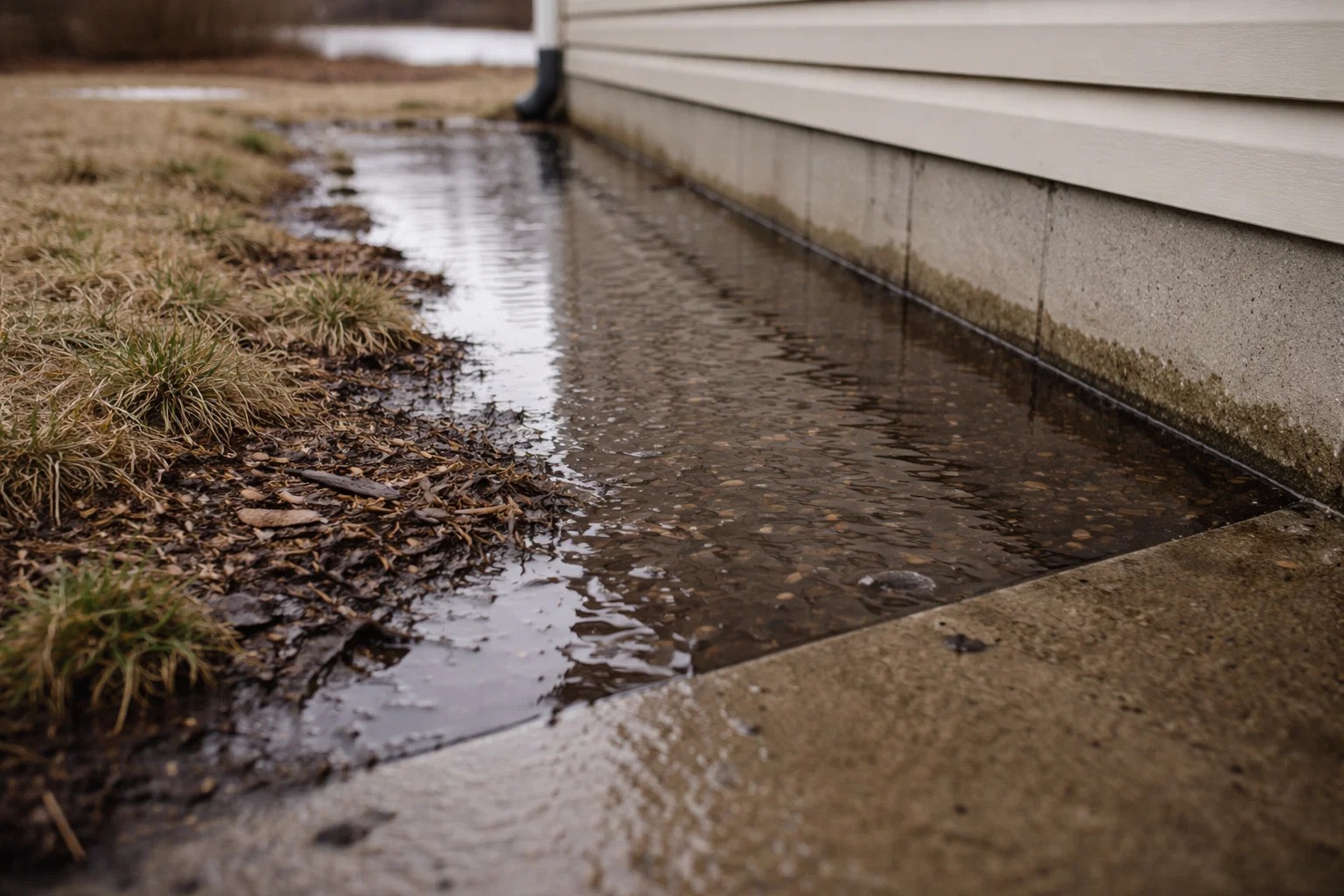
Water sitting near a foundation is more than a surface problem. Over time, it can lead to:
-
Moisture intrusion into crawlspaces or basements
-
Increased risk of mold and mildew during cooler months
-
Soil erosion that undermines structural support
-
Damage to landscaping and hardscape features
-
Long-term foundation stress if left uncorrected
Winter often exposes these problems clearly, as pooling water remains visible for longer periods and does not dry out as quickly as it might in warmer seasons.
Temporary Fixes vs. Lasting Solutions
Homeowners sometimes attempt quick fixes such as redirecting downspouts or filling low spots with soil. While these measures may reduce symptoms temporarily, they rarely address the underlying issue.
Effective drainage solutions consider:
-
Yard slope and water flow patterns
-
Soil composition and compaction
-
Proximity of water to the foundation
-
Existing drainage infrastructure
Addressing drainage at the source helps prevent water from returning to the same problem areas with each rainfall.
Why Winter Is the Right Time to Evaluate Drainage
Waiting until spring to investigate drainage problems can make them harder to diagnose. Winter conditions often reveal where water naturally collects, making it easier to identify the root cause and plan an effective solution.
Additionally, addressing drainage before the heavier rains of spring can help homeowners avoid worsening damage and scheduling delays later in the year.
Professional Drainage Evaluation Makes the Difference
Every property is different, particularly in coastal North and South Carolina. A professional drainage evaluation looks beyond surface water and considers how the entire yard interacts with the home and surrounding landscape.
Precision Hardscape & Construction works with homeowners throughout Ash, Calabash, Carolina Shores, Sunset Beach, Little River, and North Myrtle Beach to identify winter drainage problems and recommend solutions designed for long-term performance. Homeowners who notice standing water near their foundation can contact Precision Hardscape & Construction at (843) 222-5377 to schedule a professional evaluation and discuss drainage options tailored to their property.