
The Importance of Landscaping and Hardscaping in Protecting Your Home
A well-designed landscape and hardscape do more than enhance curb appeal—they form a critical part of your property’s defensive system against the elements. Strong patios, reinforced retaining walls, and properly graded walkways can prevent costly erosion, flooding, and structural damage. In regions like coastal North and South Carolina, where fall storms and hurricanes frequently sweep through, your outdoor spaces face powerful forces of wind and water. Maintaining your hardscape isn’t just an aesthetic choice—it’s an investment in the safety and longevity of your home.
As we approach another unpredictable hurricane season, storm-proofing your hardscape becomes essential. While you can’t control nature, you can absolutely control how well-prepared your property is to endure it. From securing loose pavers to reinforcing retaining walls, a few proactive steps can make the difference between a quick cleanup and thousands of dollars in repairs. Below, we’ll cover expert-level strategies to prepare your patios, walkways, and retaining walls before the next major storm hits.
Inspecting and Reinforcing Before the Storm Hits
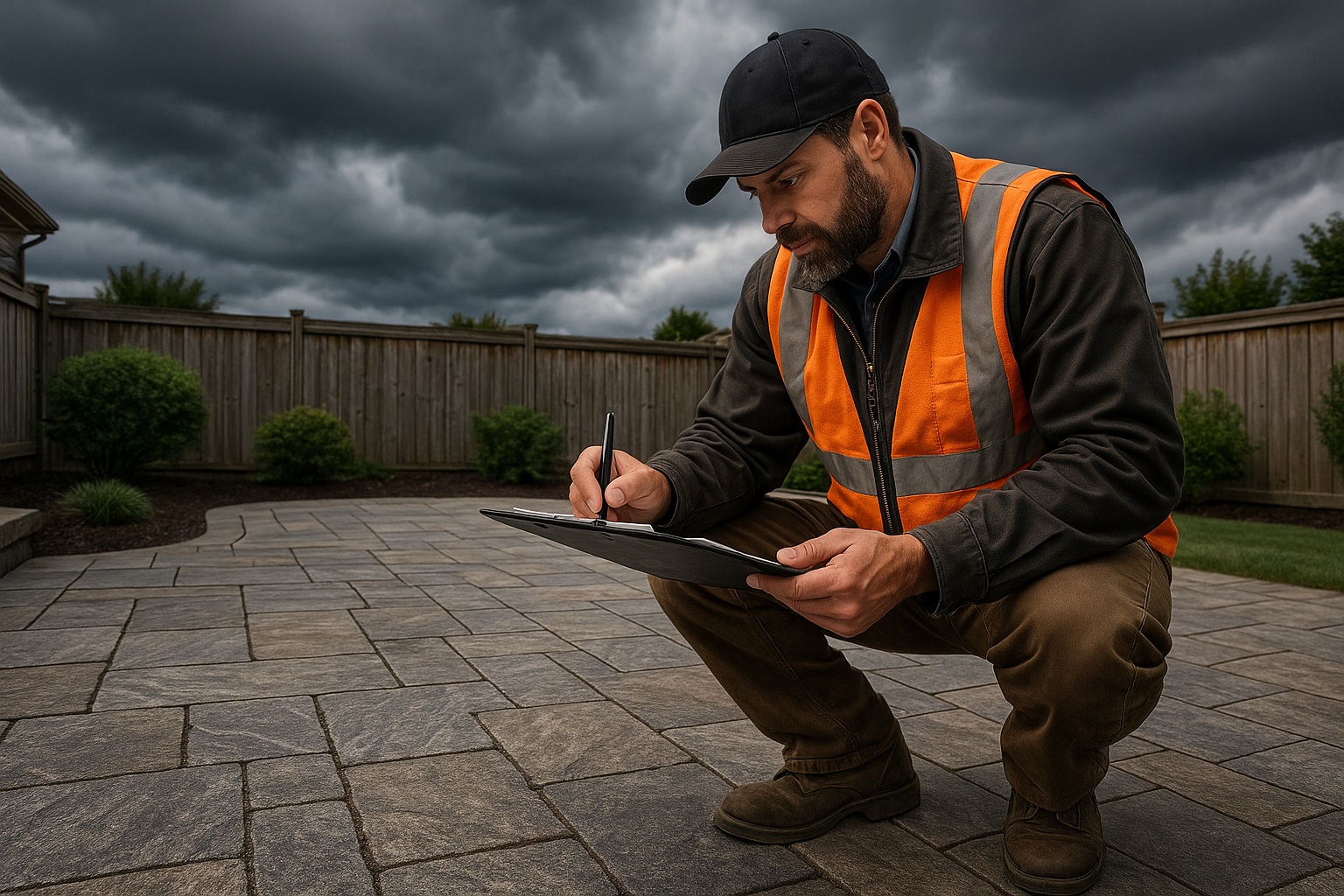
Before the skies darken and winds rise, a thorough inspection of your hardscape is your first line of defense. Start by checking joint sands—the material that fills the spaces between pavers. Over time, heavy rains and pressure washing can wash out these joints, leaving pavers vulnerable to movement. Refill them with polymeric sand, which hardens when wet, locking the stones together and minimizing water intrusion.
Next, examine edge restraints, the barriers that keep your pavers from shifting outward. These can loosen due to soil erosion or previous flooding. Re-secure them with proper anchoring spikes or replace damaged sections entirely. For retaining walls, inspect for cracks, bulging, or separation between blocks—early signs of pressure buildup behind the wall. Small cracks can quickly worsen under the weight of stormwater, so apply mortar repair compound or epoxy filler where necessary.
Also, check your slope grading. Water should flow away from your home and structures, not pool near foundations or patio surfaces. A misaligned grade can lead to flooding or foundation damage. If you notice areas where water tends to settle, consider adding channel drains, French drains, or adjusting the elevation slightly with gravel or soil fill.
Securing Vulnerable Elements and Temporary Protection
Once you’ve addressed structural vulnerabilities, focus on securing decorative or movable elements. Loose pavers, stepping stones, benches, planters, and decorative rocks can become dangerous projectiles in high winds. Either anchor them firmly in place or move them indoors. For outdoor kitchens or built-in features, ensure that gas lines, electrical components, and loose fittings are shut off and covered.
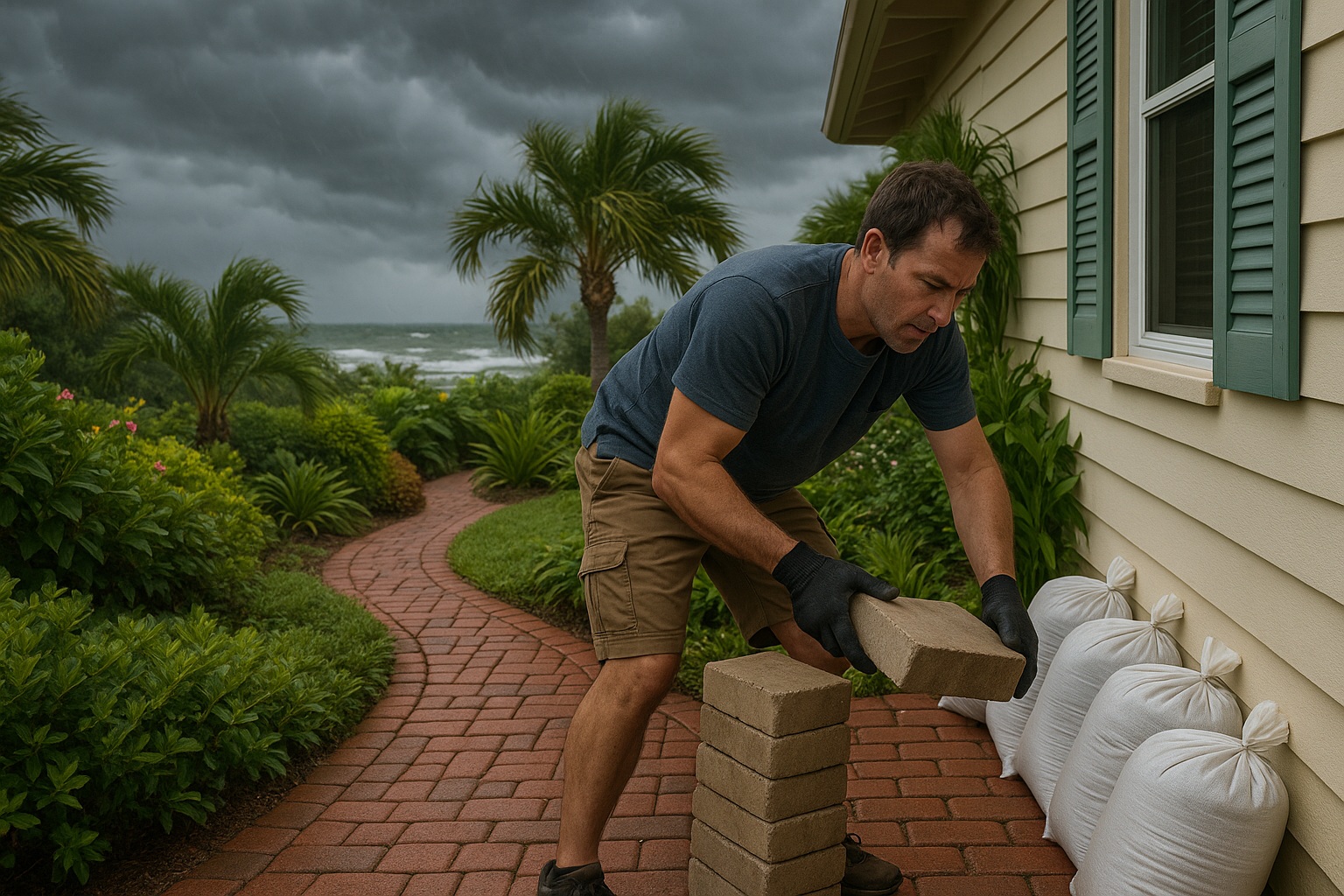
If your hardscape includes steps or tiered walkways, use sandbags or weighted barriers along lower sections to redirect floodwater. Temporary coverings like heavy-duty tarps can help protect exposed materials such as travertine or limestone from erosion and staining.
Homeowners near coastal or flood-prone areas should also consider water-permeable pavers, which allow stormwater to drain through rather than pooling on the surface. These systems are not only eco-friendly but also reduce hydrostatic pressure that can lead to shifting or cracking. Finally, sealants play a major role in storm protection. Apply a high-quality penetrating sealer to stone, brick, or concrete every few years. This creates a hydrophobic barrier, preventing water absorption that leads to cracking during temperature changes.
What to Do in the Days Just Before a Forecasted Hurricane
When a hurricane or severe storm warning is issued, time becomes your most valuable resource. In the 48 to 72 hours before landfall, follow a simple checklist:
-
Clear all debris—leaves, branches, and mulch—from patios and drains. These can block water flow and cause localized flooding.
-
Store outdoor furniture and planters indoors. Even heavy items can be lifted by sustained winds.
-
Disconnect power sources for outdoor lighting or water features to avoid electrical hazards.
-
Check and secure drainage systems—ensure grates and inlets are unobstructed.
-
Inspect your retaining walls for drainage outlet functionality. Blocked weep holes can increase pressure and cause failure.
-
Apply temporary waterproof barriers or sandbags along low areas where runoff typically collects.
For properties with sloped yards or hillside features, reinforce erosion-prone zones with erosion control blankets, coir mats, or strategically placed stones. These add friction and reduce soil displacement during heavy rainfall. After the storm passes, inspect immediately—but do not start repairs until you’re certain the area is stable and free from hidden hazards.
Post-Storm Evaluation and Long-Term Protection
Once the danger has passed, it’s time for a detailed post-storm inspection. Look for uneven surfaces, loose pavers, displaced gravel, or retaining wall bulges. Standing water that lingers more than 24 hours indicates a grading or drainage problem that must be corrected. Remove debris gently to avoid scratching sealed surfaces, and consider scheduling a professional hardscape inspection for hidden foundation or structural issues.
Over the long term, preventive maintenance pays for itself. A well-built and properly maintained hardscape can withstand multiple storm seasons with minimal damage. Routine cleaning, resealing, and joint maintenance extend the life of your investment and preserve your property’s value. Remember, hardscape resilience isn’t about resisting nature—it’s about working intelligently with it.
Your Partner in Hardscape Durability and Protection
At Precision Hardscape Construction, we understand the unique challenges that coastal weather brings to outdoor living spaces. Whether you need storm preparation, drainage solutions, hardscape repair, or complete outdoor redesign, our experienced team is ready to help you protect and beautify your property. We specialize in walkways, patios, retaining walls, synthetic turf, outdoor kitchens, and erosion control systems—all built to last through every season.
Don’t wait until the next storm warning—call us today at (843) 222-5377 or visit www.PrecisionHardscapeConstruction.com to schedule your consultation. Protect your investment and keep your outdoor spaces safe, functional, and beautiful year-round.