
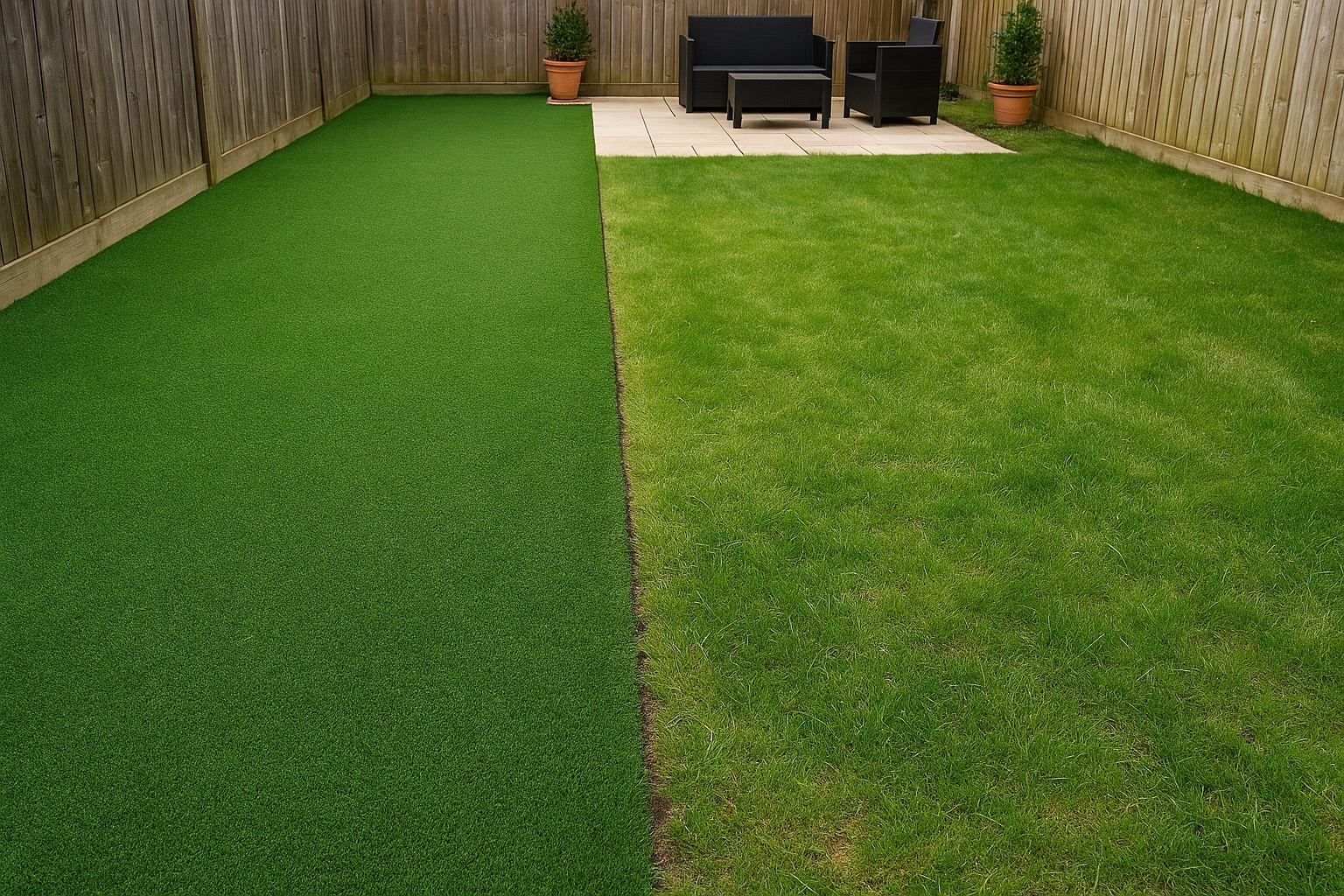
When it comes to creating a safe, functional, and beautiful lawn for your home, the debate between synthetic turf vs natural grass is one every homeowner faces. If you have children, pets, or an active lifestyle—or you simply want to reduce your weekend maintenance—it’s important to understand the differences between these two lawn options.
For homeowners along the Carolina coast, where rain, humidity, salt air, and sandy soil challenge even the most dedicated lawn lovers, the decision becomes even more critical. This side-by-side comparison will help you determine which surface is better suited for your family, pets, climate, and lifestyle.
Safety and Comfort for Kids and Pets
Your lawn is more than a backdrop—it’s a play zone, relaxation space, and high-traffic surface that needs to handle rough use while staying safe.
Natural Grass:
-
Soft and cool to the touch, but can develop muddy patches, bare spots, and inconsistent terrain over time.
-
May host pests, allergens, and fertilizers that can irritate children or pets.
-
Often slippery when wet, increasing the risk of slips and falls.
Synthetic Turf:
-
Designed to be level, cushioned, and slip-resistant, ideal for kids playing sports or running barefoot.
-
Antimicrobial turf systems are available specifically for pet areas, helping eliminate odors and bacteria.
-
Turf doesn’t harbor pests or allergens, making it a cleaner, allergy-friendly option for families.
Verdict: For active families and pet owners, synthetic turf offers more consistent safety and cleanliness year-round.

Maintenance Requirements
One of the most important differences between turf and grass is the amount of time and money required to maintain them.
Natural Grass:
-
Needs frequent mowing, watering, fertilizing, and pest control, especially in coastal regions with sandy or salty soil.
-
Requires seasonal aeration, weed removal, and irrigation system maintenance.
-
Inconsistent growth due to sunlight, shade, pet traffic, or heavy rain.
Synthetic Turf:
-
Virtually zero mowing, watering, or fertilizing needed.
-
Occasional rinsing, debris removal, and brushing of high-traffic areas keep turf looking new.
-
No need for chemicals or irrigation—saving both time and utility costs.
Verdict: Synthetic turf wins for low maintenance, especially in regions with challenging weather or water restrictions.
Durability and Lifespan
Both natural grass and synthetic turf wear differently over time, especially with heavy use from children and pets.
Natural Grass:
-
Prone to damage from foot traffic, pet urine, sports, and shaded areas.
-
Requires continuous reseeding, sodding, or patch repair to stay lush.
-
Weeds and pests can degrade grass quality quickly.
Synthetic Turf:
-
Built to withstand high-traffic use, pet activity, and extreme weather.
-
Professional installations last 15–20 years, with minimal touch-ups required.
-
Pet systems are designed to drain quickly and resist odor or discoloration.
Verdict: Synthetic turf outperforms grass in durability, especially for households with children or multiple pets.
Environmental Impact
Eco-conscious homeowners often weigh the environmental pros and cons when comparing turf and natural grass.
Natural Grass:
-
Offers natural cooling and oxygen production, but requires thousands of gallons of water annually.
-
Lawn chemicals like fertilizers and herbicides can harm local waterways and ecosystems.
-
Gas-powered mowers contribute to carbon emissions and noise pollution.
Synthetic Turf:
-
Uses no water, pesticides, or fuel, significantly reducing environmental footprint.
-
Some systems are made from recyclable or recycled materials.
-
No risk of fertilizer or pesticide runoff into oceans or marshes.
Verdict: Synthetic turf is more eco-friendly in terms of water conservation, emissions, and chemical reduction, especially in coastal environments.
Aesthetic and Design Flexibility
Looks matter, and both options offer different visual outcomes.
Natural Grass:
-
Offers a classic, organic look but can be patchy, weedy, or overgrown.
-
Difficult to grow evenly in shaded, salty, or sandy areas.
-
Color may fade in heat, dry spells, or from pet use.
Synthetic Turf:
-
Stays perfectly green and manicured year-round.
-
Available in different blade lengths, colors, and textures to match regional grass styles.
-
Easy to install in hard-to-grow spaces, around pools, between pavers, or in narrow yards.
Verdict: Synthetic turf delivers consistent beauty and is far easier to customize for modern outdoor living designs.
Which Lawn is Right for You?
If you love the idea of weekend yard work, prefer an organic lawn under your feet, and don’t mind the maintenance, natural grass may still be a good fit. But for most coastal Carolina homeowners, the advantages of synthetic turf are hard to ignore.
When it comes to safety, convenience, appearance, and durability, synthetic turf outperforms natural grass in nearly every category—especially for families with kids, pets, or a love of easy outdoor living.
Let Precision Hardscape & Construction Help You Choose the Right Lawn
At Precision Hardscape & Construction, we help you make the right decision for your yard, lifestyle, and goals. Whether you’re ready to replace your lawn with synthetic turf or want to combine natural and artificial elements into a balanced design, our team delivers expert planning and installation.
📞 Call us today at (843) 222-5377
🌐 Visit: www.precisionhardscapeconstruction.com to schedule your consultation.