Why Proper Downspout Extensions Matter Before Pouring Concrete
When planning a new patio, driveway, walkway, or slab, drainage is often overlooked — yet it’s one of the most critical steps in protecting your home and outdoor investment. One of the biggest mistakes homeowners and contractors make is pouring concrete before properly extending gutter downspouts.
Downspouts are designed to move rainwater safely away from your home’s foundation. If that water isn’t redirected correctly before concrete is poured, it can lead to standing water, soil erosion, foundation problems, slab shifting, cracking, and long-term drainage failures.
At Precision Hardscape & Construction, we see these issues far too often — and they’re usually expensive to fix once concrete is already in place. Doing it right from the start saves time, money, and frustration.
What Happens When Downspouts Aren’t Extended Properly?
Failing to extend downspouts correctly before a concrete pour can result in:
-
Water pooling next to foundations
-
Soil erosion under slabs and patios
-
Cracked or uneven concrete
-
Poor yard drainage
-
Water intrusion into crawlspaces or basements
-
Premature deterioration of hardscaping
Water always finds the path of least resistance. If that path leads underneath or around new concrete, structural issues are only a matter of time.
The Professional Method: How Downspouts Should Be Extended Before Concrete
1. Use PVC Pipe Beneath the Concrete
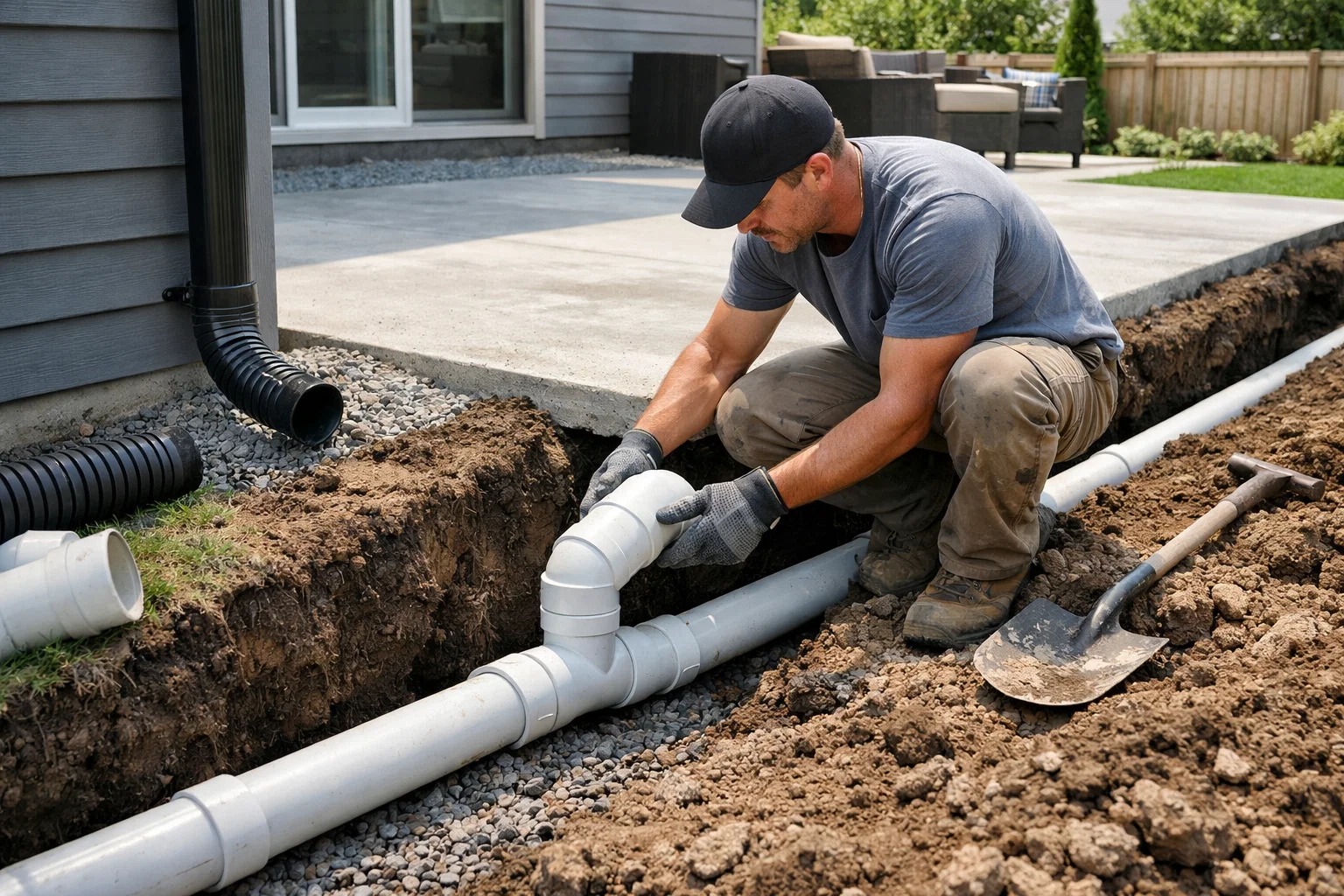
Flexible black corrugated pipe should never be used under concrete. It collapses easily, clogs faster, and can shift over time. Instead, professionals use rigid PVC pipe, which maintains its shape, ensures consistent water flow, and lasts for decades.
PVC piping should be installed before the concrete pour, positioned beneath the slab, and directed toward a safe discharge location.
2. Plan the Drainage Path Carefully
Every property is different. The slope of the yard, soil type, landscaping, and foundation layout all affect how water should be routed.
Proper planning ensures:
-
Water is carried far enough away from the structure
-
The discharge point prevents erosion
-
Water doesn’t flow back toward the home
-
Yard grading supports natural drainage
This step is essential to prevent future drainage failures.
3. Use Proper Fittings and Connections
Adapters, reducers, and transitions must be properly fitted and sealed to prevent leaks, clogs, and pipe separation. Poor connections often lead to underground failures that remain hidden until damage becomes severe.
Professional installation ensures tight connections and long-term durability.
4. Position Pop-Up Emitters Correctly
Pop-up emitters allow water to exit the drainage line safely at ground level. If placed incorrectly, they can cause flooding, erosion, or standing water.
Correct placement ensures:
-
Proper water dispersion
-
Protection of landscaping
-
No water pooling near structures
Why This Step Should Always Come Before a Concrete Pour
Once concrete is poured, drainage corrections become complicated, invasive, and expensive. Cutting through slabs, tunneling underneath concrete, or redirecting flow around hardened surfaces often costs thousands more than proper pre-installation.
Correct drainage installation before concrete protects:
-
Your foundation
-
Your slab
-
Your landscaping
-
Your investment
It is one of the smartest preventative steps you can take.
Why Homeowners Trust Precision Hardscape & Construction
At Precision Hardscape & Construction, we don’t just build beautiful outdoor spaces — we engineer them to perform properly for years to come. Our team specializes in:
-
Hardscaping & outdoor living design
-
Concrete preparation & installation
-
Drainage solutions & grading
-
Walkways, patios, outdoor kitchens, pergolas & fire features
-
Synthetic turf & landscape enhancements
We combine craftsmanship, technical expertise, and local experience to deliver projects that look great and perform flawlessly.
Final Thoughts: Build It Right the First Time
Proper drainage planning before a concrete pour isn’t optional — it’s essential. Taking the time to extend downspouts correctly prevents structural issues, eliminates water problems, and ensures your outdoor project stands the test of time.
If you’re planning a hardscape or concrete project, let the professionals handle the drainage correctly from the start.
Work With Precision Hardscape & Construction
If you’re planning a patio, driveway, walkway, outdoor kitchen, or full backyard transformation, Precision Hardscape & Construction is here to help you design and build it properly from the ground up.
📍 Serving Calabash, NC, Sunset Beach, Ocean Isle Beach, Shallotte, Little River, North Myrtle Beach & Myrtle Beach, SC
📞 Call: (843) 222-5377
🌐 Visit: www.precisionhardscapeconstruction.com
Let’s build something beautiful — and make sure it lasts.