

Creating an inviting, functional outdoor space is one of the smartest ways to add value to your home while enhancing your lifestyle. Whether you’re hosting summer gatherings, enjoying quiet evenings outside, or simply improving curb appeal, your choice of landscaping and hardscaping materials plays a pivotal role. A well-designed patio becomes the centerpiece of your backyard, seamlessly blending comfort, durability, and style.
Choosing the right paver patio material is a critical step in building an outdoor space that meets your needs, complements your home’s architecture, and performs well in your local climate. From affordability and longevity to aesthetic appeal and maintenance, different paver types offer varying benefits. In this guide, we’ll break down the most popular patio paver materials—concrete, brick, and natural stone—so you can make an informed decision and bring your dream patio to life.
Concrete Pavers: Versatile, Durable, and Cost-Effective
Concrete pavers are among the most widely used patio materials due to their affordability, durability, and design flexibility. Made from a mixture of cement, sand, and aggregate, these pavers are factory-molded into a variety of shapes, sizes, and textures. Many even mimic the look of natural stone or brick while offering more budget-friendly pricing.
Pros:
-
Cost-effective: Concrete pavers typically cost between $14 to $17 per square foot (installed), making them ideal for larger patios (if using a concrete slab base, add $4–7/sq ft).
-
Design flexibility: Available in endless shapes, colors, and finishes, concrete pavers allow for custom layouts and patterns.
-
Easy installation and repair: Individual pavers can be replaced without tearing up the entire patio.
-
Strong durability: When properly sealed, they withstand heavy foot traffic and adverse weather conditions.
Cons:
-
Color fading: Over time, exposure to sunlight may cause color to fade without proper sealing.
-
Weed growth: Gaps between pavers can allow weeds to sprout if not maintained.
-
Stains and erosion: Concrete is porous, so it may stain from spills and require regular sealing to maintain its appearance.
Best for: Homeowners seeking customizable and cost-effective solutions with broad aesthetic possibilities.

Brick Pavers: Classic Charm with Eco-Friendly Appeal
Brick pavers bring a timeless, rustic aesthetic to any outdoor space. Made from natural clay fired in a kiln, brick pavers are known for their eco-friendliness, strength, and historical charm. Their uniformity and warm red and brown hues complement traditional and colonial-style homes beautifully.
Pros:
-
Timeless style: Brick pavers offer a classic and elegant look that adds instant character.
-
Eco-friendly: Made from natural materials and often recyclable.
-
Long-lasting: With proper care, brick patios can last 50+ years.
-
Slip resistance: Their textured surface provides good traction, even when wet.
Cons:
-
Higher cost: Expect to pay between $15 to $24 per square foot installed (mid-range $15–18; high-end $17–24), which can be higher than concrete.
-
Limited color options: Bricks primarily come in earth tones, which may not suit all styles.
-
Can crack or chip: Brick pavers may be more prone to cracking under heavy loads compared to stone or concrete.
Best for: Homeowners who prioritize sustainability and traditional aesthetics with moderate maintenance needs.
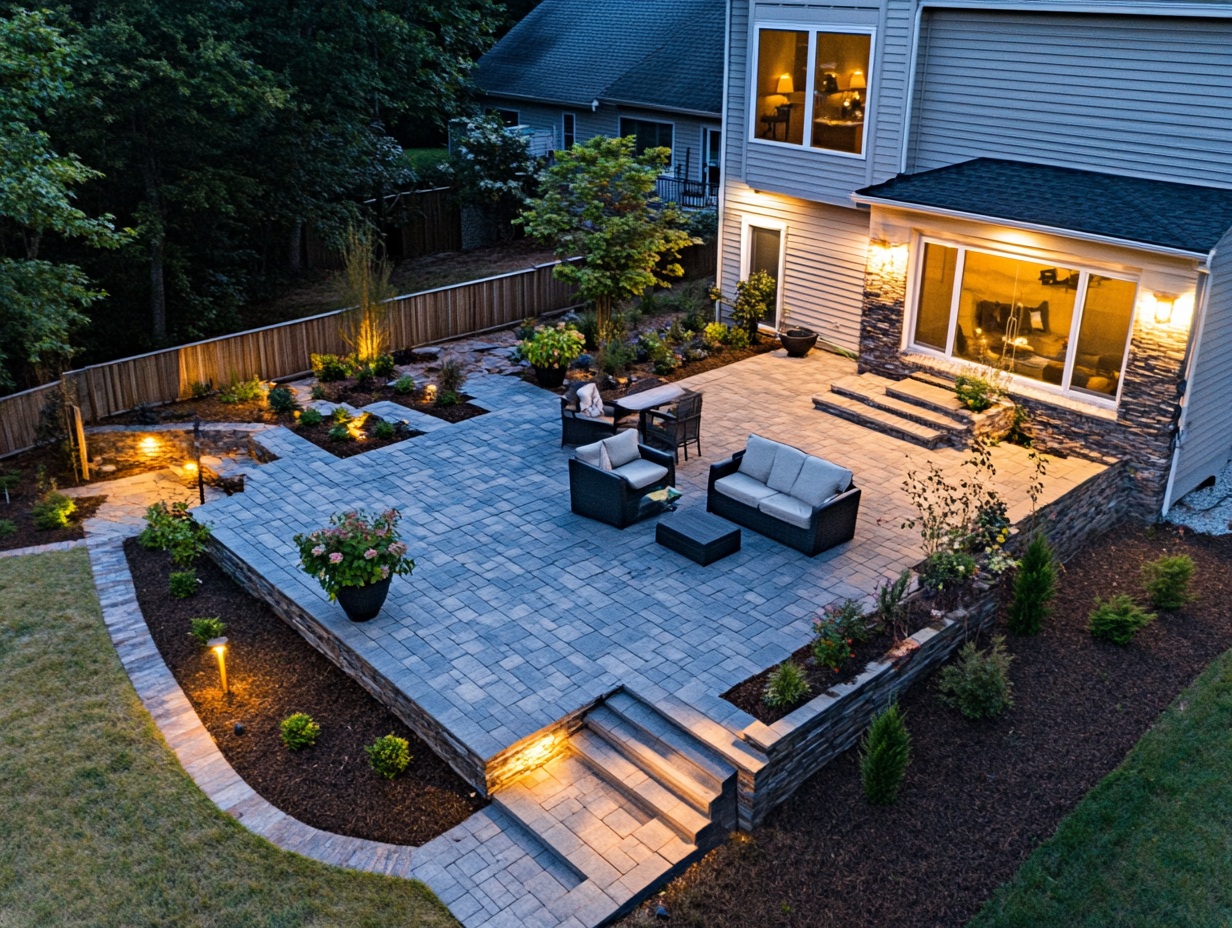
Natural Stone Pavers: Elegant, Unique, and Long-Lasting
For those wanting a luxurious and organic look, natural stone pavers are unmatched. Cut from real rock such as flagstone, slate, travertine, bluestone, or granite, each piece features its own distinct pattern and texture, offering a one-of-a-kind patio finish.
Pros:
-
Unmatched beauty: Each stone is naturally unique, creating a stunning and upscale appearance.
-
Extreme durability: Natural stone withstands extreme temperatures, UV exposure, and heavy use.
-
High resale value: A stone patio can increase property value due to its premium aesthetic.
Cons:
-
Higher investment: Depending on the type, natural stone pavers can range from $17 to $25+ per square foot installed.
- For luxury stones or intricate patterns, expect up to $25–$30 per square foot, especially with sloped terrain or custom features
-
Labor-intensive installation: Uneven shapes and thicknesses make installation more complex and time-consuming.
-
May require sealing: Some stones are porous and need sealing to prevent moisture absorption and staining.
Best for: Homeowners looking for high-end, durable, and naturally elegant patios that reflect premium craftsmanship.
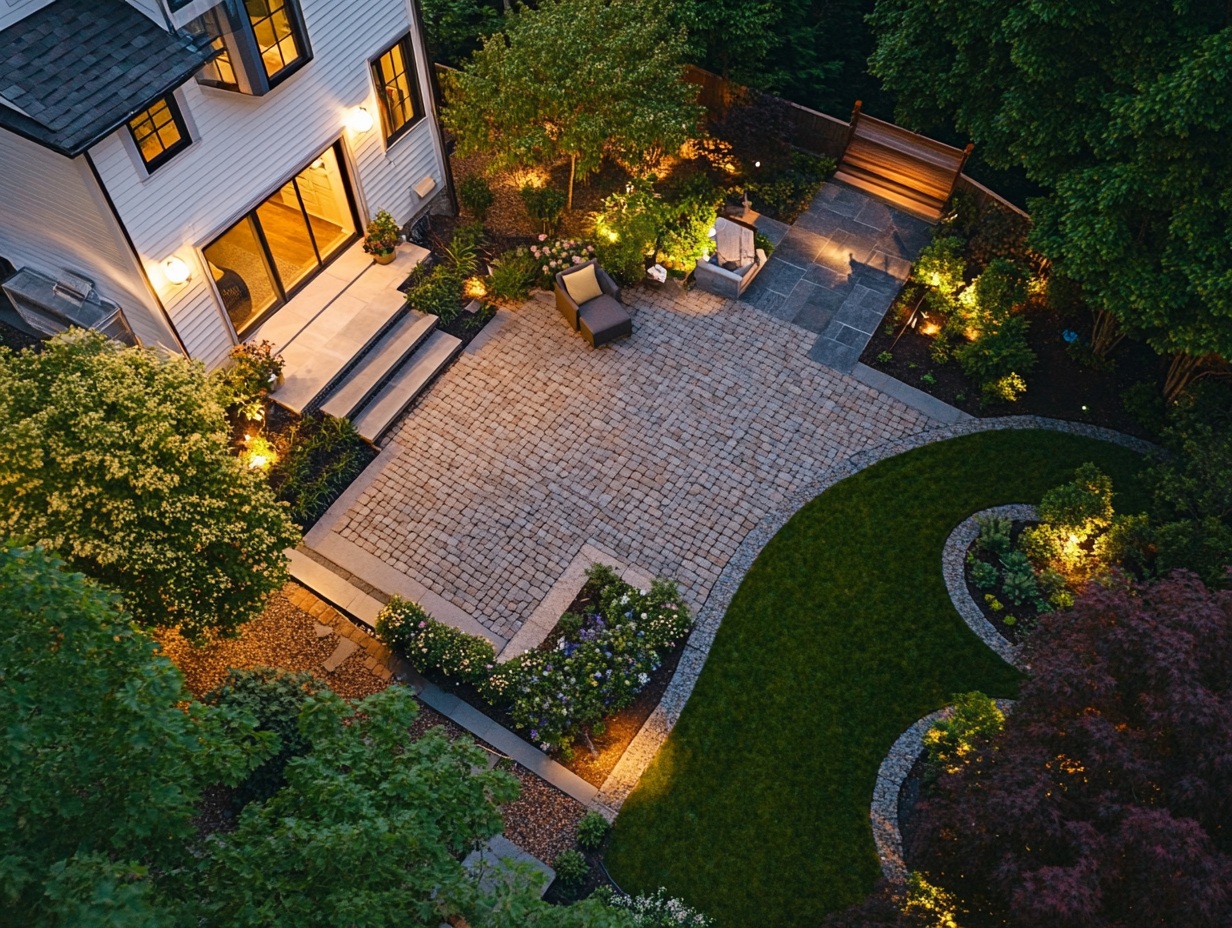
Choosing the Best Paver Patio for Your Needs
Ultimately, the right paver patio material depends on your budget, aesthetic goals, climate conditions, and how much maintenance you’re willing to perform. Concrete pavers are excellent for modern versatility and affordability. Brick pavers give your space classic charm and eco-conscious value. Natural stone pavers, while a bigger investment, offer unmatched luxury and longevity.
Whichever path you choose, investing in professional installation is key to maximizing the beauty and lifespan of your outdoor space. Proper site preparation, drainage planning, and precise execution can make the difference between a mediocre job and a patio that lasts for decades.

Let Precision Hardscape & Construction Help You Build the Perfect Patio
If you’re ready to upgrade your outdoor living space with a stunning, professionally installed paver patio, Precision Hardscape & Construction is here to help. Our team has years of experience designing and building high-quality patios using the best materials for your specific needs—whether you want concrete, brick, or natural stone. We proudly serve Calabash, NC, and the surrounding coastal communities, offering personalized service and exceptional results.
Visit us at www.precisionhardscapeconstruction.com or call us at (843) 222-5377 to schedule your consultation and take the first step toward the outdoor space you’ve always dreamed of.