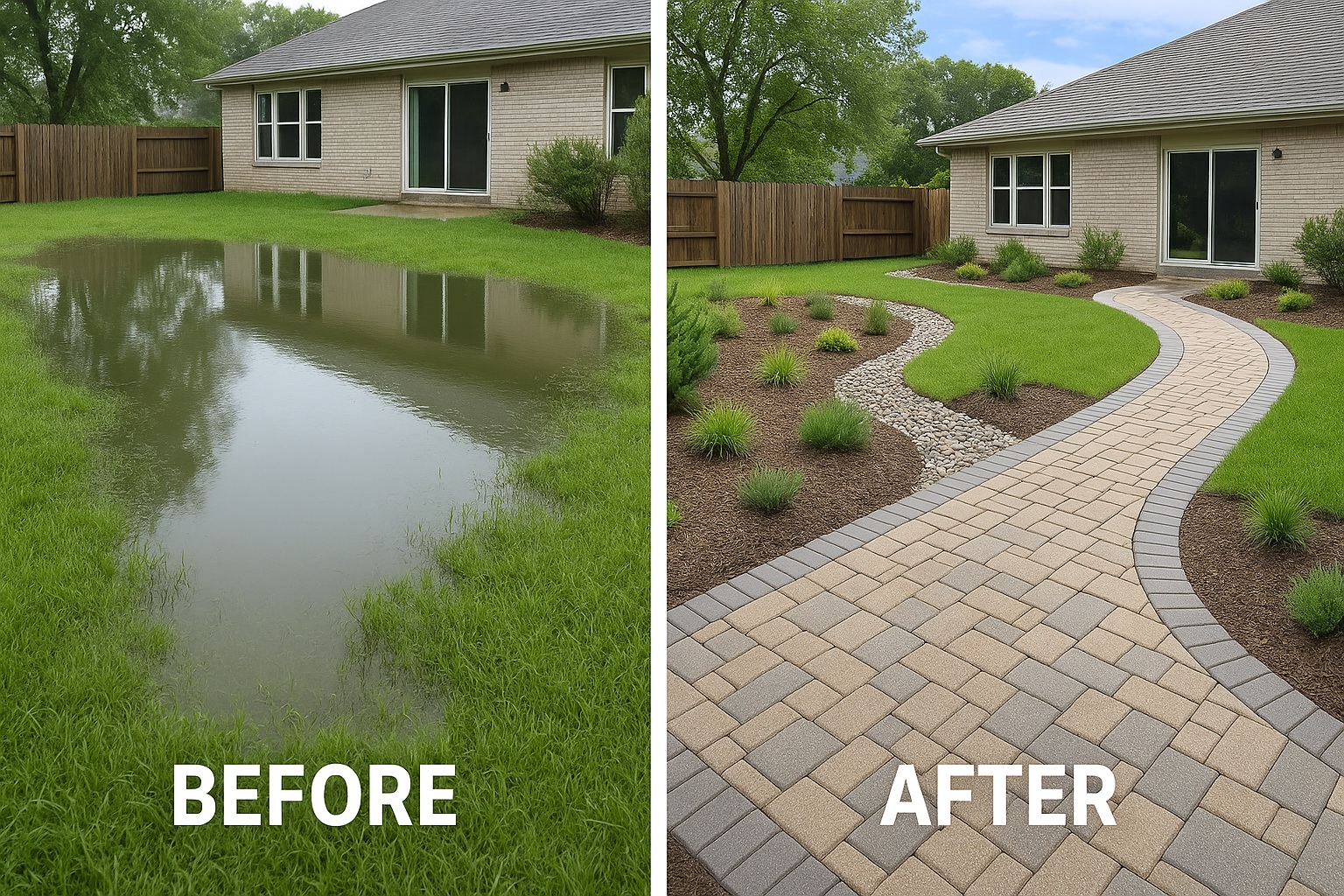
A beautifully designed landscape and hardscape not only enhances the curb appeal and functionality of your home—it also plays a vital role in how your property handles water. In the coastal and lowland regions of North Carolina and South Carolina, frequent rains, tropical storms, and poor grading can quickly turn a dream backyard into a soggy, unusable mess. Without proper planning and infrastructure, your investment in patios, walkways, retaining walls, and gardens can be compromised by erosion, mildew, or costly water damage.
Effective hardscape drainage solutions are essential for maintaining a healthy, attractive, and durable outdoor space. Whether you’re building a new patio or upgrading your existing yard, it’s crucial to implement systems that move water away from your home, structures, and key landscape elements. Below are the top techniques used by professionals to prevent yard and patio flooding while preserving the integrity of your hardscaping year-round.
Surface Grading: The First Line of Defense Against Flooding
The most overlooked yet powerful strategy in any drainage plan is proper grading. This involves shaping the slope of your yard or patio surface to direct water away from your home and toward designated drainage zones.
-
Minimum slope: Patios and hard surfaces should have a slope of at least 1/4 inch per foot (2%) away from your foundation or structure. This allows gravity to carry surface water away naturally.
-
Swales: A shallow, grassy or stone-lined channel, swales are designed to collect and redirect runoff from large areas. These can be both functional and decorative, doubling as a softscape border.
-
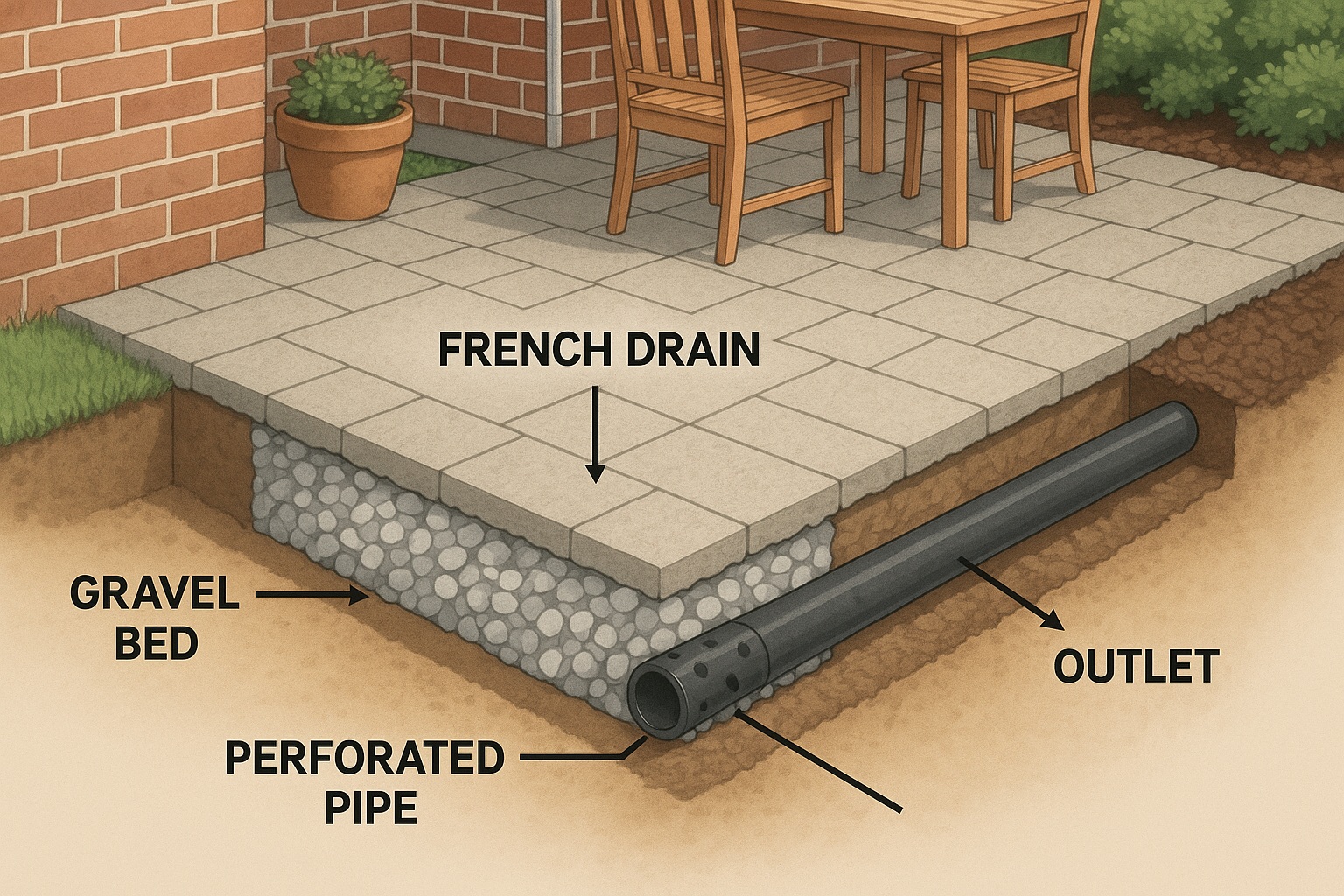
French drains: When surface grading alone isn’t enough, French drains offer an excellent solution. These are gravel-filled trenches containing a perforated pipe that collects water and redirects it underground, typically to a dry well or safe discharge point.
-
Catch basins: Installed at low points of patios or walkways, catch basins collect excess water and connect to underground drainage pipes. They’re essential in flat yards or areas prone to puddling.
Professional hardscape design always begins with identifying low points, hardscape slope, roof runoff zones, and areas where water naturally collects—then grading and trenching accordingly to control water flow.
Smart Drainage Systems and Permeable Pavers for Flood Prevention
In addition to grading, smart drainage systems and innovative materials can greatly enhance the performance and appearance of your outdoor spaces.
1. Permeable pavers
Unlike traditional concrete or dense brick, permeable pavers are specially designed to allow water to pass through joints and into a drainage bed below. These pavers are installed over layers of gravel and sand that help filter and absorb stormwater, reducing runoff.
-
Ideal for driveways, patios, and walkways.
-
Prevents standing water and helps replenish groundwater.
-
Meets many stormwater regulations in urban and coastal areas.
2. Channel drains
Also known as trench drains, these are long, narrow drains that run across the edge of hard surfaces like driveways or patios. They’re often topped with decorative grates and can handle large volumes of water, making them ideal for heavy rainfall areas.
-
Effective along retaining walls, pool decks, garage entries, and large patios.
-
Available in concrete, metal, or polymer components with customizable covers.
3. Dry wells and rain gardens
Once water is collected via French drains or channel systems, it needs a final destination. Dry wells are deep holes filled with gravel or storage tanks that slowly release water into the soil. Rain gardens are shallow, plant-filled basins that use native plants and mulch to absorb and purify runoff.
-
These solutions are eco-friendly and visually appealing.
-
They reduce strain on public drainage systems and help manage water on-site.
4. Downspout extensions and splash blocks
Roof runoff can be a major contributor to flooding near patios and foundations. Redirect water with underground downspout extensions or visible splash blocks that carry water at least 5–10 feet away from your home and into proper drainage areas.

A Dry, Durable Outdoor Space Starts with Drainage
A stunning backyard means nothing if it floods every time it rains. From pooling water that weakens your pavers to erosion that compromises your retaining walls, ignoring drainage puts your entire outdoor investment at risk. The good news is that most backyard flooding fixes are preventable—and often invisible—with the right design approach.
By incorporating professional patio drainage ideas such as surface grading, French drains, permeable pavers, and proper discharge points, you can enjoy a dry, usable yard all year long. Drainage is not an optional feature; it is the foundation of every long-lasting hardscape project.
Call Precision Hardscape & Construction for Expert Drainage Solutions
At Precision Hardscape & Construction, we design and install functional, beautiful landscapes that withstand the weather challenges of the Carolina coast. Whether you’re facing chronic yard flooding or planning a new patio and want to get the drainage right from the start, our experienced team delivers custom hardscape drainage solutions tailored to your property.
Let us protect your outdoor investment with systems that are as smart as they are seamless.
📞 Call us today at (843) 222-5377
🌐 Visit: www.precisionhardscapeconstruction.com