Keep Your Yard Dry and Protected This Carolina Winter
Your outdoor spaces—patios, walkways, retaining walls—are only as strong as the ground beneath them. In the Carolinas, heavy rainfall and saturated soil during late fall and winter often lead to drainage problems, standing water, and eventual structural damage. A winter drainage tune-up is not just a maintenance task—it’s a critical safeguard against property loss, erosion, and costly hardscape repair.
Why Drainage Matters More Than You Think
When water doesn’t move away from your property quickly, it accumulates. That accumulation weakens soil, pushes against pavers, erodes edges, and undermines retaining walls. In other words: drainage isn’t just about comfort—it’s about preventing collapse and protecting your investment. By acting now, you stop standing water before it becomes a flood, a repair job, or worse, a structural failure.
Identify the Warning Signs of Drainage Failure
-
Pooling water near patios, walkways, or retaining wall bases.
-
Runoff channels etched into lawns or mulch beds.
-
Loose pavers or shifting stones along pathways.
-
Bulging or bowing retaining walls where water is trapped behind.
-
Clogged grates or downspouts blocking the natural flow of water.
If any of these signs are present, your property may already be suffering drainage problems that accelerate during winter rains.
Tip: Reference our article Preventing Winter Erosion: Protecting Slopes, Walls, and Soil from Seasonal Rains for deeper erosion-control details.
Steps to a Thorough Winter Drainage Tune-Up
1. Clean Out Drainage Components
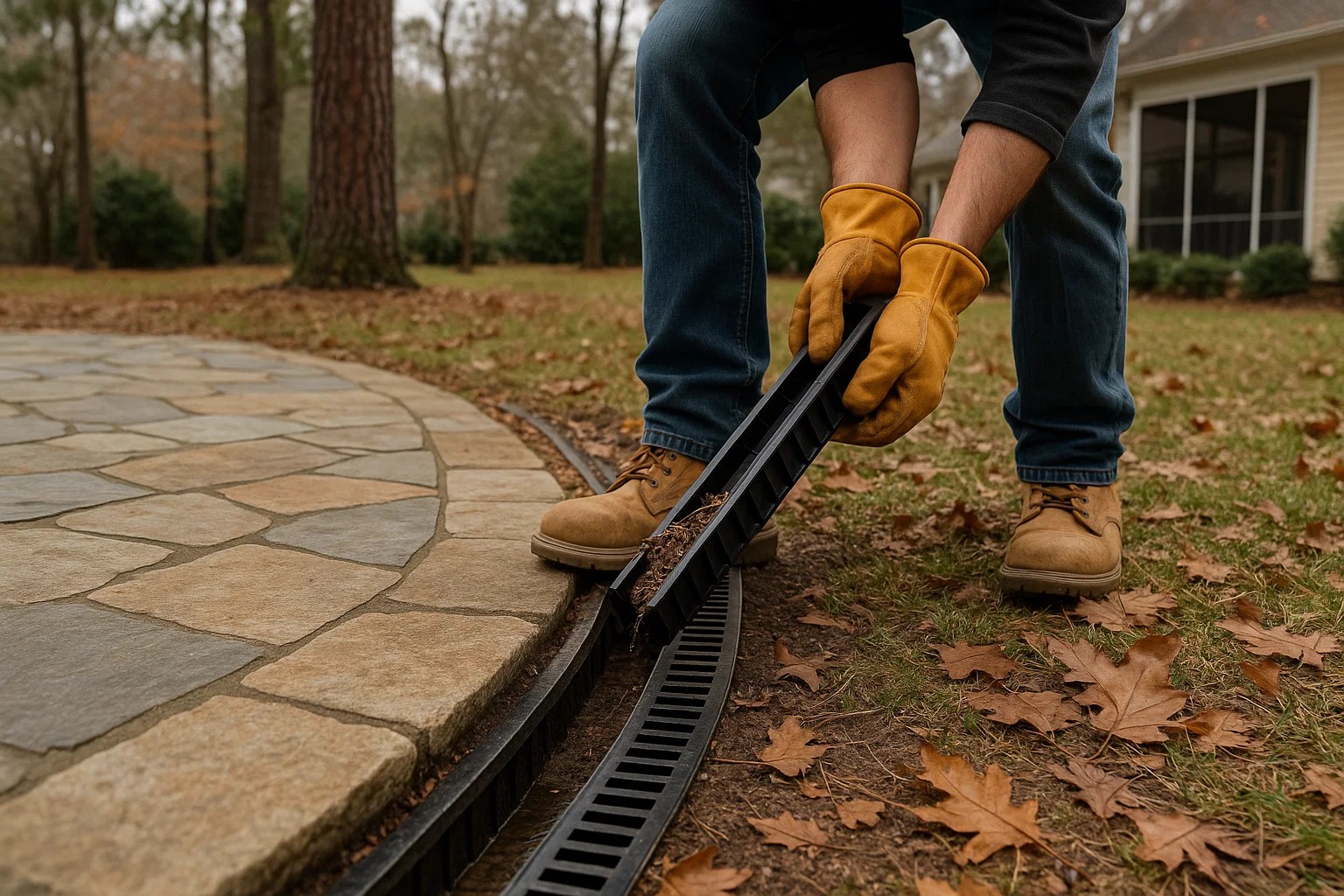
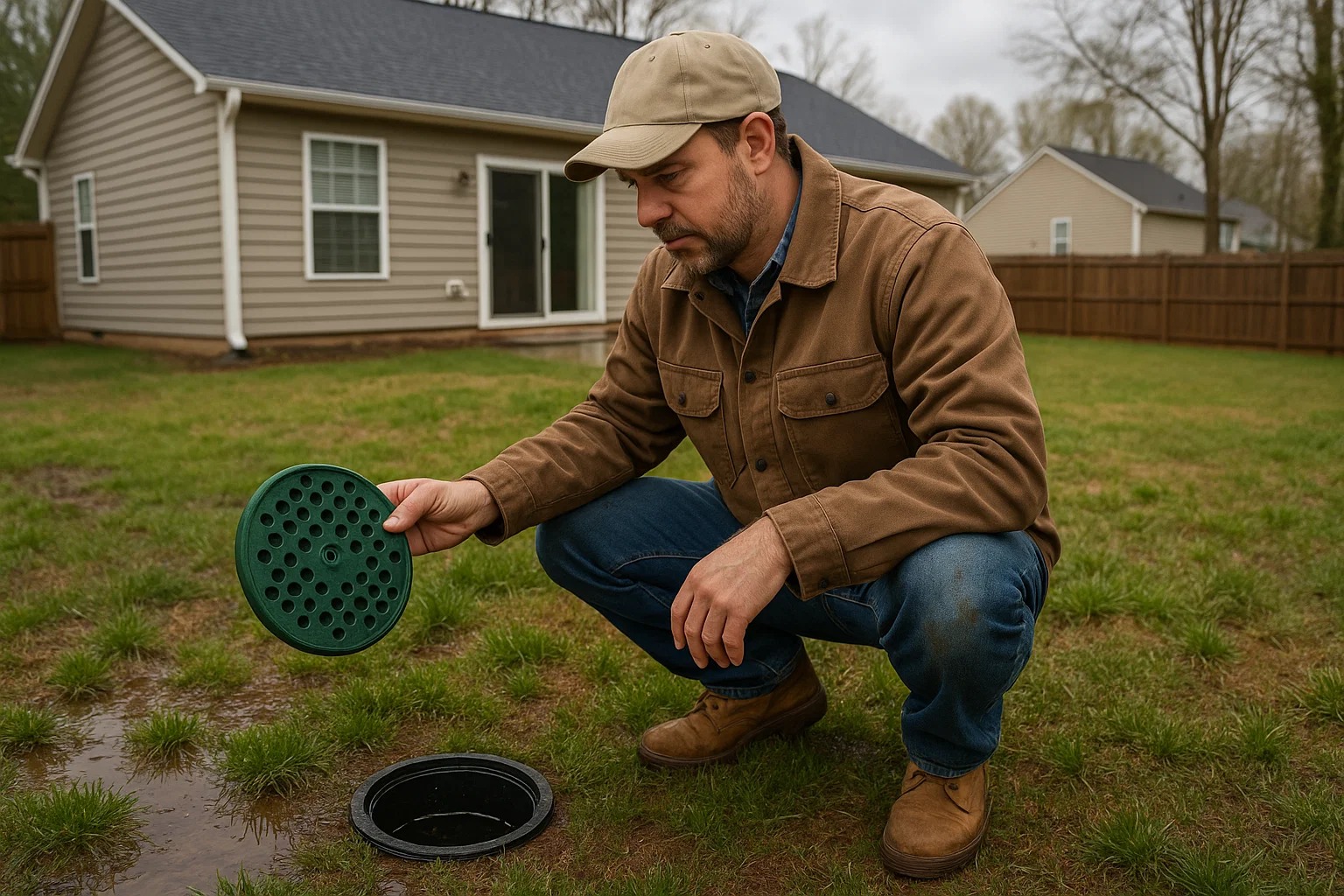
Ensure all grates, catch basins, French drains and channel drains are free of leaves, sediment, and debris. Standing water begins with simple clogs.
2. Inspect and Re-Grade
Check slopes around patios and retaining walls: there should be a minimum 1–2% slope directing water away. If grading is flat or slopes toward structures, corrective re-grading is needed.
3. Evaluate Sub-Surface Drainage Systems
Inspect existing French drains and subsurface pipes for sediment or collapse. If blockages exist, excavate, clean, and replace with proper gravel bed and geotextile fabric. The service page Drainage & Erosion Control Solutions details professional installation options.
4. Protect Hardscape Edges
Where patios or pavers meet lawns or slopes, use edge restraints and gravel tramples to keep soil from washing out beneath the surface. Loose edges can allow water to undermine your hardscape.
5. Seal and Protect Surfaces
Once drainage tasks are complete and surfaces are clean and dry, apply a high-quality penetrating sealer to pavers, natural stone or concrete. This blocks moisture infiltration, which is especially harmful during freeze-thaw cycles in colder months.
Planning & Budgeting for Your Drainage Tune-Up
The best time to perform a winter drainage tune-up is during the pre-storm lull between late fall and mid-winter. Contractors often have better availability and pricing before spring.
Budget tips:
-
Smaller repairs (grading adjustments, cleaning drains) can run a few hundred dollars.
-
Major installs (French drains, full re-grading) may run into thousands—consider phased approaches: immediate fixes now, major upgrades in spring.
-
Include this tune-up in your annual hardscape maintenance budget—it’s not just service, it’s protection.
Next Steps for Homeowners in North & South Carolina
Running a pre-winter drainage inspection now prevents major issues later. If you haven’t scheduled your tune-up, now is the time. Consider a inspection from professionals like Precision Hardscape Construction, who specialize in Carolina-specific drainage, erosion, and hardscape solutions.
Call (843) 222-5377 or visit www.precisionhardscapeconstruction.com to book your Winter Drainage Tune-Up today. Protect your outdoor investment before the next heavy rains hit.