
What Homeowners Can Do About It
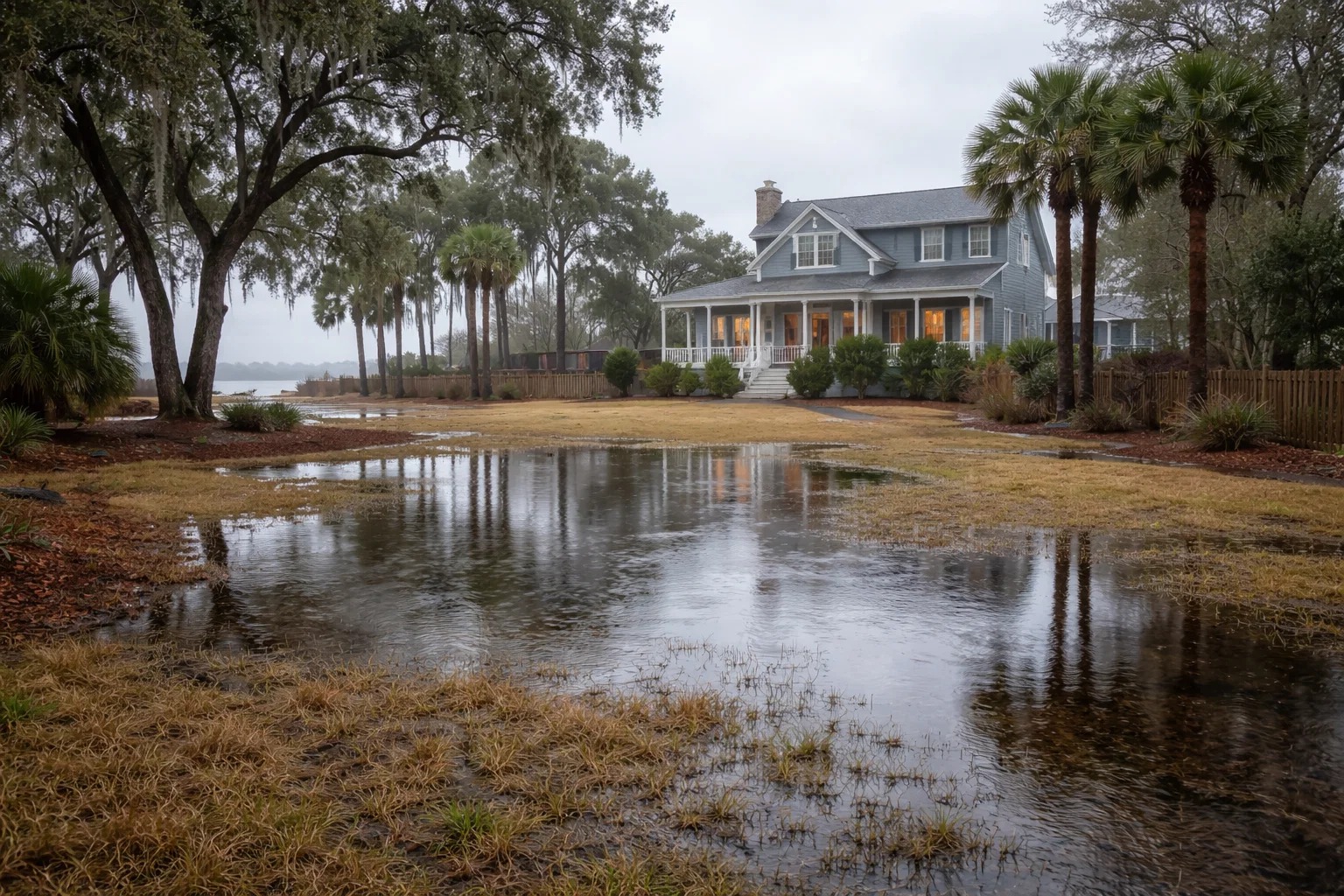
Winter rains along the Carolina coast have a way of revealing problems that stay hidden the rest of the year. Lawns that looked fine in summer suddenly develop puddles. Low spots hold water for days. Areas near patios, driveways, or foundations feel soft underfoot.
For many homeowners in Brunswick County and the Grand Strand, this isn’t just an inconvenience — it’s an early warning sign of a drainage issue that deserves attention.
Understanding why water collects in certain yards is the first step toward fixing it correctly.
Why Winter Makes Drainage Problems Worse
Coastal Carolina yards face a unique combination of conditions that make winter drainage especially challenging:
-
Saturated soil from steady winter rainfall
-
High water tables common in low-lying coastal areas
-
Clay-heavy soil that drains slowly
-
Minimal evaporation due to cooler temperatures
In places like Ash, Calabash, Carolina Shores, Sunset Beach, Little River, and North Myrtle Beach, water often has nowhere to go once the ground reaches its saturation point. When that happens, it surfaces in the weakest areas of the yard.
Common Reasons Yards Hold Water After Rain
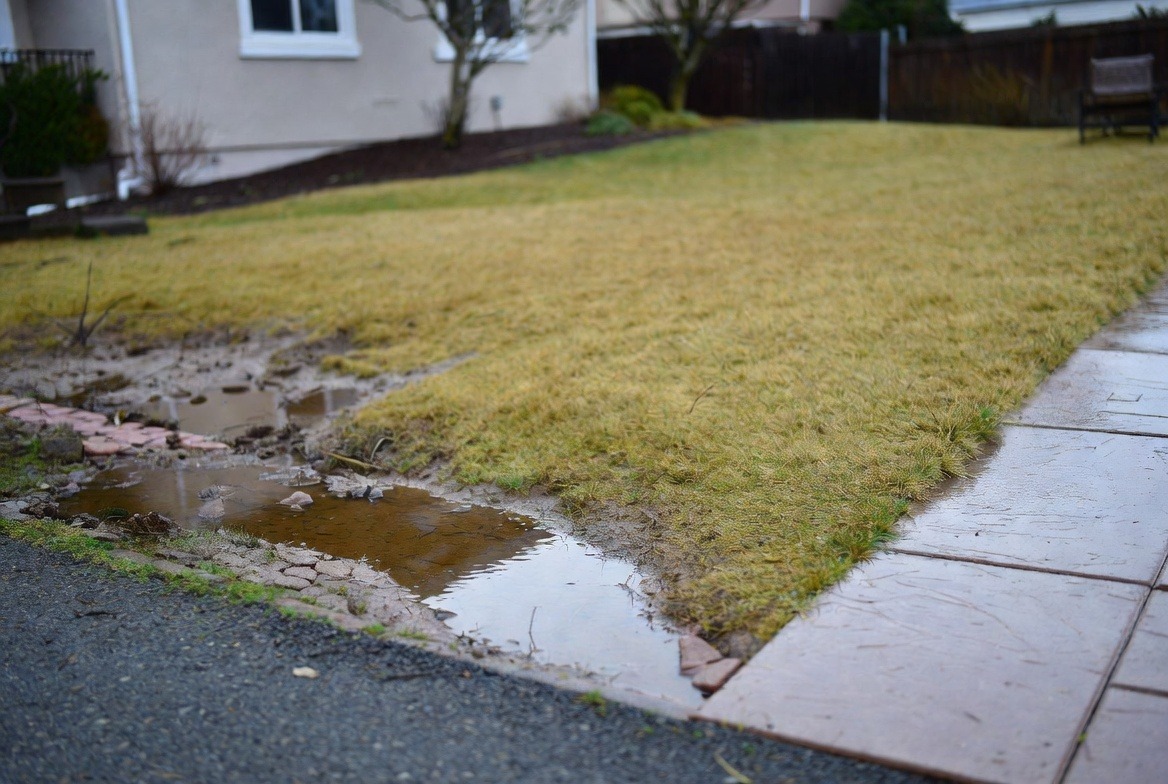
While every property is different, certain drainage problems show up repeatedly across this region.
Poor Grading
Yards that were never properly graded — or that have settled over time — may naturally direct water toward low spots instead of away from the home.
Compacted Soil
Construction activity, heavy equipment, or even years of foot traffic can compact soil, preventing water from soaking in as it should.
Blocked or Inadequate Drainage Systems
Older or improperly installed drainage systems may no longer handle current water volumes, especially after landscaping changes or additions like patios and walkways.
Flat Coastal Lots
Many coastal properties are nearly level, which makes natural water runoff difficult without intentional drainage planning.
Why Standing Water Shouldn’t Be Ignored
Occasional puddles after a heavy storm aren’t always a cause for concern. Persistent water, however, can lead to more serious problems over time:
-
Turf damage and dead grass
-
Soil erosion and uneven ground
-
Mosquito breeding areas
-
Water migrating toward foundations or crawlspaces
-
Long-term structural concerns if left unaddressed
Winter is often when these issues become most visible — which makes it one of the best times to evaluate them.
What Homeowners Can Do First
Before jumping to conclusions or quick fixes, a professional evaluation is usually the most effective starting point. Drainage solutions are not one-size-fits-all, especially in coastal North and South Carolina.
A proper assessment looks at:
-
Yard slope and elevation changes
-
Soil composition
-
Water flow patterns during rainfall
-
Existing drainage structures
-
Proximity to the home and hardscape features
From there, solutions may range from subtle grading adjustments to targeted drainage systems designed specifically for the property.
Addressing Drainage Before It Becomes a Bigger Problem
Many homeowners wait until spring to address drainage concerns, only to find that the problem worsens with seasonal storms and increased demand for contractors. Winter conditions often make drainage issues easier to diagnose and plan for, allowing solutions to be implemented before damage occurs.
Precision Hardscape & Construction regularly works with homeowners throughout Ash, Calabash, Carolina Shores, Sunset Beach, Little River, and North Myrtle Beach to identify drainage problems early and recommend long-term solutions tailored to coastal properties.
If a yard consistently holds water after winter rains, a professional evaluation can help determine the right path forward — protecting both the landscape and the home itself.
Homeowners who are dealing with persistent drainage issues don’t have to guess at solutions or wait for problems to escalate. Precision Hardscape & Construction works with property owners across Ash, Calabash, Carolina Shores, Sunset Beach, Little River, and North Myrtle Beach to evaluate drainage concerns and design practical, long-term solutions suited to coastal conditions. For a professional assessment, homeowners can call (843) 222-5377 or reach out directly to schedule a consultation and discuss the best way to protect their yard and home.