
Project Spotlight
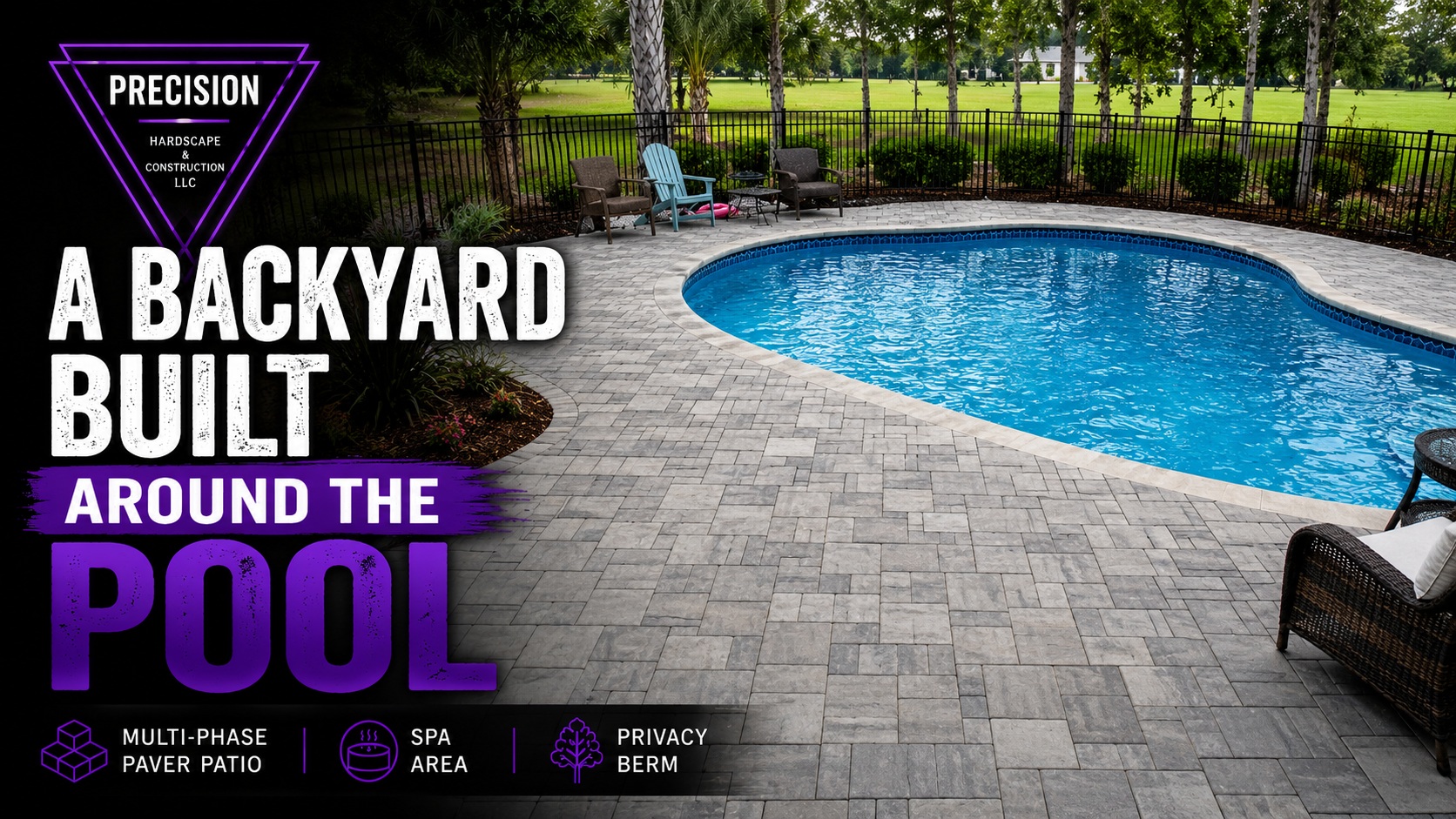
Matt Jones and the Precision Hardscape & Construction crew recently tackled one of the more involved backyard projects in their portfolio — a multi-phase outdoor living build featuring a paver grilling patio tied into an existing pool deck, a decorative border, stepped levels down to a larger second patio, a spa area, a wash station, and a landscaped privacy berm. This is what a fully thought-out backyard looks like when it’s built in phases by a crew that knows how each piece connects to the next.
Most backyard projects start with one idea and grow from there. A homeowner wants somewhere to grill. Then they realize that area connects to the pool deck and should flow together. Then they notice the yard drops off and a second level would open up more space. Then the conversation turns to the spa that’s been sitting in the plans for two years, and the wash area they’ve needed since they put the pool in, and the privacy issue along the fence line that’s always bothered them.
That’s not scope creep — that’s good design thinking. A backyard that’s planned as a connected system, rather than a series of isolated additions, is a backyard that actually works. Every element reinforces the others. The grilling area connects to the pool deck. The step-down wall creates definition between two distinct outdoor zones. The spa area tucks in beside the house where it belongs. The berm gives the whole space privacy from the fence line.
This article walks through how Precision Hardscape approached this project — what went in, how the different phases connect, what product choices were made and why, and what homeowners planning a similar multi-phase backyard build should think about before they start.
In This Article
- The Project Matt Walks Through in the Video
- Phase One: The Grilling Patio and Pool Deck Tie-In
- The Pavers: Unilock Trio with a Cream Border
- Phase Two: The Larger Patio, Steps, and Spa Area
- The Privacy Berm: Landscaping That Works With the Hardscape
- Why Multi-Phase Backyard Projects Make Sense
- Designing a Patio Around an Existing Pool
- Common Mistakes in Pool Patio Projects
- FAQ: Pool Patios and Backyard Hardscape in Coastal Carolina
- Work With Precision Hardscape & Construction
The Project Matt Walks Through in the Video
Matt gives two walkthroughs in this video — one at the start of the project with the crew in full swing, and one partway through showing the first patio section near completion.
In the first walkthrough, you can see the scope of what’s being built. A paver grilling patio is going in off the pool area, with a decorative border running around the perimeter where it meets the existing pool deck. Crew member Chris is working dirt with equipment on the other side of the yard, where a berm is being built between two established trees along the fence line — adding a natural privacy screen that will grow in over time. On the far side of the yard, excavation is underway for the second, larger patio area — a multi-level design that steps down from the first patio level to a lower outdoor zone, with a retaining wall running corner to corner to define the transition. Beside the house, space is being carved out for a spa area and a wash station.
In the second walkthrough, the first patio is near completion and the quality of the installation is clear. The primary paver field uses Unilock Trio in a running bond pattern — a versatile large-format paver with natural color variation in earthy tones. Around the perimeter runs a beige cream border that frames the field and creates a finished edge where the new patio meets the existing concrete pool deck. The transition is clean and intentional — the border color bridges the warm tone of the existing concrete with the cooler tones in the Trio field.
As Matt noted during the progress update: “We’ve got the Unilock Trio and flags on the primary pavement. We’ve got this nice beige cream border — it looks really good, goes around the perimeter.”
Phase One: The Grilling Patio and Pool Deck Tie-In
The first phase of this project — the grilling patio adjacent to the pool — is the kind of addition that pool homeowners eventually realize they need once they’ve spent a few summers navigating the gap between their pool and wherever the grill actually lives.
A dedicated paver grilling area solves several problems at once. It gives the grill a stable, heat-appropriate surface that won’t stain or degrade the way lawn or mulch does under heavy use. It creates a defined space for cooking that’s close enough to the pool to be social but separated enough that the cook isn’t in the way of swimmers. And it gives the back of the house a finished look that the bare concrete pool surround alone can’t provide.
Tying Into an Existing Pool Deck
One of the more technically demanding aspects of a pool patio addition is the transition where new pavers meet an existing concrete pool deck. This joint needs to be handled carefully — the two materials will expand and contract at slightly different rates with temperature changes, and the finished grade at the transition has to be precise to avoid a trip hazard or a water trap.
The approach on this project was to run the decorative border along the full perimeter of the new paver area, including the edge where it meets the pool deck. This does two things: it creates a visual break that reads as intentional design rather than a patch, and it gives the installer a consistent edge detail to work to rather than trying to match paver joints directly to the concrete edge.
Drainage at the Pool Perimeter
Pool areas require careful attention to drainage. Water from the pool, rain runoff from the patio surface, and splashout from pool use all need somewhere to go — and that somewhere should not be toward the house foundation or into areas that will pond and create slip hazards. Every Precision Hardscape pool patio installation is graded to direct water away from the house and pool equipment, and away from traffic areas. For homeowners with existing drainage challenges in the pool area, our drainage solutions page covers the full range of options available.
The Pavers: Unilock Trio With a Cream Border
The paver selection on this project does a lot of work. Understanding why these specific products were chosen helps illustrate how material decisions at the planning stage shape what a finished backyard looks and feels like.
Unilock Trio in the Primary Field
Unilock Trio is a concrete paver system that combines three different unit sizes — large, medium, and small — into a single cohesive pattern. The mix of sizes creates a natural, random-looking layout that avoids the repetitive visual rhythm of a single-size paver field. The result reads more like natural stone than a manufactured paver, while still delivering the dimensional consistency and durability that makes concrete pavers the right choice for a pool environment.
The color blend in the Trio system used on this project runs through warm earth tones — tans, taupes, and muted browns with natural variation across units. This palette works well in a coastal Carolina backyard setting, complementing the greens of the surrounding landscape and the warm tones of the home’s exterior without competing with either.
The Beige Cream Border
The border running around the perimeter of the patio is one of those details that separates a well-designed paver installation from a basic one. A border serves several purposes simultaneously: it provides a finished edge that terminates the field pattern cleanly, it creates a visual frame that defines the space, and it gives the installer a consistent reference line to work to around the perimeter.
The beige cream color chosen for the border on this project is lighter and warmer than the Trio field — a deliberate contrast that makes the border visible as a design element rather than an afterthought. Where the border meets the existing pool deck concrete, it acts as a transition piece that bridges the two surfaces without either trying to match them or ignoring the joint.
🧱
Unilock Trio Field
Three-size paver system creating a natural, random-layout look with warm earth tone color variation.
⬜
Cream Border Detail
Lighter perimeter border frames the field and bridges the transition to the existing pool deck.
🏊
Pool Deck Tie-In
New paver patio connects seamlessly to existing concrete pool deck with clean transition detail.
🪜
Multi-Level Design
Stepped levels with a wall define the transition from grilling patio to lower outdoor zone.
Phase Two: The Larger Patio, Steps, and Spa Area
While the grilling patio near the pool was taking shape, the crew was simultaneously beginning excavation on the second phase — a larger patio area on the other side of the yard that would step down from the first level and include a dedicated spa area and wash station beside the house.
The Step-Down Wall
The grade change between the two patio levels is handled with a wall running corner to corner — a structural element that both retains the upper level and creates two steps down to the lower patio area. This kind of wall does more than manage grade. It creates a physical and visual boundary between two distinct outdoor zones, giving each space its own identity within the larger backyard design.
Steps in a paver installation require precise planning. Riser height, tread depth, and the relationship of the step dimensions to how people naturally walk determine whether steps feel comfortable or awkward. Getting this wrong — steps that are too steep, too shallow, or inconsistent in height — is a safety concern and a daily frustration. Precision Hardscape builds steps to standard residential dimensions and integrates them with the surrounding patio surface so the transition between levels feels natural rather than abrupt.
For more on the structural side of retaining walls and step installations, see our retaining walls and seat walls page.
The Spa Area
The spa area is being carved in beside the house — a location that gives it some shelter from the yard while keeping it close to the house for easy access. Spa installations in hardscape projects require careful coordination between the hardscape contractor and the spa supplier. The paver surface around the spa needs to be level, properly drained, and built to accommodate the weight of the unit when full. Precision Hardscape coordinates these details at the planning stage rather than figuring them out once the spa arrives on site.
The Wash Area
A wash area beside the house is one of those practical additions that pool homeowners particularly appreciate. A defined paved space with a hose connection gives swimmers, gardeners, and dog owners a place to rinse off without tracking water and debris through the house. It’s a small footprint with an outsized impact on day-to-day livability — the kind of detail that gets used every single day.
The Privacy Berm: Landscaping That Works With the Hardscape
One of the elements that sets this project apart is the privacy berm being built along the fence line — a raised earthen mound positioned between two existing trees that will support plantings to create a natural privacy screen along the perimeter.
A berm is a landscaping technique that uses grade change and planting to create visual screening without the hard edge of a fence or wall. When positioned between existing trees — as this one is — the berm fills in the gap at lower levels where tree canopy doesn’t provide coverage, creating a more complete privacy buffer from neighboring properties or the street.
The integration of this berm into a hardscape project is a good example of how Precision Hardscape thinks about backyards as whole environments rather than just paved surfaces. A beautiful patio is diminished if the yard it sits in feels exposed or incomplete. Adding a privacy element — whether a berm, a planted screen, a fence, or a combination — makes the whole outdoor living area feel more intentional and more usable.
For homeowners interested in how hardscape and landscaping work together, our outdoor living spaces page covers the full range of what Precision Hardscape designs and builds across the coastal Carolina service area.
Why Multi-Phase Backyard Projects Make Sense
There’s a common assumption that the right way to build a backyard is to plan everything at once and do it all in one shot. And there are situations where that’s the right approach — when the scope is clear, the budget is set, and there’s no reason to break the work into stages.
But multi-phase projects — where a backyard is built out in planned stages over time — often make more sense, for several reasons.
Budget Flexibility Without Sacrificing Vision
Breaking a larger project into phases allows homeowners to invest in what matters most now and add additional elements as budget allows — without compromising the quality of what gets built in each phase. The key is planning all phases upfront so each stage is designed to connect cleanly with the next, rather than retrofitting additions onto a design that wasn’t built to accommodate them.
Living With the Space Before Committing to All of It
Sometimes homeowners aren’t entirely sure how they’ll use a space until they’ve spent time in it. Building the primary patio first — getting the grilling area and pool connection done — and then adding the lower patio and spa area after a season gives the homeowner real experience with how the yard functions before committing to the final layout of the second phase.
Contractor Continuity
When phases are built by the same contractor who did the original installation, everything connects correctly — grades match, materials are consistent, and the contractor already knows the site. This is one of the strongest arguments for establishing a relationship with a single trusted hardscape contractor rather than re-bidding each phase independently.
Designing a Patio Around an Existing Pool
Pool patio additions are one of the most common projects Precision Hardscape handles across the coastal Carolina service area — and for good reason. Pools are expensive investments that most homeowners want to enjoy fully, and the standard concrete pool deck that comes with most installations often doesn’t give the surrounding yard the treatment it deserves.
Work With the Existing Deck, Not Against It
The most important design principle for a pool patio addition is respecting the existing pool deck as a fixed element and designing the new hardscape to complement it. This means choosing paver colors and textures that work with the concrete, handling the transition joint carefully, and ensuring the new surface grade flows logically from the existing deck rather than creating awkward level changes.
Safety and Slip Resistance
Any surface in a pool environment needs to be slip-resistant when wet. Concrete pavers manufactured for pool and patio use have textured surfaces specifically designed for this — they provide traction underfoot even when wet without sacrificing appearance. This is a non-negotiable consideration in paver selection for pool-adjacent surfaces.
Chlorine and Chemical Resistance
Pool water contains chlorine, salt (in saltwater systems), and other chemicals that can affect hardscape materials over time. Quality concrete pavers are highly resistant to pool chemistry and won’t degrade or stain under normal pool use. This is one area where pavers have a clear advantage over some alternative patio materials that can be discolored or damaged by pool chemical exposure.
Entertaining Flow
A well-designed pool patio creates natural zones for different activities — swimming, lounging, grilling, dining — that flow into each other without crowding. This project achieves that with a grilling area close to the pool, a larger lower patio that could accommodate dining and seating, and a spa area that functions as its own space rather than competing with the pool zone. The step-down wall between levels reinforces this zoning without closing off the view between spaces.
See more examples of outdoor living spaces Precision Hardscape has built across Little River, Calabash, Sunset Beach, and the surrounding area on our paver patio installation page.
Common Mistakes in Pool Patio Projects
Pool patio additions have a few specific failure points that aren’t as common in other paver projects. These are worth knowing about whether you’re evaluating contractor quotes or just trying to understand what to ask about before a project starts.
Ignoring the Transition Joint
The joint where new pavers meet existing pool deck concrete is one of the most common points of long-term failure in pool patio additions. Concrete and pavers expand and contract at different rates, and if the transition isn’t handled with a proper expansion gap or isolation joint, cracking and separation will develop over time. A border detail — as used on this project — helps manage this transition but doesn’t replace the need for proper joint treatment at the interface.
Grading Toward the Pool Equipment
Pool equipment pads — pumps, filters, heaters — are vulnerable to flooding and water intrusion. A patio that drains toward the equipment pad rather than away from it creates maintenance headaches and potential equipment damage over time. Every paver installation in a pool environment should be graded with the equipment pad location in mind.
Using the Wrong Paver Thickness
Patio-weight pavers in a pool environment that also sees vehicle access — for maintenance equipment, delivery vehicles, or access gates — need to be thick enough for the load. Using standard 2 3/8-inch residential pavers in areas that will see repeated heavy equipment use can lead to cracking under load. If any portion of the pool patio will see vehicle access, the paver specification and base design need to reflect that.
Planning Phases Independently Instead of as a System
The most expensive multi-phase mistake is treating each phase as its own independent project rather than as part of a planned whole. Grades that work for Phase One may create problems when Phase Two is added. Materials that looked fine in isolation may not coordinate with what gets added later. Planning the full scope upfront — even when building in stages — is the approach that produces a backyard that looks and functions like a coherent design rather than a series of additions.
FAQ: Pool Patios and Backyard Hardscape in Coastal Carolina
Yes, and it’s one of the most common pool patio projects Precision Hardscape handles. The key is managing the transition joint carefully — concrete and pavers expand and contract at different rates, so the interface between them needs to accommodate movement without cracking or separating. A border detail at the transition helps visually while proper joint treatment handles the structural side.
Quality concrete pavers manufactured for pool and patio applications have textured surfaces specifically designed for slip resistance when wet. They’re actually a better choice around pools than many alternative surfaces for this reason. The key is selecting the right product — not all pavers have the same surface texture, and a paver specified for a driveway may not have the same slip rating as one specified for pool surround use.
Unilock Trio is a concrete paver system that combines three different unit sizes to create a natural, random-looking pattern with warm earth tone color variation. It’s a strong pool patio choice because it has the dimensional stability and durability of concrete pavers, a surface texture appropriate for wet environments, and a visual character that reads more like natural stone than a manufactured product — which works well in a residential backyard setting.
Yes — planning the full scope upfront is important even when you intend to build in stages. Grades, material choices, connection points, and structural elements like walls and steps all need to be designed as a system. Building Phase One without knowing where Phase Two will connect often creates expensive problems when the second phase starts. Precision Hardscape plans multi-phase projects as a whole and builds them in stages that connect cleanly at each phase boundary.
A spa area addition involves site preparation for the spa pad (level, properly compacted base to handle the weight of a filled spa), electrical coordination for the spa equipment, paver surface installation around the unit, and drainage planning for the area. Precision Hardscape coordinates the hardscape side of spa installations and can work alongside your spa supplier to ensure the site is prepared correctly before the unit arrives.
Precision Hardscape & Construction serves homeowners throughout the coastal Carolinas, including Little River SC, Calabash NC, Sunset Beach NC, North Myrtle Beach SC, Myrtle Beach SC, Ocean Isle Beach NC, Shallotte NC, and Longs SC. Call (843) 222-5377 to talk through your project and confirm service for your location.